Key takeaways
- Fastest mainstream gaming performance available, with excellent 1% lows
- Second-gen 3D V-Cache under the cores allows real overclocking headroom
- Drops into existing AM5 boards with a long upgrade runway on the platform
- Much stronger in productivity than the 7800X3D thanks to higher clocks
What's inside
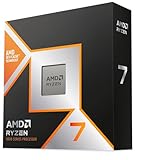
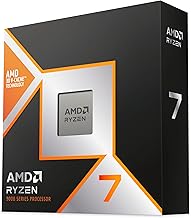
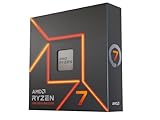
The AMD Ryzen 7 9800X3D is the chip most PC gamers have been waiting for in 2026: an eight-core, sixteen-thread Zen 5 processor that stacks AMD’s second-generation 3D V-Cache underneath the compute cores instead of on top of them. That layout change sounds like an engineering footnote, but it is the whole story here, because it finally lets the cache-heavy X3D part clock and overclock like a normal desktop CPU while keeping the 96MB of L3 that makes games run so well.
It is aimed squarely at people who build or upgrade a rig primarily to play games at high frame rates, especially anyone pairing it with a fast GPU at 1080p or 1440p where the CPU actually matters. Streamers and creators who game will also benefit, though pure productivity users have cheaper paths to the same core count. If your goal is the fastest 1% lows in competitive titles, this is the part to beat.
As an Amazon Associate we earn from qualifying purchases at no extra cost to you. Product prices and availability are accurate as of the date shown and are subject to change.



⚡ Save on Your Next PC — Amazon Prime
Prime members get fast free shipping on the systems above, plus early access to Prime Day & Black Friday PC deals. New members get a 30-day free trial.
Watch: Ryzen 7 9800X3D Review — Video Review
Design & Build
Physically it is a standard AM5 chip on the LGA 1718 socket, so it drops into existing X670, B650, X870 and B850 boards after a BIOS update, and it reuses the same coolers as previous Ryzen parts. The rated TDP climbs to 120W versus the 7800X3D’s 65W, and the redesigned cache placement means the silicon runs hotter under sustained load, so a good 240mm AIO or a large dual-tower air cooler is realistic rather than optional. AMD ships it without a cooler, which is fair for the class but worth budgeting for.
Performance
In games the 9800X3D is comfortably the fastest mainstream gaming CPU you can buy, typically landing several percent ahead of the 7800X3D and pulling further away in CPU-bound esports titles and simulation games where cache scaling shines. The bigger change is that it is now unlocked for overclocking and holds higher boost clocks, so it no longer trails non-X3D chips in lightly threaded and productivity work the way the 7800X3D sometimes did.
That said, the gains over a 7800X3D are modest at 4K where the GPU is the bottleneck, and against the 9950X3D you give up half the cores for heavy multi-threaded rendering and compilation. It also draws more power and generates more heat than its predecessor, so the efficiency crown moves elsewhere. For the money, though, the frame-rate-per-dollar math still favors this chip for a gaming-first build.
Pros & Cons
- Fastest mainstream gaming performance available, with excellent 1% lows
- Second-gen 3D V-Cache under the cores allows real overclocking headroom
- Drops into existing AM5 boards with a long upgrade runway on the platform
- Much stronger in productivity than the 7800X3D thanks to higher clocks
- Runs hotter and pulls noticeably more power than the 65W 7800X3D
- No bundled cooler, so budget for a capable AIO or premium air tower
- Only eight cores, so heavy rendering favors the 12- and 16-core parts
Alternatives to Consider
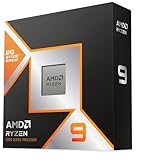
If you want to spend less and mostly game at 1440p or 4K, the outgoing AMD Ryzen 7 7800X3D still delivers most of the experience for less money and runs cooler. Buyers who split time between gaming and serious multi-threaded work should look at the AMD Ryzen 9 9950X3D, which pairs V-Cache with sixteen cores. And if you can wait, the newer AMD Ryzen 7 9850X3D is the incremental refresh that nudges clocks a little higher in the same eight-core envelope.
Frequently Asked Questions
Do I need a new motherboard for the 9800X3D?
No. It uses the AM5 socket, so any X670, B650, X870 or B850 board will run it after a BIOS update. Confirm your board’s current BIOS supports Zen 5 X3D before installing.
How good a cooler does it need?
Because the 120W part runs warmer than the 7800X3D, plan on a 240mm or larger AIO or a high-end dual-tower air cooler to keep it in its comfort zone during long sessions.
Is it worth upgrading from a 7800X3D?
For most people, no. The gaming gains are real but incremental, and at 4K they shrink further. The upgrade makes more sense if you also want the higher clocks for productivity.
Can I overclock it?
Yes. Unlike the first-gen X3D chips, the 9800X3D is unlocked and responds to Precision Boost Overdrive and manual tuning, which is a genuine change from the locked 7800X3D.
Verdict
The Ryzen 7 9800X3D earns its reputation as the default gaming CPU of 2026: it is the fastest mainstream part for frame rates, and the reworked cache design fixes the clock and overclocking compromises that held back the 7800X3D. You pay for it in heat, power and the cost of a proper cooler, and owners of the previous X3D chip can comfortably sit this generation out. For a fresh high-end gaming build, though, it is the safe and satisfying choice.