Key takeaways
- Architecture: The 9800X3D uses Zen 5 with roughly a 15% IPC uplift over the Zen 4 cores in the 7800X3D, plus far stronger AVX-512 throughput.
- Cache placement: AMD moved the 3D V-Cache beneath the compute die on the 9800X3D. The 7800X3D stacks it on top, which caps clocks and heat headroom.
- Clock speeds: 4.7GHz base and 5.2GHz boost on the 9800X3D versus 4.2GHz to 5.0GHz on the 7800X3D — a meaningful jump for an X3D part.
- Overclocking: The 9800X3D is fully unlocked, including multiplier and Precision Boost Overdrive. The 7800X3D is limited to Curve Optimizer undervolting and PBO tuning.
- Power and cooling: The 7800X3D sips power, often under 90W in games. The 9800X3D pulls up to about 162W package power and wants a large tower cooler or 240mm AIO.
- Productivity: Expect a 15-25% advantage for the 9800X3D in rendering, compiling, and encoding — the widest gap between the two.
What's inside
The Ryzen 7 9800X3D and the Ryzen 7 7800X3D are the two most recommended gaming CPUs of the last three years, and in 2026 they are still the chips most builders end up choosing between. Both are 8-core, 16-thread AM5 processors with 96MB of total L3 cache thanks to AMD’s 3D V-Cache, and both will comfortably feed a flagship GPU. The difference is generational: one is Zen 4, the other Zen 5 with a redesigned cache stack.
That distinction matters more now than it did at launch. The 7800X3D has shifted into clearance-and-bundle territory, frequently appearing in discounted CPU-and-motherboard kits, while the 9800X3D has settled in as the default high-end gaming pick. Choosing well is mostly a question of how much you’re paying for the newer chip, what resolution you play at, and whether you do anything demanding outside of games.
As an Amazon Associate we earn from qualifying purchases at no extra cost to you. Product prices and availability are accurate as of the date shown and are subject to change.




⚡ Save on Your Next PC — Amazon Prime
Prime members get fast free shipping on the systems above, plus early access to Prime Day & Black Friday PC deals. New members get a 30-day free trial.
Watch: Ryzen 7 9800X3D vs 7800X3D: Upgrade in 2026? — Video Review
Quick Verdict
The AMD Ryzen 7 9800X3D is the better processor in essentially every measurable way — faster in games, substantially faster in productivity, fully unlocked for overclocking, and easier to cool relative to its clock speeds. Buy it if you want the strongest 8-core gaming CPU available and plan to keep the build for years. The AMD Ryzen 7 7800X3D remains the smarter value, especially in a Micro Center CPU-and-motherboard combo, where the total platform cost often undercuts a bare 9800X3D. If you game at 1440p or 4K, you will rarely feel the gap.
Key Differences
- Architecture: The 9800X3D uses Zen 5 with roughly a 15% IPC uplift over the Zen 4 cores in the 7800X3D, plus far stronger AVX-512 throughput.
- Cache placement: AMD moved the 3D V-Cache beneath the compute die on the 9800X3D. The 7800X3D stacks it on top, which caps clocks and heat headroom.
- Clock speeds: 4.7GHz base and 5.2GHz boost on the 9800X3D versus 4.2GHz to 5.0GHz on the 7800X3D — a meaningful jump for an X3D part.
- Overclocking: The 9800X3D is fully unlocked, including multiplier and Precision Boost Overdrive. The 7800X3D is limited to Curve Optimizer undervolting and PBO tuning.
- Power and cooling: The 7800X3D sips power, often under 90W in games. The 9800X3D pulls up to about 162W package power and wants a large tower cooler or 240mm AIO.
- Productivity: Expect a 15-25% advantage for the 9800X3D in rendering, compiling, and encoding — the widest gap between the two.
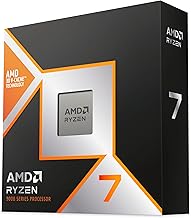
AMD Ryzen 7 9800X3D
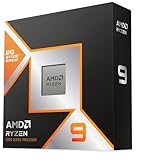
The 9800X3D fixed the one real compromise of the previous generation. By flipping the cache stack, AMD freed the cores to clock like a normal Zen 5 chip while keeping the enormous L3 pool that makes X3D parts so dominant in simulation and strategy titles. In CPU-bound 1080p testing with a top-tier GPU, it averages roughly 8-12% ahead of the 7800X3D, with larger margins in engine-limited games like Microsoft Flight Simulator, Factorio, and heavily modded RPGs. Minimum frame rates and frame pacing improve noticeably too.
It is also the only one of the two worth buying if your PC does double duty. Zen 5’s stronger cores make it a credible workstation chip for streaming, video editing, and code compilation, jobs where the 7800X3D’s low clocks always held it back. The trade-off is heat: it runs hotter under sustained load, so budget for proper cooling and a B850 or X870 board with a decent VRM. On a current AM5 platform with DDR5-6000 CL30 and a modern GPU, nothing in this core count range is faster for gaming.
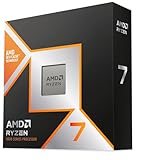
AMD Ryzen 7 7800X3D
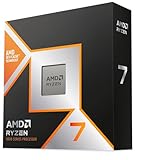
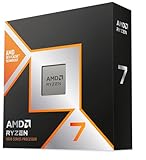
The 7800X3D is still an outstanding gaming CPU and will not bottleneck any reasonable 2026 build at 1440p or above. Its 96MB cache does the heavy lifting, and its efficiency is genuinely impressive — low package power means modest cooling requirements and quiet operation. Bundles such as the Ryzen 7 7800X3D with Cooler Master Hyper Spectrum V3 120mm PWM air cooler solve the cooling question in one purchase, since neither X3D chip ships with a heatsink.
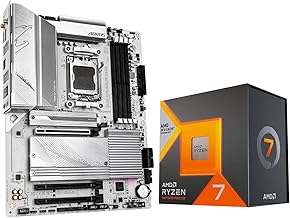
Value is where it wins outright. The Micro Center 7800X3D with GIGABYTE B850 Gaming WF combo pairs it with a modern DDR5, PCIe 5.0 board, while the 7800X3D with GIGABYTE B650 AORUS Elite AX ICE kit adds triple M.2 and Wi-Fi 6E in a white build-friendly design. Either lands you on the same AM5 socket AMD has committed to supporting into 2027 and beyond, so a future CPU upgrade stays on the table.
Which Should You Buy?
- For competitive
Affiliate disclosure. As an Amazon Associate we earn from qualifying purchases at no extra cost to you. Prices accurate as of the date shown.Ryzen 7 9800X3D vs 7800X3D: Upgrade in 2026?Check price on Amazon