Key takeaways
- 8000G APUs need no graphics card, enabling genuinely capable budget and compact builds.
- Future-proof AM5 platform with DDR5 and a long upgrade path.
- 9800X3D leads in gaming thanks to 3D V-Cache, ideal paired with a strong GPU.
- Wide price range covers everything from entry APUs to enthusiast gaming chips.
What's inside
This guide compares published specifications, integrated-graphics capability, platform requirements and intended use across the listed AMD processors. It separates Ryzen 8000G APUs from Ryzen 9000 and Ryzen 7000 CPUs so each option is judged for the build it actually fits.
This page uses published product details and current availability; it does not claim hands-on testing where no test record is available.
As an Amazon Associate we earn from qualifying purchases at no extra cost to you. Product prices and availability are accurate as of the date shown and are subject to change.
Quick Comparison
| Processor family | Main distinction |
| Ryzen 8000G | Integrated Radeon graphics for builds without a discrete GPU |
| Ryzen 9000 | CPU-focused AM5 options normally paired with a discrete GPU |
| Ryzen 7000 | Earlier AM5 alternatives that may offer better value |
Who Should Buy — and Who Should Skip?
Buy: Choose an 8000G APU for a compact AM5 build that needs usable integrated graphics now.
Skip: Skip an 8000G chip if you already own a strong discrete GPU and want maximum CPU gaming performance.




🎮 Get More From Your Setup — Free
Prime Gaming gives you free PC games every month, in-game loot, and a free Twitch channel sub — plus fast free shipping on all the gear above. New members get a 30-day free trial.
Watch: What to Compare Before Choosing
Ryzen 8000G and Ryzen 9000 Platform Differences
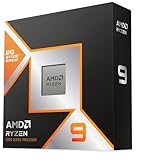
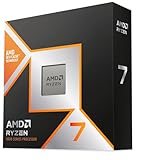
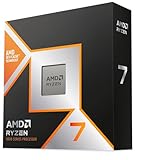
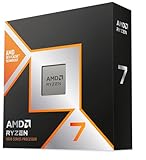
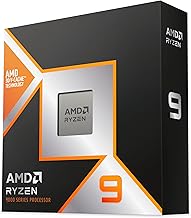
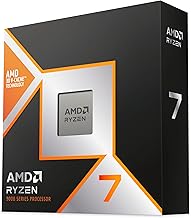
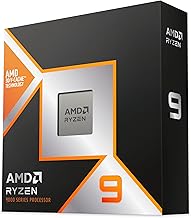
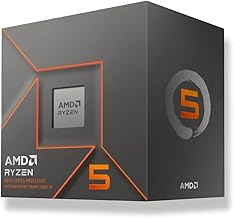
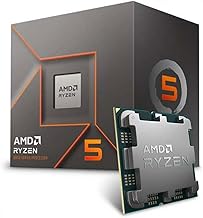
All of these are standard AM5 socket processors, so they slot into the same modern motherboards and use DDR5 memory — a platform with a long upgrade runway ahead. The Ryzen 7 8700G and Ryzen 5 8600G and 8500G are the APUs, integrating Radeon 700M-class graphics that can run esports and lighter titles with no separate GPU at all, making them ideal for small-form-factor and cost-conscious builds. The 9000-series chips here — the Ryzen 5 9600X, Ryzen 7 9700X, and the gaming-focused Ryzen 7 9800X3D — are built on the newer Zen 5 architecture and expect a discrete graphics card. Cooler compatibility carries over across AM5, so upgrading later is straightforward.
Performance
The right choice hinges entirely on whether you’re using a graphics card. If you want a capable system with no discrete GPU, the Ryzen 7 8700G is the star — its integrated Radeon 780M handles 1080p esports and older AAA titles at playable frame rates, something no 9000-series chip can match without a separate card. For pure gaming with a discrete GPU, however, the 9000 series pulls decisively ahead. The Ryzen 7 9800X3D is the standout gaming CPU, its 3D V-Cache delivering class-leading frame rates while running efficiently. The Ryzen 5 9600X and Ryzen 7 9700X offer excellent all-round Zen 5 performance for gaming and productivity at more accessible prices. In short: APUs for GPU-free builds, X3D for gaming, X-series for balanced value.
Pros & Cons
- 8000G APUs need no graphics card, enabling genuinely capable budget and compact builds.
- Future-proof AM5 platform with DDR5 and a long upgrade path.
- 9800X3D leads in gaming thanks to 3D V-Cache, ideal paired with a strong GPU.
- Wide price range covers everything from entry APUs to enthusiast gaming chips.
- Naming is confusing — 8000G APUs and 9000 CPUs serve very different purposes.
- APU gaming is limited to esports and lighter titles without a discrete GPU.
- X3D premium means the top gaming chip costs more than balanced alternatives.
Alternatives to Consider
If you’re building purely for gaming with a discrete GPU and want the best frames per dollar, the 9800X3D is worth the premium, but the 9600X or 9700X deliver most of the experience for less. Buyers wanting integrated graphics on the newest architecture might also watch for newer APU releases. And for those not tied to AMD, Intel’s competing chips are worth a cross-shop — but the AM5 platform’s longevity is a strong point in AMD’s favor.
Frequently Asked Questions
What’s the difference between the 8000G and 9000 series?
The 8000G chips are APUs with strong integrated graphics for builds without a discrete GPU. The 9000-series are newer Zen 5 CPUs expecting a separate graphics card and offering higher gaming and productivity performance.
Can the Ryzen 7 8700G game without a graphics card?
Yes. Its integrated Radeon 780M handles 1080p esports titles and many older or lighter AAA games at playable frame rates, which is the whole appeal of an APU for budget builds.
Is the 9800X3D worth it over the 9700X for gaming?
For maximum frame rates, yes — the 9800X3D’s 3D V-Cache gives it a real gaming edge. If your budget is tighter or you also do productivity work, the 9700X is an excellent, more affordable all-rounder.
Do these chips use the same motherboard?
Yes, all are AM5 socket and work with DDR5 memory, so they share compatible motherboards. This makes it easy to start with an APU and later add a graphics card or upgrade the CPU.
Verdict
Your pick comes down to graphics. For a capable system without a discrete card, the Ryzen 7 8700G APU is the clear choice. If you’re pairing with a graphics card and prioritize gaming, the Ryzen 7 9800X3D is the standout, while the Ryzen 5 9600X offers the best balance of price and performance. Decide on your GPU plans first, and the right chip becomes obvious.