Key takeaways
- Near-flagship gaming and top-tier multi-threaded performance in one chip
- Sixteen cores handle rendering, encoding and compilation with ease
- Second-gen V-Cache keeps 1% lows close to the dedicated gaming part
- Fits the long-lived AM5 platform for future upgrades
What's inside
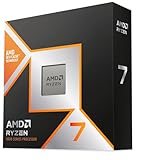
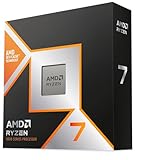
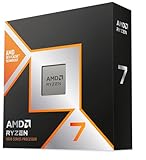
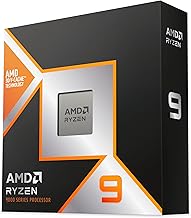
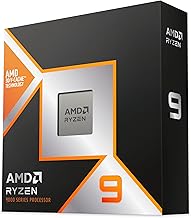
The AMD Ryzen 9 9950X3D is the flagship that tries to end the old compromise between gaming and productivity. It packs sixteen Zen 5 cores and thirty-two threads across two core complexes, with second-generation 3D V-Cache stacked under one of them, so one chiplet is optimized for cache-hungry games while the other clocks high for heavily threaded work. In theory you get 9800X3D-class gaming and 9950X-class rendering in a single socket.
This is a processor for people who genuinely do both jobs on the same machine: creators who render, compile or run simulations by day and play demanding titles at night, and enthusiasts who simply want the best of everything and are willing to pay for it. Pure gamers will find cheaper parts that match its frame rates, so the 9950X3D only makes financial sense when the extra cores earn their keep.
As an Amazon Associate we earn from qualifying purchases at no extra cost to you. Product prices and availability are accurate as of the date shown and are subject to change.





⚡ Save on Your Next PC — Amazon Prime
Prime members get fast free shipping on the systems above, plus early access to Prime Day & Black Friday PC deals. New members get a 30-day free trial.
Watch: Ryzen 9 9950X3D Review — Video Review
Design & Build
It is an AM5 chip with a 170W TDP, and the dual-CCD design means AMD’s chipset software has to steer games onto the V-Cache die and productivity threads onto the frequency die. That scheduling works well in 2026 but is a moving part that a single-CCD chip like the 9800X3D never has to worry about. As with the rest of the X3D range there is no included cooler, and the high power ceiling means a strong 280mm or 360mm AIO is the sensible pairing.
Performance
In multi-threaded workloads the 9950X3D is a monster, trading blows with the non-3D 9950X in rendering, encoding and compilation while pulling well ahead of any eight-core part. In games it lands within a whisker of the 9800X3D once threads are parked correctly, so you rarely give up meaningful frame rate for all those extra cores.
The caveats are cost, heat and the reliance on correct thread scheduling. A few titles or misbehaving launchers can occasionally place a game on the wrong die and cost you performance until drivers or a game update sort it out, something the simpler 9800X3D avoids entirely. It is also considerably more expensive, so if you never touch heavy multi-threaded software you are paying for silicon you will not use.
Pros & Cons
- Near-flagship gaming and top-tier multi-threaded performance in one chip
- Sixteen cores handle rendering, encoding and compilation with ease
- Second-gen V-Cache keeps 1% lows close to the dedicated gaming part
- Fits the long-lived AM5 platform for future upgrades
- Expensive, and overkill if you only game
- Relies on chipset scheduling to route games to the cache die
- 170W part runs hot and needs a large AIO plus no bundled cooler
Alternatives to Consider
If gaming is your only real priority, the AMD Ryzen 7 9800X3D delivers essentially the same frame rates for far less money. Creators who do not need cache-boosted gaming can save with the AMD Ryzen 9 9950X, which offers the same sixteen cores without the V-Cache premium. And the AMD Ryzen 9 9900X3D sits in the middle with twelve cores, a reasonable compromise for lighter multi-threaded loads.
Frequently Asked Questions
Is the 9950X3D worth it over the 9800X3D for gaming?
For gaming alone, no. The two are effectively tied in most titles, so you only pay the premium if you also need the extra eight cores for serious productivity work.
Does the dual-die design cause problems?
Usually not. AMD’s software routes games to the cache die reliably, but occasional titles or launchers can land on the wrong die until a driver or game update fixes it.
What cooler should I use?
Given the 170W rating, a 280mm or 360mm AIO is the practical choice to keep clocks high under sustained multi-threaded loads. No cooler is included.
Can it handle 4K gaming and streaming at once?
Comfortably. The spare cores make encoding a stream or running background tasks alongside a game far less disruptive than on an eight-core CPU.
Verdict
The Ryzen 9 9950X3D is the do-everything flagship, and it largely succeeds: you get gaming performance within touching distance of the 9800X3D plus genuine sixteen-core productivity muscle. The price, the heat and the dependence on thread scheduling keep it from being a blanket recommendation, and gamers who never render will be better served elsewhere. But for the creator who also games hard, this is the single best chip to build around.