Key takeaways
- Frequency: measured in MHz or MT/s, higher is generally faster. A 6000MHz kit moves data more quickly than a 4800MHz kit, and on many platforms that shows up as higher minimum frame rates.
- CAS latency (CL): the responsiveness of the memory. Lower is better at a given speed, so a 6000MHz CL30 kit is snappier than a 6000MHz CL40 kit.
- The sweet spot: for most 2026 gaming builds, 6000MHz at CL30 to CL36 offers the best balance of speed, stability, and price, which is why so many of the kits above cluster around that specification.
What's inside
- Watch: How Much RAM Do You Need for Gaming in 2026? — Video Review
- 16GB vs 32GB: What Games Actually Use
- Speed and Timings Matter on DDR5
- Why Dual-Channel Configuration Is Essential
- Enable XMP or EXPO for Rated Speed
- Two Sticks vs Four, and Future Upgrades
- Tips
- Related Guides
- Frequently Asked Questions
- Conclusion
- Related Articles
- Related Guides
RAM is where a lot of gamers either overspend or under-provision, because the advice online has not kept pace with how games actually behave in 2026. For years 16GB was the safe default, but modern titles, background applications, and the habit of leaving a browser with a dozen tabs open while you play have quietly pushed the practical requirement upward. At the same time, DDR5 has matured, prices have settled, and the speed and timing of your memory now have a measurable effect on frame rates, particularly on AMD platforms where the memory controller is closely tied to the chip’s internal fabric.
- Watch: How Much RAM Do You Need for Gaming in 2026? — Video Review
- 16GB vs 32GB: What Games Actually Use
- Speed and Timings Matter on DDR5
- Why Dual-Channel Configuration Is Essential
- Enable XMP or EXPO for Rated Speed
- Two Sticks vs Four, and Future Upgrades
- Tips
- Related Guides
- Frequently Asked Questions
- Conclusion
- Related Articles
- Related Guides
This guide cuts through the confusion. You will learn how much memory today’s games really use, why capacity is only half the story and speed is the other half, and how dual-channel configuration can matter more than raw gigabytes. We will also cover the difference between running two sticks and four, and how to read a memory kit’s specifications so you buy the right capacity at the right speed for your motherboard. Along the way we have picked out kits that represent smart choices at the capacities most gamers should target.
As an Amazon Associate we earn from qualifying purchases at no extra cost to you. Product prices and availability are accurate as of the date shown and are subject to change.


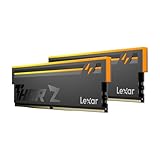


The memory kits above are our recommended picks for gaming builds. A 32GB dual-channel kit like the CORSAIR Vengeance RGB DDR5 32GB (2x16GB) at 6000MHz CL36 or the CORSAIR Vengeance DDR5 32GB up to 6400MHz is the capacity most people should aim for today, while a 16GB kit such as the Patriot Viper Venom DDR5 16GB 6000MT/s CL36 remains a sensible budget option. The Lexar Thor Z RGB 32GB 6000MHz CL38 and Corsair Vengeance RGB RS 16GB round out solid mid-range choices.
⚡ Save on Your Next PC — Amazon Prime
Prime members get fast free shipping on the systems above, plus early access to Prime Day & Black Friday PC deals. New members get a 30-day free trial.
Watch: How Much RAM Do You Need for Gaming in 2026? — Video Review
16GB vs 32GB: What Games Actually Use
Most current games still fit within 16GB of system memory when it is the only thing running, but that is an increasingly narrow assumption. The moment you add a browser, a chat client, a game launcher, and a streaming or capture tool, a 16GB system starts swapping to disk, which causes stutters and longer load times. 32GB has become the comfortable target for 2026: it gives games room to breathe, absorbs everything you leave open in the background, and provides headroom for the more demanding titles that now routinely allocate 12GB or more on their own. For a new build, 32GB is the capacity we recommend as the default.
Speed and Timings Matter on DDR5
- Frequency: measured in MHz or MT/s, higher is generally faster. A 6000MHz kit moves data more quickly than a 4800MHz kit, and on many platforms that shows up as higher minimum frame rates.
- CAS latency (CL): the responsiveness of the memory. Lower is better at a given speed, so a 6000MHz CL30 kit is snappier than a 6000MHz CL40 kit.
- The sweet spot: for most 2026 gaming builds, 6000MHz at CL30 to CL36 offers the best balance of speed, stability, and price, which is why so many of the kits above cluster around that specification.
Why Dual-Channel Configuration Is Essential
How you install your memory matters as much as how much you buy. Running two matched sticks in the correct slots enables dual-channel mode, which effectively doubles the memory bandwidth available to the CPU compared with a single stick. A single 32GB module will run in slower single-channel mode and can cost you a noticeable chunk of performance, especially in games that lean on integrated graphics or a tightly coupled memory controller. This is why the recommended kits ship as matched pairs: buying a 2x16GB kit rather than a single 32GB stick guarantees dual-channel operation out of the box.
Enable XMP or EXPO for Rated Speed
Here is the step that catches out a huge number of builders: memory does not run at its advertised speed automatically. Out of the box, a motherboard defaults to a conservative baseline like 4800MHz to guarantee compatibility. To unlock the 6000MHz CL36 you paid for, you enable the memory’s overclocking profile in the BIOS, called XMP on Intel platforms and EXPO on AMD. It is a single toggle, but skipping it leaves fast RAM running slow and quietly robs you of frames. Always boot into the BIOS after a build, enable the profile, and confirm the reported speed matches the kit’s rating.
Two Sticks vs Four, and Future Upgrades
For DDR5 specifically, two sticks are usually easier to run at high speed than four. Populating all four slots increases the electrical load on the memory controller and can force you to drop the frequency for stability. If you want 32GB, a single 2x16GB kit is the cleaner choice than two 2x8GB kits, and it leaves the option to add a second matched kit later if your board handles it well. Buying the capacity you need in the fewest sticks keeps the system stable and preserves an upgrade path without immediately filling every slot.
Tips
- Always buy memory as a matched kit rather than mixing single sticks, so the modules are tested to run together at the rated speed.
- Install the two sticks in the slots your motherboard manual specifies for dual-channel, usually slots two and four.
- Enable XMP or EXPO in the BIOS immediately after building, then verify the speed in a monitoring tool.
- Prioritise a 32GB kit at 6000MHz CL36 over a faster but tighter-budget 16GB kit if you multitask or keep apps open while gaming.
Frequently Asked Questions
Is 16GB still enough for gaming in 2026?
It can be if gaming is all the system does, but it leaves little headroom. The moment you add background apps, streaming tools, or many browser tabs, 16GB starts to stutter. For a new build, 32GB is the safer and more future-proof target.
Does RAM speed really affect frame rates?
Yes, particularly on AMD platforms where the memory speed is linked to the CPU’s internal fabric. Moving from a slow default to a 6000MHz CL30 to CL36 kit measurably improves minimum frame rates and smoothness in many titles.
Should I get 64GB for gaming?
For pure gaming, no; 64GB is overkill and the money is better spent elsewhere. It only makes sense if you also do heavy content creation, run virtual machines, or work with large datasets alongside your games.
Why is my new RAM running slower than advertised?
Because the XMP or EXPO profile is not enabled. The motherboard boots at a conservative default speed until you turn on the memory’s rated profile in the BIOS. It is a one-time setting that unlocks the full speed you paid for.
Conclusion
For a 2026 gaming build, target 32GB of DDR5 in a matched dual-channel kit running at 6000MHz with timings around CL30 to CL36, and remember to enable XMP or EXPO so it actually runs at that speed. That combination of capacity, speed, and correct configuration gives games room to breathe, keeps background tasks from causing stutter, and extracts the frame-rate benefit that fast, low-latency memory provides. Buy the right kit once and you will not think about memory again for years.