Key takeaways
- Higher frame rates lower input lag: the faster your GPU produces frames, the sooner your latest action appears, so a higher and more stable frame rate directly reduces the delay you feel.
- Cap slightly below your refresh rate: setting a frame limit a few frames under your monitor’s maximum keeps the GPU from maxing out and, combined with adaptive sync, avoids the latency penalty of traditional V-Sync.
- Avoid uncapped frames with V-Sync on: classic V-Sync adds noticeable lag; use an in-game frame cap plus FreeSync or G-Sync instead for smooth, tear-free, low-latency motion.
What's inside
Input lag is the delay between the moment you move your mouse or press a key and the moment that action appears on screen. It is measured in milliseconds, and while a few milliseconds sound trivial, they are the difference between a shot that lands and one that misses in a fast game. Unlike frame rate, input lag is not a single number you can read off a spec sheet; it is the sum of delays contributed by your peripheral, your PC, the game’s settings, and your display. Reducing it is about attacking each link in that chain, and the good news is that most of the fixes cost nothing.
This guide walks through where input lag actually comes from and how to cut it at every stage, from the mouse in your hand to the pixels on your monitor. You will learn which settings genuinely help, which do more harm than good, and why a fast, responsive mouse is the foundation the rest of the chain is built on. We will separate the changes that make a measurable difference from the placebo tweaks that get passed around online. To ground the peripheral side of the equation, we have picked out gaming mice known for low, consistent latency.
As an Amazon Associate we earn from qualifying purchases at no extra cost to you. Product prices and availability are accurate as of the date shown and are subject to change.

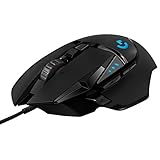


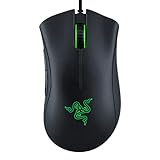
The gaming mice above are our recommended picks for anyone serious about a responsive, low-latency setup. A high-end wireless option like the Logitech G PRO X2 SUPERSTRIKE or the Razer Basilisk V3 X HyperSpeed delivers latency indistinguishable from wired, while the Logitech G305 Lightspeed offers proven low-lag wireless on a budget. Wired choices like the Logitech G502 Hero and Razer Basilisk V3 remove the wireless variable entirely for players who want the simplest path to consistency.
⚡ Save on Your Next PC — Amazon Prime
Prime members get fast free shipping on the systems above, plus early access to Prime Day & Black Friday PC deals. New members get a 30-day free trial.
Watch: How to Reduce Input Lag in Games — Video Review
Understand Where Input Lag Comes From
Input lag is not one delay but a chain of them added together. Your mouse or keyboard takes time to register and transmit the input, your PC takes time to process it and render the resulting frame, and your monitor takes time to display that frame. Each stage contributes a few milliseconds, and the total is what you feel as responsiveness. Because it is cumulative, there is no single magic setting; the way to a snappy system is to trim delay at every stage. Understanding this chain is what lets you spend your effort where it actually helps rather than chasing myths.
Raise and Cap Your Frame Rate Sensibly
- Higher frame rates lower input lag: the faster your GPU produces frames, the sooner your latest action appears, so a higher and more stable frame rate directly reduces the delay you feel.
- Cap slightly below your refresh rate: setting a frame limit a few frames under your monitor’s maximum keeps the GPU from maxing out and, combined with adaptive sync, avoids the latency penalty of traditional V-Sync.
- Avoid uncapped frames with V-Sync on: classic V-Sync adds noticeable lag; use an in-game frame cap plus FreeSync or G-Sync instead for smooth, tear-free, low-latency motion.
Tune Your In-Game and Driver Settings
Several settings have an outsized effect on latency. Enable low-latency modes where your game or graphics driver offers them, as these reduce the queue of pre-rendered frames waiting to be displayed. Turn off or reduce heavy post-processing effects like motion blur, which add both rendering time and visual smearing. Play in exclusive fullscreen rather than windowed or borderless where the option exists, since fullscreen can bypass extra compositing delay. None of these cost performance elsewhere in a way you will notice, and together they meaningfully shorten the path from input to screen.
Optimise Your Display
Your monitor is often a hidden source of lag. Switch it into its gaming or low-latency picture mode, which disables the image-processing features that add delay in favour of drawing frames as fast as possible. Turn off any dynamic contrast, noise reduction, or motion-smoothing options, as these buffer frames to process them. A high refresh rate helps here too, because a screen that updates more often puts your newest frame in front of you sooner. Enabling adaptive sync keeps everything tear-free without the latency that older synchronisation methods introduced.
Choose a Low-Latency Mouse
Your peripheral is the very first link in the chain, and a sluggish or inconsistent one undermines everything downstream. A good gaming mouse combines a fast, accurate sensor with a high polling rate and, if wireless, a low-latency connection engineered specifically for gaming. Modern wireless gaming mice have effectively closed the gap with wired ones, so the old advice to always go wired is out of date, provided you buy a purpose-built model. Wired mice remain a foolproof choice because they remove the wireless variable entirely. Either way, starting the chain with a responsive mouse means the effort you put into the rest of your settings is not wasted at the very first step.
Tips
- Cap your frame rate a few frames below your monitor’s refresh rate and pair it with adaptive sync for the lowest-latency smooth experience.
- Enable your GPU driver’s low-latency mode and your monitor’s gaming picture mode; both trim delay for free.
- Turn off motion blur and heavy post-processing, which add rendering time without improving how the game plays.
- Use a wired connection or a purpose-built low-latency wireless gaming mouse rather than a generic office mouse.
Frequently Asked Questions
Does a wireless mouse add noticeable input lag?
Not if it is a modern gaming model. Purpose-built low-latency wireless mice have closed the gap with wired ones to the point where the difference is imperceptible in play. A generic office wireless mouse, however, can add real, noticeable delay.
Is V-Sync bad for input lag?
Traditional V-Sync adds noticeable latency because it holds frames back to prevent tearing. The better approach is to cap your frame rate slightly below your refresh rate and use FreeSync or G-Sync, which gives you tear-free motion without the lag penalty.
Will a higher refresh rate monitor reduce my input lag?
Yes, to a degree. A higher refresh rate means the screen redraws more frequently, so your newest frame reaches your eyes sooner. Combined with a monitor’s low-latency gaming mode, it shortens the final link in the input chain.
Does frame rate really affect how responsive a game feels?
Significantly. A higher and more stable frame rate means less time between your action and the frame that reflects it, which is why raising and stabilising your frame rate is one of the most effective ways to reduce the lag you feel.
Conclusion
Reducing input lag is about trimming delay at every link in the chain rather than finding one miracle setting. Start with a responsive low-latency mouse, raise and cap your frame rate sensibly, enable low-latency modes in your driver and game, and put your monitor into its gaming picture mode with adaptive sync on. Each change shaves off a few milliseconds, and together they add up to a system that feels immediate and precise, turning your inputs into on-screen action with as little delay as your hardware allows.