Key takeaways
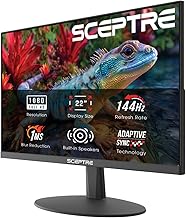
- Budget/entry: the Sceptre 22″ 144Hz monitor is an easy, affordable jump from 60Hz.
- Balanced 1440p: the Samsung Odyssey G5 (G51F) 180Hz adds sharper resolution without sacrificing speed.
- Competitive esports: the ASUS 300Hz Fast IPS and Dell SE2726HG 240Hz are built for players who need every millisecond.
What's inside
- Watch: How to Reduce Input Lag While Gaming — Video Review
- Understand Where Input Lag Comes From
- Prioritize a Low-Latency, High-Refresh Monitor
- Enable the Right Sync Technology
- Optimize In-Game and System Settings
- Don’t Overlook Cables, Ports, and Peripherals
- Tips
- Related Guides
- Frequently Asked Questions
- Conclusion
- Related Articles
- Related Guides
Input lag is the invisible enemy of competitive and fast-paced gaming. It’s the delay between the moment you press a button or move your mouse and the moment that action appears on screen. Even a few extra milliseconds can mean the difference between landing a headshot and getting fragged, or pulling off a perfect combo versus eating a punish. Unlike frame rate, which is easy to see on an FPS counter, input lag is felt rather than measured, which is why so many gamers overlook it until they upgrade their setup and immediately notice how much “snappier” everything feels.
- Watch: How to Reduce Input Lag While Gaming — Video Review
- Understand Where Input Lag Comes From
- Prioritize a Low-Latency, High-Refresh Monitor
- Enable the Right Sync Technology
- Optimize In-Game and System Settings
- Don’t Overlook Cables, Ports, and Peripherals
- Tips
- Related Guides
- Frequently Asked Questions
- Conclusion
- Related Articles
- Related Guides
In this guide, we’ll break down where input lag actually comes from, which settings and hardware choices matter most, and how to systematically eliminate delay from your gaming setup. We’ll also point you toward monitors that are built specifically to minimize lag, since your display is often the single biggest bottleneck in the chain.
As an Amazon Associate we earn from qualifying purchases at no extra cost to you. Product prices and availability are accurate as of the date shown and are subject to change.


🎮 Get More From Your Setup — Free
Prime Gaming gives you free PC games every month, in-game loot, and a free Twitch channel sub — plus fast free shipping on all the gear above. New members get a 30-day free trial.
Watch: How to Reduce Input Lag While Gaming — Video Review
Understand Where Input Lag Comes From
Total input lag is the sum of delays across several stages: your input device (mouse/keyboard/controller), the game engine’s processing time, your PC’s rendering pipeline, and finally your monitor’s signal processing and pixel response. Most gamers focus only on their GPU or CPU, but a slow monitor can add 20–50ms on its own, dwarfing gains from a faster processor. Diagnosing lag means looking at the whole chain, not just one link.
Prioritize a Low-Latency, High-Refresh Monitor
Refresh rate and response time are the two specs that matter most for display-related lag. A 60Hz panel refreshes every 16.7ms; a 144Hz panel refreshes every 6.9ms; a 240Hz or 300Hz panel drops that to under 5ms. Pair that with a fast pixel response time (1ms or lower) and you cut both the wait for a new frame and the ghosting between frames.
- Budget/entry: the Sceptre 22″ 144Hz monitor is an easy, affordable jump from 60Hz.
- Balanced 1440p: the Samsung Odyssey G5 (G51F) 180Hz adds sharper resolution without sacrificing speed.
- Competitive esports: the ASUS 300Hz Fast IPS and Dell SE2726HG 240Hz are built for players who need every millisecond.
Enable the Right Sync Technology
V-Sync reduces screen tearing but can add noticeable lag because it forces the GPU to wait for the monitor’s refresh cycle. Instead, use adaptive sync technologies like AMD FreeSync or NVIDIA G-SYNC, which dynamically match the monitor’s refresh rate to your GPU’s frame output. This eliminates tearing without the queuing delay that traditional V-Sync introduces. Most modern monitors, including budget options, now support some form of FreeSync.
Optimize In-Game and System Settings
Software settings can add or remove lag just as much as hardware:
- Cap your frame rate slightly below your monitor’s max refresh rate to avoid queued frames.
- Disable motion blur, film grain, and other post-processing effects that add render time.
- Turn off V-Sync and triple buffering unless you’re experiencing tearing.
- Set your GPU’s low-latency mode (NVIDIA Reflex, AMD Anti-Lag, or Ultra Low Latency mode) to on.
Don’t Overlook Cables, Ports, and Peripherals
A wireless mouse with an outdated 2.4GHz receiver or a worn-out cable can silently add latency. Use a wired connection or a modern low-latency wireless mouse, and connect your monitor via DisplayPort when possible, as it generally handles high refresh rates more efficiently than HDMI on older monitors. Also check that your monitor’s “Game Mode” or equivalent picture setting is enabled, since some factory picture modes add extra processing for image enhancement at the cost of latency.
Tips
- Always test games in “Game Mode” or “Fast” response mode on your monitor’s on-screen display.
- Overdrive/response-time settings can reduce ghosting but may introduce overshoot artifacts if set too aggressively — find the middle setting first.
- Keep GPU drivers updated; driver-level optimizations for low latency modes are updated regularly.
- If you’re on a budget, a higher refresh rate monitor usually delivers a bigger felt improvement than a marginally faster GPU.
Frequently Asked Questions
Does a higher refresh rate always mean lower input lag?
Generally yes, since higher refresh rates reduce the time between frame updates. However, actual input lag also depends on the monitor’s internal processing time, so it’s worth checking independent reviews rather than refresh rate alone.
Is input lag the same as response time?
No. Response time measures how quickly a pixel changes color (affecting motion blur/ghosting), while input lag measures the delay between your action and its appearance on screen. Both contribute to how “responsive” a display feels, but they’re distinct metrics.
Do curved monitors add input lag?
Not inherently. A curved panel like the Samsung Essential S3 has the same signal processing pipeline as a flat one; curvature affects immersion and viewing angles, not latency.
Can a 60Hz monitor still work for casual gaming?
Yes, for slower-paced or single-player games, 60Hz is perfectly playable. Upgrading to 120Hz+ mainly benefits fast-paced shooters, fighting games, and competitive titles where reaction time matters most.
Conclusion
Reducing input lag isn’t about chasing a single miracle setting — it’s about tightening every link in the chain, from your peripherals and PC settings to, most importantly, your monitor’s refresh rate and response time. Start with the display, since it’s often the largest and most fixable source of delay, then fine-tune your sync settings and in-game options to match.