Key takeaways
- Prioritize the GPU above all else: At this budget the graphics card determines almost everything about your gaming experience. A used-market RX 580 8GB or RTX 2060 will outperform a newer-sounding entry card like a GT 1030 by a factor of three or more in real games.
- Ignore CPU marketing names: “Core i7” means nothing without a generation number. A 7th-gen i5 from 2017 and a modern Ryzen 5 5600GT are worlds apart. Look for the full model string and check its release year before you buy.
- 16GB RAM is the floor, not a bonus: Modern titles routinely allocate 12GB or more. Any sub-$500 build advertising 8GB should be skipped unless you’re certain you’ll upgrade immediately — and that upgrade eats into your budget.
- Check storage type and capacity: A 512GB SSD is workable; a 256GB drive fills up after three or four installs. NVMe beats SATA for load times, and adding a second drive later is one of the cheapest meaningful upgrades you can make.
- Understand what “Renewed” means: Refurbished machines can be excellent value, but verify the warranty length and return window. Budget prebuilts also frequently ship with underpowered PSUs, so factor in a possible $50–70 power supply swap if you plan to upgrade the GPU down the line.
What's inside
Shopping for a gaming PC under $500 in 2026 means navigating a market crowded with vague listings, recycled parts, and specs that sound impressive until you look closely. Sellers lean on phrases like “Core i7” or “8GB graphics” without telling you the generation of the CPU or whether that GPU is a modern card or a decade-old workstation part. The result is a lot of buyers spending real money on machines that stutter in the games they actually want to play.
This guide cuts through that. Below we’ve assembled the budget prebuilts that genuinely deliver playable frame rates for the money, explained what specs matter at this price point, and flagged the compromises you should expect. Every pick here is a realistic sub-$500 buy — no bait-and-switch configurations, no “starting at” pricing that balloons at checkout.
As an Amazon Associate we earn from qualifying purchases at no extra cost to you. Product prices and availability are accurate as of the date shown and are subject to change.


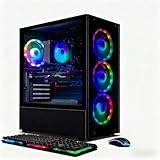


⚡ Save on Your Next PC — Amazon Prime
Prime members get fast free shipping on the systems above, plus early access to Prime Day & Black Friday PC deals. New members get a 30-day free trial.
Watch: Best Gaming PC Under $500 — Video Review
How to Choose Gaming PC Under $500
- Prioritize the GPU above all else: At this budget the graphics card determines almost everything about your gaming experience. A used-market RX 580 8GB or RTX 2060 will outperform a newer-sounding entry card like a GT 1030 by a factor of three or more in real games.
- Ignore CPU marketing names: “Core i7” means nothing without a generation number. A 7th-gen i5 from 2017 and a modern Ryzen 5 5600GT are worlds apart. Look for the full model string and check its release year before you buy.
- 16GB RAM is the floor, not a bonus: Modern titles routinely allocate 12GB or more. Any sub-$500 build advertising 8GB should be skipped unless you’re certain you’ll upgrade immediately — and that upgrade eats into your budget.
- Check storage type and capacity: A 512GB SSD is workable; a 256GB drive fills up after three or four installs. NVMe beats SATA for load times, and adding a second drive later is one of the cheapest meaningful upgrades you can make.
- Understand what “Renewed” means: Refurbished machines can be excellent value, but verify the warranty length and return window. Budget prebuilts also frequently ship with underpowered PSUs, so factor in a possible $50–70 power supply swap if you plan to upgrade the GPU down the line.
The Best Picks Reviewed
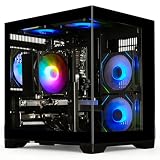
STGAubron Gaming PC (i7 / RX 580 8G)
The RX 580 8GB remains the value king of budget gaming, comfortably handling 1080p at high settings in most competitive titles and medium settings in newer releases. Paired with 16GB of RAM and a 512GB SSD, this is the most well-rounded configuration on the list for players who want to actually max out esports games rather than merely launch them.
STGAubron Gaming PC (R5 2600 / RTX 2060 6G)
The RTX 2060 is the strongest GPU you’ll realistically find near this price and unlocks DLSS support, hardware ray tracing, and NVENC encoding for streaming. The Ryzen 5 2600 is dated but its six cores keep pace well enough that the GPU stays the bottleneck — which is exactly what you want in a gaming build.
YAWYORE Gaming PC (R5 5600GT / 1TB NVMe)
This one leans on integrated Radeon graphics rather than a discrete card, which caps you at lower settings in demanding titles, but the 5600GT is a genuinely modern six-core CPU and the 1TB NVMe drive is the most generous storage here. It’s the smartest buy if you play mostly esports and indie games and want a platform you can drop a real GPU into later.
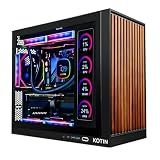
YAWYORE Gaming PC (Ryzen 7 5700X / RTX 5060)
The most capable machine on this list by a wide margin, pairing eight Zen 3 cores with a current-generation RTX 5060 that brings DLSS 4 and solid 1440p performance. Expect this to sit at or slightly above the $500 line depending on the day — if you can stretch to it during a sale, it’s the only pick here that won’t need a GPU upgrade within two years.
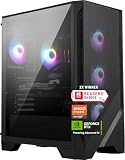
suevery Prebuilt Gaming Desktop
A no-frills entry-level tower that gets you into PC gaming at the lowest possible cost, suitable for older titles, emulation, and lighter competitive shooters. Treat it as a starting chassis rather than a finished build — the value here is in having a functional platform you can incrementally improve.
Frequently Asked Questions
Can a $500 gaming PC run modern AAA games?
Yes, at 1080p with medium settings and some upscaling enabled. Machines with an RX 580 or RTX 2060 will hold 60fps in most 2024–2025 titles once you dial back shadows and ray tracing; expect to make more compromises with 2026’s heaviest releases.
Is a renewed or refurbished gaming PC safe to buy?
Generally yes, provided it’s covered by a warranty and a clear return policy. The main risks are worn thermal paste and aging power supplies — both cheap to address — rather than outright failure. Read recent reviews for the specific seller before committing.
Should I build my own PC instead?
Under $500 in 2026, prebuilts often win because sellers source GPUs and cases in bulk at prices individuals can’t match. Building becomes clearly better above roughly $700, where component choice and quality control matter more than raw cost savings.
What should I upgrade first?
RAM if you’re at 8GB, storage if you’re at 256GB, then the power supply, and finally the GPU. Upgrading the graphics card without first confirming your PSU has the wattage and connectors to support it is the most common mistake budget buyers make.
Final Thoughts
For most buyers the STGAubron RX 580 8G build is the sweet spot — it delivers the best frames-per-dollar on this list with no glaring weak point. If you can find the STGAubron RTX 2060 configuration in stock, its DLSS support and ray tracing hardware make it the more future-proof choice, while the YAWYORE Ryzen 7 5700X / RTX 5060 is worth stretching your budget for if a sale brings it into range. All three will get you gaming properly; the cheaper options on this list are best treated as upgrade platforms rather than finished machines.