Key takeaways
- Prioritize the GPU: The graphics card determines roughly 70% of your gaming performance. Under $1,000, an RTX 5060 Ti or RTX 5070 should be your target — anything older or lower-tier will struggle with modern titles at 1440p, and last-gen cards like the RX 580 are strictly entry-level territory now.
- Don’t overspend on the CPU: A Ryzen 7 or Core Ultra 7 is plenty for gaming at this budget. Paying extra for a top-tier processor while settling for a weaker GPU is the most common mistake buyers make in this bracket.
- Insist on 16GB minimum, 32GB ideal: Modern games routinely use 12–14GB of system RAM. DDR5 in a dual-channel configuration is now standard; if a listing doesn’t specify dual-channel or shows a single stick, factor in an upgrade cost.
- Check storage capacity carefully: A 512GB SSD fills up after four or five modern installs. Look for 1TB NVMe as a baseline — 2TB is a meaningful bonus that saves you an immediate upgrade.
- Look past the case: RGB lighting and tempered glass cost manufacturers very little. Scrutinize the power supply wattage, case airflow, and whether the CPU cooler is adequate, since these are where budget builders cut costs invisibly.
What's inside
Shopping for a gaming PC under $1,000 in 2026 is genuinely harder than it looks. GPU prices have stabilized somewhat since the RTX 50-series launch, but prebuilt configurations vary wildly in quality — two machines with identical graphics cards can differ by $300 depending on the CPU pairing, memory speed, storage, and whether the manufacturer cut corners on the power supply or cooling. Add in listings that advertise a headline GPU while quietly shipping 8GB of single-channel RAM, and it’s easy to overpay for a system that bottlenecks itself within a year.
This guide cuts through that noise. We’ve focused on prebuilts that deliver genuine 1080p and 1440p gaming performance without blowing past the $1,000 mark, prioritizing balanced component selection over flashy spec-sheet numbers. Below you’ll find our current picks, a practical buying framework, and honest notes on where each machine makes its compromises — because at this price, every system makes at least one.
As an Amazon Associate we earn from qualifying purchases at no extra cost to you. Product prices and availability are accurate as of the date shown and are subject to change.


⚡ Save on Your Next PC — Amazon Prime
Prime members get fast free shipping on the systems above, plus early access to Prime Day & Black Friday PC deals. New members get a 30-day free trial.
Watch: Best Gaming PC Under $1000 — Video Review
How to Choose Gaming PC Under $1000
- Prioritize the GPU: The graphics card determines roughly 70% of your gaming performance. Under $1,000, an RTX 5060 Ti or RTX 5070 should be your target — anything older or lower-tier will struggle with modern titles at 1440p, and last-gen cards like the RX 580 are strictly entry-level territory now.
- Don’t overspend on the CPU: A Ryzen 7 or Core Ultra 7 is plenty for gaming at this budget. Paying extra for a top-tier processor while settling for a weaker GPU is the most common mistake buyers make in this bracket.
- Insist on 16GB minimum, 32GB ideal: Modern games routinely use 12–14GB of system RAM. DDR5 in a dual-channel configuration is now standard; if a listing doesn’t specify dual-channel or shows a single stick, factor in an upgrade cost.
- Check storage capacity carefully: A 512GB SSD fills up after four or five modern installs. Look for 1TB NVMe as a baseline — 2TB is a meaningful bonus that saves you an immediate upgrade.
- Look past the case: RGB lighting and tempered glass cost manufacturers very little. Scrutinize the power supply wattage, case airflow, and whether the CPU cooler is adequate, since these are where budget builders cut costs invisibly.
The Best Picks Reviewed
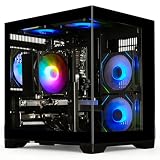
MSI Codex Z2 (R7-8700F / RTX 5070 / 32GB / 2TB)
This is the most complete package on the list — an RTX 5070 paired with 32GB of DDR5 and a genuinely generous 2TB NVMe drive means you’re not budgeting for upgrades on day one. The R7-8700F is a smart cost-saving choice, dropping integrated graphics you’d never use to keep the price competitive while feeding the GPU without bottlenecks at 1440p.
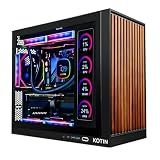
KOTIN Prebuilt RTX 5070 (Ryzen 7 9700X / 32GB)
The Ryzen 7 9700X is the strongest processor here by a comfortable margin, making this the pick if you stream, edit, or plan to keep the system for five-plus years. The 1TB SSD is the only real compromise, and it’s an easy, inexpensive fix later.
Alienware Aurora (RTX 5070 / Core Ultra 7 265F)
Alienware’s Aurora brings the best build quality, thermals, and warranty support of any machine on this list, which matters more than spec-sheet parity if you’re not comfortable troubleshooting hardware yourself. You pay a modest premium for that polish, and the chassis is less upgrade-friendly than the competition — but it’s the safest buy for a first-time PC owner.
MSI Codex Z2 (R7-8700F / RTX 5060 Ti / 16GB / 1TB)
Stepping down to the RTX 5060 Ti drops the price meaningfully while still delivering excellent 1080p performance and very playable 1440p with DLSS enabled. It’s the value sweet spot for anyone gaming on a 1080p monitor, though 16GB of RAM is the configuration you’ll want to bump up first.
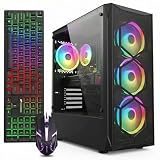
YAWYORE Gaming PC (Ryzen 7 5700X / RTX 5060)
This is the budget entry point — the RTX 5060 handles esports titles and most AAA games at 1080p high settings without complaint. The Ryzen 7 5700X is an older AM4 chip, so long-term CPU upgrade paths are limited, but it’s more than sufficient for the GPU it’s paired with.
Frequently Asked Questions
Can a $1,000 PC handle 1440p gaming in 2026?
Yes, with reasonable expectations. An RTX 5070 system will run most modern titles at 1440p with high settings and DLSS enabled, typically landing between 60 and 100 FPS. Ray tracing at 1440p will require dropping to medium settings or leaning more heavily on upscaling.
Is a prebuilt worth it versus building my own?
In 2026, prebuilt pricing is far more competitive than it was five years ago, and manufacturers get volume discounts on GPUs that individual buyers don’t. Building your own still offers better component transparency and typically a stronger power supply, but the savings are often under $100 — not enough to matter if you value the warranty and support.
How much RAM do I actually need?
16GB is the functional minimum for 2026 gaming, and it’s adequate if you close background applications. 32GB is the comfortable target, especially if you multitask, stream, or play simulation and open-world titles that stream large amounts of data.
Will these systems be upgradeable later?
Most of them, yes — the MSI and KOTIN builds use standard ATX components, so GPU, RAM, and storage upgrades are straightforward. Check power supply wattage before installing a significantly more demanding graphics card, and note that proprietary designs from larger OEMs can limit your options.
Final Thoughts
If you want the strongest all-around value, the MSI Codex Z2 with the RTX 5070 and 2TB SSD is the easiest recommendation — it’s the rare budget prebuilt that doesn’t ask you to upgrade anything immediately. The KOTIN RTX 5070 build is the better choice if CPU performance matters for streaming or content work, while the Alienware Aurora earns its place for buyers who’d rather pay a small premium for build quality and real customer support. Whichever you choose, verify current pricing before buying, since configurations in this bracket shift frequently.