Key takeaways
- Passthrough delay: the time added to the monitor signal. For competitive play, near-zero or sub-frame passthrough is the goal.
- Capture delay: the time before the streaming PC receives the image. A delay of 1 to 3 frames can be normal, depending on resolution, software, and buffering.
- Audio synchronization: whether game audio, microphone audio, and video arrive together. Even a visually responsive setup can feel wrong if audio drifts by 50 to 100 milliseconds.
What's inside
Shopping for a dual-PC capture card is less about finding the highest resolution on the box and more about avoiding delays between your gaming PC, streaming PC, monitor, and audience. The wrong device can introduce noticeable input lag, force you to lower your refresh rate, or create audio that slowly falls out of sync.
The most common mistake is confusing passthrough latency with capture latency. Passthrough is the signal sent directly to your gaming display; capture latency is the delay before the streaming computer receives the video. A second mistake is assuming USB 3.0 automatically means low latency. The connection helps, but the capture chip, driver, signal format, software buffer, and display path matter just as much.
As an Amazon Associate we earn from qualifying purchases at no extra cost to you. Product prices and availability are accurate as of the date shown and are subject to change.



Another frequent error is buying for 4K60 recording when the actual priority is competitive 1080p240 or 1440p144 gaming. Before comparing products, decide which screen, resolution, refresh rate, and connection your dual-PC setup must support. In 2026, a good capture card should fit your entire signal chain—not just advertise an impressive maximum resolution.
Decide These 3 Things First
- Which resolution and refresh rate will you play at? Write down the output from the gaming PC and the refresh rate of your main monitor. A card rated for 4K60 may not pass through 1440p240 or 1080p240.
- Does your monitor need HDMI 2.1? Newer consoles and graphics cards can output 4K120, HDR, and variable refresh rate through HDMI 2.1. If you need those features, an HDMI 2.0 card may require compromises.
- How sensitive are you to latency? Competitive shooters benefit from a direct passthrough display and a capture device with near-zero passthrough delay. For tutorials, webcams, and casual games, a small capture delay may be acceptable.
Once these decisions are clear, use the following factors to compare models rather than relying on the headline resolution alone.
Size and Port Layout
Size affects cooling, portability, and cable management. Most USB capture cards measure about 4 to 7 inches long, 2 to 4 inches wide, and roughly 0.5 to 1.5 inches thick. Compact budget models can be convenient, but extremely small housings may leave less room for heat dissipation and full-size connectors.
For a desk-based dual-PC setup, a device around 5 to 6 inches long is usually easy to place beside a streaming PC without crowding the rear I/O. Check that the HDMI input, HDMI output, USB port, and audio connections face the direction that suits your cable routing. Side-facing ports can be useful for a portable setup but may look untidy on a permanent desk.
Weight is rarely a performance specification, but it affects stability. Budget USB cards may weigh 2 to 5 ounces, while larger external units often weigh 6 to 12 ounces. A heavier enclosure is less likely to slide when you disconnect an HDMI cable. Allow at least 2 inches of ventilation space on each side and avoid stacking the card on a warm external drive.
Material and Thermal Design
Look for an aluminum or metal-bodied enclosure when the capture card will run for several hours at a time. Metal can help spread heat, while plastic is not automatically poor but should have ventilation openings and a solid internal frame. A glossy plastic shell may look attractive yet show fingerprints and scratches quickly.
Heat matters because sustained encoding and high-bandwidth signals can expose stability problems. A capture card handling 4K60, HDR, or high-refresh passthrough should not feel excessively hot within minutes. Warm is normal; repeated signal drops, random black screens, or audio interruptions are not.
USB power consumption is commonly in the 2.5- to 7-watt range, depending on the model and signal format. Confirm that the streaming PC provides a full-speed USB 3.x port rather than a slower USB 2.0 connection. If the card uses a detachable cable, a 3- to 6-foot cable is easier to replace than a permanently attached lead.
Construction and Signal Path
Construction quality shows up in the connectors, cable, and stability of the signal path. HDMI ports should feel firm without excessive side-to-side movement. The included USB cable should be thick enough to resist kinking, and a detachable cable is preferable for a device that will be moved or packed away.
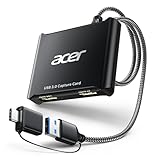
For dual-PC use, prioritize a genuine hardware passthrough output. The gaming PC should connect to the card’s HDMI input, the card’s HDMI output should connect to the gaming monitor, and the USB connection should feed the streaming PC. This arrangement lets you play from the direct display path instead of viewing the delayed preview inside OBS or another application.
Check support for the exact formats you use: 1080p240, 1440p144, 4K60, 4K120, HDR10, RGB, YUV 4:4:4, and variable refresh rate are not interchangeable. A card may capture 4K60 while passing through a different resolution or refresh rate. Read the manufacturer’s input, output, and capture tables separately.
Comfort and Performance: What to Look for in Dual Pc Capture Card Latency
When researching what to look for in dual pc capture card latency, focus on three separate measurements:
- Passthrough delay: the time added to the monitor signal. For competitive play, near-zero or sub-frame passthrough is the goal.
- Capture delay: the time before the streaming PC receives the image. A delay of 1 to 3 frames can be normal, depending on resolution, software, and buffering.
- Audio synchronization: whether game audio, microphone audio, and video arrive together. Even a visually responsive setup can feel wrong if audio drifts by 50 to 100 milliseconds.
Do not treat “zero latency” as a guarantee that every workflow is delay-free. It usually refers to the HDMI passthrough route, not the OBS preview or live broadcast. Use the direct HDMI output for gaming, and set an audio sync offset only after testing your own microphone, headset, console, and software settings.
For fast games, favor a card that supports your native refresh rate without downscaling. A 1080p240 player should not accept a 1080p60 passthrough simply because the card captures cleanly at 60 frames per second. For general streaming, 1080p60 capture is adequate. For console and high-quality game content, 4K60 capture is a more flexible target.
Price Tiers and Value
Budget HDMI-to-USB capture cards generally cost about $20 to $45. Products in this range can work well for 1080p60 streaming, webcams, presentations, and basic console capture. They often use USB 3.0, but specifications may be vague, and support for HDR, high refresh rates, VRR, or 4:4:4 color may be limited.
Mid-range cards typically cost $90 to $170. This is where you are more likely to find dependable drivers, 4K60 capture or passthrough, better construction, useful status indicators, and clearer compatibility documentation. Examples in this category include the Elgato 4K S at about $146.99 and the AVerMedia Live Gamer Ultra S at about $139.99.
Premium pricing usually begins around $180 and can exceed $300 for HDMI 2.1, 4K120 passthrough, advanced HDR handling, and specialized broadcast features. Pay for those capabilities only if your gaming PC, monitor, and console can use them. A $25.89 basic capture card may be the better value for a 1080p60 secondary stream, while an HDMI 2.1 setup needs a more capable device.
Warranty and Software Support
A warranty of at least one year is a reasonable baseline for an external capture device. Look for a manufacturer that publishes firmware updates, driver downloads, compatibility notes, and setup instructions. Software support is especially important when using OBS, because a device can be technically functional yet unreliable after an operating-system or graphics-driver update.
Check whether the card appears as a standard UVC video device. Broad compatibility can make setup easier, although proprietary software may be required for HDR controls, firmware updates, or advanced audio features. Confirm support for Windows or macOS if the streaming PC does not use Windows.
Keep the receipt and record the model number. If a card develops intermittent dropouts, test a different USB 3.x port and cable before assuming the HDMI hardware has failed.
Delivery and Assembly
Installation should require three main connections: HDMI from the gaming PC to the capture input, HDMI from the capture output to the gaming monitor, and USB 3.x from the capture card to the streaming PC. Some setups also need a 3.5-millimeter audio cable or a separate microphone connection.
Allow 15 to 30 minutes for a basic installation and up to an hour for HDR, multi-monitor, console, or audio-routing adjustments. Use cables rated for the resolution and refresh rate you need. A certified HDMI 2.1 cable is important for 4K120; a high-speed HDMI cable is generally sufficient for many HDMI 2.0 4K60 setups.
Before the return period ends, test a full stream or recording for at least 30 minutes. Change scenes, open a game, monitor audio, and check whether the signal remains stable after the card becomes warm.
Spec Checklist
| Spec | Budget | Mid | Premium |
|---|---|---|---|
| Typical price | $20–$45 | $90–$170 | $180–$350+ |
| Capture target | 1080p60 | 1080p60 or 4K60 | 4K60 with advanced HDR or higher-bandwidth options |
| Passthrough | 1080p60; verify higher refresh rates | 1440p120–144 or 4K60, model dependent | 4K120 or high-refresh 1440p, model dependent |
| Connection | USB 3.0 or USB 3.2 Gen 1 | USB 3.0/3.2 Gen 1 or faster | USB 3.2 Gen 2 or dedicated high-bandwidth connection |
| Size and weight | 4–6 inches; 2–6 ounces | 5–7 inches; 6–12 ounces | 6–9 inches; 8–16 ounces |
| Latency priority | Direct passthrough; basic capture buffer | Low-delay passthrough and stable drivers | Low-delay passthrough, high-refresh support, advanced controls |
Red Flags
- The listing says “4K” but does not distinguish 4K input, capture, and passthrough.
- There is no stated refresh rate, color format, HDR support, or USB bandwidth.
- The product promises zero latency without explaining whether that refers to passthrough.
- The device requires USB 3.0 but includes an unusually short, thin, or non-replaceable cable.
- Reviews mention black screens, dropped frames, audio drift, overheating, or frequent reconnection.
- The capture card has no firmware page, warranty details, or compatibility information.
- The card cannot pass through the refresh rate you use for competitive gaming.
FAQ
Does a capture card add input lag in a dual-PC setup?
It should not add meaningful gaming lag when you play through the card’s HDMI passthrough output. Viewing the game in OBS or another preview window can add delay, so use the direct monitor connection for gameplay.
Is USB 3.0 fast enough for dual-PC streaming?
USB 3.0 is generally sufficient for 1080p60 and many 4K60 capture workflows. The card must still support the format you want, and the streaming PC needs a functioning USB 3.x port. A slower port or poor cable can cause dropped frames.
Do I need HDMI 2.1?
You need HDMI 2.1 if you want features such as 4K120 passthrough, depending on the source and display. If you play at 1080p60 or 1440p144, HDMI 2.0 may be sufficient, but verify the specific model’s refresh-rate table.
What is the best latency target for competitive gaming?
Choose direct passthrough with near-zero or sub-frame delay, then use the monitor connected to that output. Capture latency of a few frames is usually acceptable for the stream because it does not determine the response time of the gaming display. Test audio synchronization separately before going live.