Key takeaways
- Prioritize the GPU: Your graphics card determines 70-80% of your gaming performance. At this budget, aim for an RTX 5070 or better — 12GB of VRAM is the sweet spot for 1440p gaming with high textures in 2026.
- Don’t overspend on the CPU: A Ryzen 7 or Core Ultra 7 is plenty. Anything more expensive shifts money away from the GPU without meaningfully improving frame rates at 1440p or 4K.
- Insist on DDR5 and 32GB: 16GB still works, but 32GB of DDR5 is now the practical baseline for modern titles, streaming, and keeping a browser open in the background. It’s also the cheapest upgrade to future-proof.
- Check storage capacity, not just type: Every build here uses NVMe SSDs, but 1TB fills up fast when single games run 100-150GB. A 2TB drive saves you an upgrade within the first year.
- Factor in the extras: Confirm the build includes a licensed copy of Windows 11, adequate case airflow, and a power supply with headroom. Skimping here is where budget prebuilts cut corners.
What's inside
Shopping for a gaming desktop in 2026 is harder than it should be. The $2,000 range is crowded with prebuilts that look nearly identical on paper, and the difference between a genuinely good buy and an overpriced one usually comes down to details manufacturers bury in the fine print: how much VRAM the GPU actually has, whether the CPU is a current-generation part or last year’s stock being cleared out, and how much of your money went into RGB lighting instead of components that affect frame rates.
This guide cuts through that. We’ve focused on builds that stay comfortably under $2,000, prioritizing GPU performance first (because that’s what determines your frame rate in almost every modern title), followed by CPU pairing, memory speed, and storage capacity. Below you’ll find our top picks, a practical buying checklist, and answers to the questions we hear most from readers building their first serious gaming rig.
As an Amazon Associate we earn from qualifying purchases at no extra cost to you. Product prices and availability are accurate as of the date shown and are subject to change.



⚡ Save on Your Next PC — Amazon Prime
Prime members get fast free shipping on the systems above, plus early access to Prime Day & Black Friday PC deals. New members get a 30-day free trial.
Watch: Best Gaming PC Under $2000 — Video Review
How to Choose Gaming PC Under $2000
- Prioritize the GPU: Your graphics card determines 70-80% of your gaming performance. At this budget, aim for an RTX 5070 or better — 12GB of VRAM is the sweet spot for 1440p gaming with high textures in 2026.
- Don’t overspend on the CPU: A Ryzen 7 or Core Ultra 7 is plenty. Anything more expensive shifts money away from the GPU without meaningfully improving frame rates at 1440p or 4K.
- Insist on DDR5 and 32GB: 16GB still works, but 32GB of DDR5 is now the practical baseline for modern titles, streaming, and keeping a browser open in the background. It’s also the cheapest upgrade to future-proof.
- Check storage capacity, not just type: Every build here uses NVMe SSDs, but 1TB fills up fast when single games run 100-150GB. A 2TB drive saves you an upgrade within the first year.
- Factor in the extras: Confirm the build includes a licensed copy of Windows 11, adequate case airflow, and a power supply with headroom. Skimping here is where budget prebuilts cut corners.
The Best Picks Reviewed
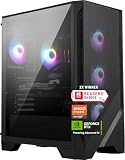
msi Codex Z2 (R7-8700F, RTX 5070)
This is the most complete package on the list: an RTX 5070, 32GB of DDR5, and a generous 2TB NVMe SSD, all from a manufacturer with a real support network behind it. The Ryzen 7 8700F is an efficient pairing that won’t bottleneck the GPU, and the included USB Type-C and VR-ready certification make it the easiest recommendation for most buyers.
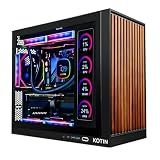
KOTIN Prebuilt RTX 5070 (Ryzen 7 9700X)
If you want the newest CPU architecture at this price, the 9700X paired with an RTX 5070 and 32GB DDR5 is a genuinely strong spec sheet. Storage drops to 1TB compared to the MSI, but you’re getting a more current processor that will age better over a five-year ownership window.
Alienware Aurora (RTX 5070, Core Ultra 7 265F)
The Aurora is the pick for buyers who value build quality, thermal engineering, and a proper warranty over raw specs-per-dollar. The Core Ultra 7 265F is a capable gaming chip, and Dell’s chassis design handles sustained load better than most budget prebuilts — just expect to pay a premium for that polish.
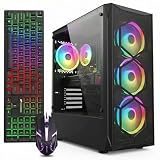
KOTIN Gaming PC (Ryzen 7 8700F, RTX 5060 Ti)
A solid step down that lands well under budget, making it the right choice if you’re gaming at 1080p or want to put the savings toward a high-refresh monitor. The 8GB of VRAM on the 5060 Ti is the main compromise, and we’d recommend budgeting for a 32GB memory upgrade down the line.
YAWYORE Gaming PC (Ryzen 7 5700X, RTX 5060)
The value entry here, pairing a current-generation RTX 5060 with the older but still perfectly competent Ryzen 7 5700X. It’s a sensible way to get into modern 1080p gaming for well under the cap, though the AM4 platform limits your future CPU upgrade path.
Frequently Asked Questions
Is $2,000 enough for 4K gaming in 2026?
For 4K at 60fps with DLSS enabled, yes — an RTX 5070 build will handle most titles comfortably. For high-refresh 4K at native resolution, you’d need to step up to a higher tier of GPU, which pushes you past this budget.
Should I buy a prebuilt or build my own?
Building your own typically saves 10-15% and gives you full component control, but prebuilts include Windows, assembly, and a single point of warranty contact. If you’re not comfortable troubleshooting a system that won’t POST, a prebuilt is worth the modest premium.
Is 8GB of VRAM still enough?
At 1080p, yes, for most games. At 1440p with high texture settings, 8GB is increasingly limiting in 2026 titles — this is the single strongest argument for stretching to a 12GB card if your budget allows.
What else do I need to budget for?
None of these include a monitor, keyboard, or mouse. Set aside $300-500 for a decent 1440p high-refresh monitor and peripherals, and factor that into your total spend before deciding which tier of PC to buy.
Final Thoughts
For most buyers, the msi Codex Z2 is the best overall value here — the RTX 5070, 32GB of DDR5, and 2TB of storage cover everything you need without an immediate upgrade. If you want the most current CPU for longevity, the KOTIN RTX 5070 build with the Ryzen 7 9700X is the better long-term bet, while the Alienware Aurora earns its place for anyone who prioritizes build quality and warranty support over maximum specs per dollar.