Key takeaways
- For the largest local LLMs: RTX 5090, its 32GB VRAM is decisive.
- For best value on AI: a discounted RTX 4090 remains excellent within 24GB workloads.
- For fastest inference and training: the 5090’s GDDR7 bandwidth pulls ahead.
- For laptop or external use: the RTX 5090 AI Box brings desktop power over Thunderbolt.
- For mixed AI and gaming: both excel; the 5090 is simply the newer, faster flagship.
What's inside
For AI enthusiasts and professionals running local models, the graphics card is the single most important component, and the two names dominating the conversation are NVIDIA’s RTX 5090 and the previous-generation RTX 4090. Both are flagship powerhouses, but the 5090’s Blackwell architecture, larger VRAM, and faster memory promise a meaningful leap for AI workloads like local LLM inference and content generation.
Whether you’re fine-tuning models, running inference on large language models locally, or doing heavy AI content creation, VRAM capacity and memory bandwidth matter as much as raw compute. This comparison focuses specifically on how these two cards perform for AI tasks rather than gaming. Here’s what separates them and which one your workload actually needs.
As an Amazon Associate we earn from qualifying purchases at no extra cost to you. Product prices and availability are accurate as of the date shown and are subject to change.


🎮 Get More From Your Setup — Free
Prime Gaming gives you free PC games every month, in-game loot, and a free Twitch channel sub — plus fast free shipping on all the gear above. New members get a 30-day free trial.
Watch: Rtx 5090 Vs 4090 For Ai: Full Comparison — Video Review
Quick Verdict
The RTX 5090 is the clear winner for AI work, thanks to its 32GB of fast GDDR7 memory, higher AI TOPS, and Blackwell architecture, which together let you run larger models and process them faster than the 4090. The RTX 4090 remains a formidable AI card and a strong value if found at a discount, but for serious local AI the 5090 is the better tool.
NVIDIA GeForce RTX 5090
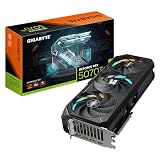
The RTX 5090 is built for exactly this era of AI workloads. With 32GB of GDDR7 on a 512-bit bus and figures like 3352 AI TOPS quoted on cards such as the ASUS TUF Gaming RTX 5090, ASUS ROG Astral, and CyberGeek Triple Fan, it has the memory capacity to hold larger language models entirely in VRAM, which is the single biggest factor in local LLM performance.
That extra VRAM headroom means you can run models the 4090 simply can’t fit, or run the same models with more context and larger batches. The faster GDDR7 bandwidth accelerates inference and training throughput, and specialized options like the GIGABYTE AORUS RTX 5090 AI Box external GPU even bring this power to laptops via Thunderbolt 5. For professionals whose work is bottlenecked by memory or throughput, the 5090 is transformative.
NVIDIA GeForce RTX 4090
The RTX 4090 remains an exceptional AI card. With 24GB of GDDR6X and enormous compute, it handles a huge range of local AI tasks, from Stable Diffusion image generation to running many popular LLMs, with ease. For a great many hobbyists and even professionals, it’s more than enough, and if you already own one, it’s far from obsolete.
Its limitation relative to the 5090 is memory: 24GB versus 32GB. That gap decides whether certain larger models fit in VRAM at all. For workloads that stay within 24GB, the 4090 is highly competitive and, at a discounted price, potentially the better value. For those pushing into larger models, the ceiling shows.
Head-to-Head: Which Should You Buy?
- For the largest local LLMs: RTX 5090, its 32GB VRAM is decisive.
- For best value on AI: a discounted RTX 4090 remains excellent within 24GB workloads.
- For fastest inference and training: the 5090’s GDDR7 bandwidth pulls ahead.
- For laptop or external use: the RTX 5090 AI Box brings desktop power over Thunderbolt.
- For mixed AI and gaming: both excel; the 5090 is simply the newer, faster flagship.
Frequently Asked Questions
Does VRAM matter more than compute for AI?
For running large language models locally, yes, VRAM capacity often decides whether a model fits at all. The 5090’s 32GB lets you run bigger models than the 4090’s 24GB, which is why it’s favored for serious local AI.
Is the RTX 4090 still good for AI in 2026?
Very much so. With 24GB and massive compute, the 4090 handles most local AI tasks excellently. It only falls short of the 5090 when a workload needs more than 24GB of memory or maximum throughput.
What is an AI Box external GPU?
It’s an external enclosure, like the GIGABYTE AORUS RTX 5090 AI Box, that houses the GPU and connects to a laptop via Thunderbolt. It brings desktop-class AI performance to portable machines that lack a powerful internal GPU.
Which is better for image generation?
Both are excellent for tools like Stable Diffusion, which fit comfortably in either card’s VRAM. The 5090 will generate faster thanks to more compute and bandwidth, but the 4090 remains highly capable for this task.
Final Verdict
For dedicated AI work, the RTX 5090 is the better card, and by a meaningful margin: its 32GB of GDDR7 and higher AI throughput unlock larger models and faster processing that the 4090 can’t match. That said, the RTX 4090 remains a superb AI performer and a smart value for workloads that fit in 24GB. Buy the 5090 if you’re pushing model size limits; stick with or seek a discounted 4090 if your work fits comfortably in its memory.