Key takeaways
- Pro: Excellent 1440p performance with Blackwell architecture and DLSS 4 support.
- Pro: Modern PCIe 5.0 and HDMI/DP 2.1 connectivity for current displays.
- Pro: SFF-ready options make it viable for compact, space-saving builds.
- Pro: Strong price-to-performance for the mainstream gaming segment.
- Con: 12GB of VRAM is adequate now but less generous for heavy 4K texture use.
- Con: Larger triple-fan models like the TUF need real case clearance.
What's inside
The GeForce RTX 5070 with 12GB of GDDR7 has become one of the most talked-about graphics cards of this generation, and it is easy to see why. It lands in the pricing and performance zone where most gamers actually shop, delivering strong 1440p performance, NVIDIA’s Blackwell architecture, and DLSS 4 without the eye-watering cost of the flagship tiers. The catch is that the RTX 5070 exists in many forms, and the board partner you choose matters.
We examined the leading RTX 5070 12GB models, from compact SFF-ready cards to beefy triple-fan editions, to help you pick the right one for your build. Here is our review of the card class and the standout variants.
As an Amazon Associate we earn from qualifying purchases at no extra cost to you. Product prices and availability are accurate as of the date shown and are subject to change.


🎮 Get More From Your Setup — Free
Prime Gaming gives you free PC games every month, in-game loot, and a free Twitch channel sub — plus fast free shipping on all the gear above. New members get a 30-day free trial.
Watch: 12 Gb Rtx 5070: Review & Buyer’s Guide — Video Review
Design & Build
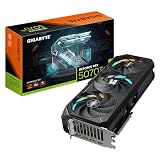
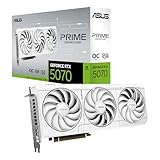
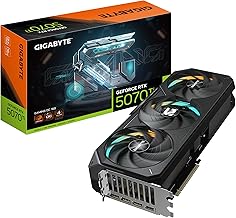
Board partners take noticeably different approaches to the same GPU. The ASUS TUF Gaming RTX 5070 goes big with a 3.125-slot design, military-grade components, and protective PCB coating for maximum cooling and longevity. At the other end, the ASUS Prime SFF-ready and GIGABYTE Eagle OC ICE SFF variants stay compact for small-form-factor builds. The GIGABYTE Gaming OC and AERO OC models balance robust WINDFORCE cooling with mainstream tower compatibility, while the PNY Triple Fan keeps things clean and straightforward.
Performance
Performance across these cards is fundamentally similar since they share the same GPU and 12GB of GDDR7 on a 192-bit bus, with PCIe 5.0 and HDMI/DP 2.1 outputs. Factory overclocks like the PNY’s 2587 MHz boost or the various OC editions yield small but welcome bumps. In practice, the RTX 5070 is a superb 1440p card that also handles entry-level 4K with DLSS 4 upscaling and frame generation. The real differentiators are cooling efficiency, noise, and how well each card fits your case.
Pros & Cons
- Pro: Excellent 1440p performance with Blackwell architecture and DLSS 4 support.
- Pro: Modern PCIe 5.0 and HDMI/DP 2.1 connectivity for current displays.
- Pro: SFF-ready options make it viable for compact, space-saving builds.
- Pro: Strong price-to-performance for the mainstream gaming segment.
- Con: 12GB of VRAM is adequate now but less generous for heavy 4K texture use.
- Con: Larger triple-fan models like the TUF need real case clearance.
Alternatives to Consider
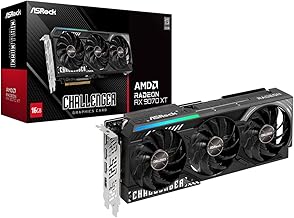
If you game strictly at 1080p, an RTX 5060 or a previous-gen card will save money while still delivering smooth frames. Gamers targeting high-refresh 4K should look at the RTX 5070 Ti or 5080 for more VRAM and horsepower. On the AMD side, the Radeon RX 9070 XT is a compelling rival worth cross-shopping for its 16GB of memory and strong rasterization.
Frequently Asked Questions
Is 12GB of VRAM enough for gaming in 2026?
For 1440p and most 4K gaming with DLSS, yes. It is comfortable today, though buyers planning for maxed-out 4K textures years from now may prefer more headroom.
Which RTX 5070 brand should I buy?
Since the GPU is identical, choose based on cooling, size, and noise. The TUF Gaming suits big builds, while SFF-ready ASUS Prime and GIGABYTE ICE models fit compact cases.
Do I need a PCIe 5.0 motherboard?
No. The card is backward compatible with PCIe 4.0 slots, so you can run it on current hardware without a bottleneck in real-world gaming.
Is the RTX 5070 good for 4K?
It handles 4K well with DLSS 4 upscaling and frame generation enabled. For native 4K at maximum settings, a higher tier card is the better fit.
Verdict
The RTX 5070 12GB is the mainstream sweet spot of this generation, and the best version depends on your case. The ASUS TUF Gaming edition is the pick for large builds prioritizing cooling, while the GIGABYTE Eagle OC ICE SFF and ASUS Prime SFF-ready cards are ideal for compact systems. Any of them delivers excellent 1440p gaming with DLSS 4.