Key takeaways
- 1080p suits smaller panels and competitive play where high frame rates matter most.
- 1440p QHD, as on the ASUS TUF 27-inch or KTC IPS models, balances sharpness and performance beautifully.
- Ultrawide 32:9 displays like the INNOCN 49-inch deliver immersive single-player and productivity space.
What's inside
Choosing a gaming monitor in 2026 means navigating a dizzying mix of refresh rates, resolutions, panel types and curvature options, and the right choice depends heavily on the games you play and the GPU driving them. A competitive shooter benefits from something very different than a sprawling single-player epic, so the best monitor is rarely the one with the biggest numbers. Understanding a handful of core specifications turns an overwhelming spec sheet into a confident decision.
This guide breaks down what actually matters when picking a display, from matching refresh rate to your graphics card to deciding whether an ultrawide or a fast 1080p panel suits your setup. Along the way we reference real 2026 monitors across sizes and price points so you can see how the theory maps onto genuine buying options.
As an Amazon Associate we earn from qualifying purchases at no extra cost to you. Product prices and availability are accurate as of the date shown and are subject to change.


⚡ Save on Your Next PC — Amazon Prime
Prime members get fast free shipping on the systems above, plus early access to Prime Day & Black Friday PC deals. New members get a 30-day free trial.
Watch: How To Choose A Gaming Monitor — Video Review
Match Refresh Rate to Your Hardware
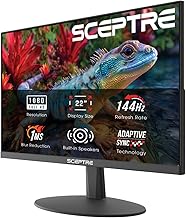
Refresh rate, measured in hertz, determines how many frames your monitor can display each second, and higher numbers deliver smoother motion. A 144Hz panel like the Sceptre 22-inch FHD is a great entry point, while 180Hz to 240Hz options such as the Samsung Odyssey G5 or a KTC 240Hz curved display reward fast GPUs. Crucially, there is little benefit to a 240Hz screen if your graphics card cannot push those frame rates, so match the panel to your hardware.
Choose the Right Resolution and Size
- 1080p suits smaller panels and competitive play where high frame rates matter most.
- 1440p QHD, as on the ASUS TUF 27-inch or KTC IPS models, balances sharpness and performance beautifully.
- Ultrawide 32:9 displays like the INNOCN 49-inch deliver immersive single-player and productivity space.
Larger screens demand more GPU power at higher resolutions, so weigh immersion against the frame rates you actually want to hit.
Understand Panel Types and Adaptive Sync
Fast IPS panels, found on monitors like the ASUS TUF VG27AQ3A and KTC white gaming display, offer strong color and quick response times, making them a versatile default. Adaptive sync technologies such as FreeSync and G-SYNC compatibility eliminate screen tearing by matching the monitor’s refresh to your GPU’s output, which is well worth prioritizing across almost every gaming genre.
Consider Curvature, HDR and Extras
Curved panels like the SANSUI 32-inch and INNOCN ultrawide wrap the image around your field of view for added immersion, especially at larger sizes. HDR support, built-in speakers, height and tilt adjustment, and generous port selection all add convenience. These extras rarely make or break a purchase, but they can be the deciding factor between two otherwise similar displays.
Frequently Asked Questions
What refresh rate should I buy in 2026?
For competitive play, 144Hz or higher is ideal, while 240Hz suits esports enthusiasts with powerful GPUs. Casual and single-player gamers are well served by 144Hz, which balances smoothness and affordability nicely.
Is 1440p better than 1080p for gaming?
1440p offers noticeably sharper visuals and works well on 27-inch panels, but it demands a stronger GPU. If frame rate is your priority on a modest card, 1080p remains a smart, performance-friendly choice.
Do I need an ultrawide monitor?
Ultrawides shine in immersive single-player games and multitasking, but not every title supports the 32:9 aspect ratio. If you mainly play competitive shooters, a standard fast panel is often the better fit.
How important is adaptive sync?
Very. FreeSync or G-SYNC compatibility eliminates tearing and stutter by syncing the display to your GPU. It is one of the most impactful features for smooth gameplay and worth prioritizing on any new monitor.
Conclusion
Choosing a gaming monitor in 2026 comes down to matching refresh rate and resolution to your GPU and the games you love, then layering on panel quality, adaptive sync and any extras that suit your space. Competitive players lean toward fast, high-refresh panels, while immersion seekers may prefer a curved ultrawide. Focus on how you actually play rather than chasing the biggest specs, and you will land on a display that feels perfectly tailored to your setup.