Key takeaways
- Switch type matters more than lighting: Mechanical switches give you crisp actuation and 50-million-plus keystroke lifespans. “Mechanical feel” membrane boards are cheaper and quieter but wear out faster and lack that decisive tactile response. Decide which trade-off fits your budget before anything else.
- Match the layout to your desk and playstyle: Full-size 104-key boards keep your numpad for MMOs and productivity. Compact 65% and 75% layouts free up significant mouse-swing room for low-sensitivity FPS players — a real competitive advantage if your desk is cramped.
- Verify true N-key rollover, not vague “anti-ghosting” claims: Many budget boards only guarantee simultaneous registration on a handful of gaming keys. Look for specified NKRO or at least 26-key rollover if you play fighting games or use complex keybinds.
- Prioritize build materials over RGB zone count: A metal top plate and PBT keycaps do more for longevity and feel than 16.8 million colors. ABS keycaps develop a greasy shine within months; PBT resists it for years.
- Consider hot-swap sockets for future-proofing: Hot-swappable boards let you change switches without soldering. At this price, that turns a one-time purchase into a keyboard you can retune as your preferences evolve.
What's inside
Shopping for a gaming keyboard under $100 sounds simple until you actually start looking. The sub-$100 tier is the most crowded segment on Amazon, packed with hundreds of near-identical boards sporting the same rainbow lighting, the same “mechanical feel” marketing language, and wildly inconsistent build quality. Some of these keyboards are genuine bargains that outperform boards costing twice as much. Others are membrane panels wearing a gamer costume, destined to develop mushy keys and dead LEDs within a year.
This guide cuts through that noise. We’ve focused on keyboards that deliver real value at their price point — solid switch feel, honest anti-ghosting, and construction that survives daily use. Below you’ll find picks spanning full-size workhorses, compact 65% and 75% layouts, and hot-swappable enthusiast boards, all realistically available under $100. We also cover what actually matters when choosing, so you can spot the difference between a genuine deal and clever packaging.
As an Amazon Associate we earn from qualifying purchases at no extra cost to you. Product prices and availability are accurate as of the date shown and are subject to change.


⚡ Save on Your Next PC — Amazon Prime
Prime members get fast free shipping on the systems above, plus early access to Prime Day & Black Friday PC deals. New members get a 30-day free trial.
Watch: Best Gaming Keyboard Under $100 — Video Review
How to Choose Gaming Keyboard Under $100
- Switch type matters more than lighting: Mechanical switches give you crisp actuation and 50-million-plus keystroke lifespans. “Mechanical feel” membrane boards are cheaper and quieter but wear out faster and lack that decisive tactile response. Decide which trade-off fits your budget before anything else.
- Match the layout to your desk and playstyle: Full-size 104-key boards keep your numpad for MMOs and productivity. Compact 65% and 75% layouts free up significant mouse-swing room for low-sensitivity FPS players — a real competitive advantage if your desk is cramped.
- Verify true N-key rollover, not vague “anti-ghosting” claims: Many budget boards only guarantee simultaneous registration on a handful of gaming keys. Look for specified NKRO or at least 26-key rollover if you play fighting games or use complex keybinds.
- Prioritize build materials over RGB zone count: A metal top plate and PBT keycaps do more for longevity and feel than 16.8 million colors. ABS keycaps develop a greasy shine within months; PBT resists it for years.
- Consider hot-swap sockets for future-proofing: Hot-swappable boards let you change switches without soldering. At this price, that turns a one-time purchase into a keyboard you can retune as your preferences evolve.
The Best Picks Reviewed
AULA F75 Pro Wireless Mechanical Keyboard
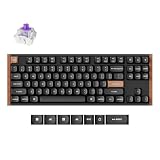
This is the enthusiast pick of the group — a 75% hot-swappable board with pre-lubed Reaper switches, side-printed PBT keycaps, a control knob, and triple connectivity via 2.4GHz, Bluetooth 5.0, and USB-C. It delivers a typing experience that genuinely rivals custom builds costing well over $150, making it the best overall value here for anyone who cares about sound and feel.
SteelSeries Apex 3 RGB Gaming Keyboard
SteelSeries built the Apex 3 around whisper-quiet gaming switches, IP32 water resistance, and a magnetic wrist rest that’s genuinely premium for the price. It’s the smart choice for shared spaces, late-night sessions, or anyone who’s already sacrificed one keyboard to a knocked-over drink.
Logitech G213 Prodigy Wired RGB Gaming Keyboard
The G213 remains a dependable full-size workhorse with Logitech’s Mech-Dome keys, spill resistance, dedicated media controls, and five-zone Lightsync RGB. It won’t satisfy switch purists, but the build quality, integrated palm rest, and Logitech’s software support make it one of the safest budget buys available.
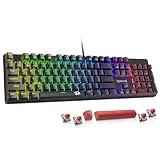
Redragon K521 Rainbow LED Gaming Keyboard
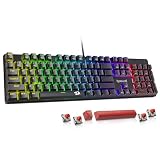
Redragon’s K521 packs 104 keys, multimedia shortcuts, one-touch backlighting, and console compatibility with PC, Mac, PS4/PS5, and Xbox into a very aggressive price. The mechanical-feel switches split the difference between membrane softness and mechanical snap, which suits casual and multi-platform players well.
GEODMAER 65% Gaming Keyboard
At 68 keys, this ultra-compact membrane board is built for players who want maximum mouse space and a minimal footprint without spending mechanical money. Anti-ghosting on the keys that matter and solid backlighting make it a sensible secondary or travel keyboard.
Frequently Asked Questions
Do I really need a mechanical keyboard for gaming?
No, but you’ll likely notice the difference. Mechanical switches offer more consistent actuation and better durability, though a quality membrane board like the G213 is perfectly competitive for casual and mid-level play.
Is wireless fast enough for competitive gaming?
Modern 2.4GHz wireless is effectively indistinguishable from wired for the vast majority of players. Bluetooth adds noticeable latency, so use the dongle for gaming and save Bluetooth for productivity devices.
What’s the advantage of a 65% or 75% layout?
Removing the numpad shifts your mouse closer to your body, reducing shoulder strain and giving low-sensitivity players room for wide swipes. The trade-off is accessing function and arrow keys via a layer shortcut.
Are hot-swappable keyboards worth it at this price?
Absolutely, if you’re curious about switch types. Swapping switches costs a fraction of a new keyboard and lets you tune weight and sound without soldering — the AULA F75 Pro makes this genuinely accessible.
Final Thoughts
For most gamers, the AULA F75 Pro is the standout value here, delivering hot-swap sockets, PBT keycaps, and wireless flexibility that punch far above the sub-$100 bracket. If you prefer near-silent operation and spill protection, the SteelSeries Apex 3 is the safer everyday pick, while the Logitech G213 Prodigy remains the most dependable full-size option for players who want a proven brand, media controls, and a comfortable palm rest without overthinking the purchase.