Key takeaways
- A specification-based review of the RØDE Wireless Micro USB-C two-mic kit, covering phone compatibility, automatic gain, monitoring unknowns and desk use.
What's inside
- A phone-first kit, not an established desktop solution
- Specifications that define this exact configuration
- Voice pickup: convenience without enough detail to predict isolation
- USB-C compatibility needs more than a matching socket
- Monitoring and desk integration are the key unknowns
- Battery planning and verdict
- A phone-first kit, not an established desktop solution
- Specifications that define this exact configuration
- Voice pickup: convenience without enough detail to predict isolation
- USB-C compatibility needs more than a matching socket
- Monitoring and desk integration are the key unknowns
- Battery planning and verdict
This review analyzes published product information. We have not performed hands-on testing of this unit.
As an Amazon Associate, we earn from qualifying purchases.
A phone-first kit, not an established desktop solution
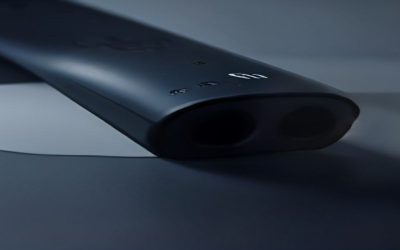
The RØDE Wireless Micro configuration reviewed here is the black kit with two microphones, a USB-C receiver, a charging case and windshields. Its clearest role for gaming creators is phone-based voice capture: commentary clips, two-person conversations or supplementary recordings around a streaming setup. The supplied listing specifically positions this receiver for USB-C phones. It does not establish the kit as a microphone system for a gaming PC or console.
This is a specification-based assessment of the retailer listing, not a hands-on audio test. The practical appeal is straightforward: two included microphones, a direct phone connection and automatic level management. The main purchasing questions concern what the listing leaves open, particularly live monitoring, app routing and compatibility beyond the stated phones.
Specifications that define this exact configuration
| Item | Listed detail |
|---|---|
| Product family | RØDE Wireless Micro |
| Configuration | Two microphones, USB-C receiver and charging case |
| Finish | Black |
| Stated device support | iPhone 15 and later, plus Android USB-C devices; not Lightning iPhones |
| Initial connection | Pre-paired microphones; listing says no app or pairing procedure is required |
| Level management | Automatic GainAssist |
| Battery claim | Up to 21 hours of combined use with the charging case |
| Other included accessories | Windshields |
| Listed dimensions | 2.83464 × 2.28346 × 1.1811 inches; component or package scope unspecified |
| Listed weight | 0.225753356288 pounds; component or package scope unspecified |
Voice pickup: convenience without enough detail to predict isolation
RØDE’s listing promotes the microphone capsules and says GainAssist manages levels automatically. For someone moving between quiet explanation and excited game commentary, automatic level management is a relevant convenience. It reduces the emphasis on manually setting levels, but the evidence does not explain the algorithm’s limits or provide recordings demonstrating how it handles abrupt changes.
That distinction matters at a gaming desk. Automatic gain management should not be read as a promise to reject mechanical keyboard clicks, PC fans or loudspeaker audio. The supplied specifications give no pickup pattern, frequency response, maximum sound-pressure level or noise-rejection detail. There is consequently no evidence-based way to predict how much room sound this kit captures relative to speech.
The two microphones make a two-speaker recording setup a plausible use case without requiring another microphone purchase. However, the listing does not say whether the speakers reach the recording app as separate tracks, separate channels or a combined signal. Creators who need to edit one speaker independently should confirm that routing before choosing the kit. Included windshields are also useful accessories to have, although their presence alone does not establish outdoor wind performance.
USB-C compatibility needs more than a matching socket
The strongest compatibility statement is also the most restrictive: this is the USB-C phone version. The listing names iPhone 15 and later and Android USB-C devices, while explicitly excluding Lightning iPhones. A Lightning-phone owner should not treat this exact configuration as the supported option.
The receiver connects directly to the phone, and the microphones are described as pre-paired. According to the listing, connecting the receiver does not require an app or a separate pairing process. That supports a relatively simple connection workflow, but it does not guarantee that every streaming or recording app will select and route the audio as intended. App-specific support is not documented in the supplied evidence.
For a live-streaming desk, USB-C alone is not enough to infer Windows, macOS or console compatibility. Nor does the listing establish operation through a dock or hub. Our guide to USB-C hubs for gaming setups can help frame broader port-planning questions, but it is not evidence that this receiver works through those accessories. Confirm the complete device-to-app connection rather than buying on connector shape alone.
Monitoring and desk integration are the key unknowns
Live monitoring deserves particular attention if this kit will supply commentary during a broadcast. The listing does not specify a headphone output, a monitoring path or latency. That is not proof that monitoring is impossible; it means the supplied information cannot establish how you would hear your own microphone signal or how delayed it might be. For buyers who need dependable real-time self-monitoring, this is a decision-critical gap.
A directly connected receiver also makes the phone’s physical layout important. Check clearance around the USB-C port with your case and phone mount in place. Neither connector clearance nor mount compatibility is given. Simultaneous phone charging is another unanswered question: the supplied facts do not describe a pass-through charging connection.
The kit is marketed as compact, but the dimensions and weight have no clearly identified measurement scope. They should not be treated as the size or weight of an individual microphone. For desk planning, the more defensible conclusion is that this is a phone-connected kit whose fit still needs checking against your particular arrangement.
Battery planning and verdict
The charging case is credited with up to 21 hours of combined use. That is a seller-stated total involving the case, not evidence of a 21-hour uninterrupted microphone session. Per-charge microphone runtime, recharge duration and the conditions behind that total are not supplied. Long-stream planning therefore needs more information than the headline figure.
The Wireless Micro USB-C two-microphone kit is worth considering for creators prioritizing simple, supported-phone voice recording and a two-speaker setup. Pre-pairing, automatic GainAssist and the included case are its clearest specification-backed conveniences. For a primary desktop broadcast microphone, separate-track production or monitoring-dependent live work, confirm those missing capabilities first. This listing supports a phone-focused purchase more convincingly than an all-purpose streaming-audio purchase.
Sources: Retailer listing for the RØDE Wireless Micro USB-C two-microphone kit. Specifications and manufacturer-style performance claims above are drawn from that listing, not independent measurements.
Check the exact product and current offer on Amazon