Key takeaways
- For most gamers, premium wireless latency is now indistinguishable from wired, so choose on comfort and convenience.
- Build charging into your routine, or pick a long-battery-life model, so wireless gear never dies mid-session.
- If budget is the priority, wired gear delivers more performance per dollar than equivalent wireless.
- Choose wired for maximum reliability in signal-heavy environments or elite competitive play.
What's inside
- Watch: Wired vs Wireless Gaming Gear: Which Is Better? — Video Review
- Latency: How Big Is the Gap Now?
- Battery Life and Charging Habits
- Weight, Comfort, and Freedom of Movement
- Price and Value
- Reliability and Interference
- Tips
- Related Guides
- Frequently Asked Questions
- Conclusion
- Related Articles
- Related Guides
The wired-versus-wireless debate is one of the oldest arguments in gaming, and for good reason: your choice affects latency, comfort, cost, and how clean your desk looks. Wireless gear has improved dramatically, closing the gap that once made cables the only serious option, but wired connections still hold real advantages. Knowing the trade-offs helps you spend wisely on mice, keyboards, and headsets.
- Watch: Wired vs Wireless Gaming Gear: Which Is Better? — Video Review
- Latency: How Big Is the Gap Now?
- Battery Life and Charging Habits
- Weight, Comfort, and Freedom of Movement
- Price and Value
- Reliability and Interference
- Tips
- Related Guides
- Frequently Asked Questions
- Conclusion
- Related Articles
- Related Guides
This 2026 guide compares wired and wireless gaming gear across the factors that actually matter. You will learn how modern wireless latency really compares, how battery life and charging fit into daily use, what the price difference buys you, and how to decide which connection type suits your play style, budget, and setup.
As an Amazon Associate we earn from qualifying purchases at no extra cost to you. Product prices and availability are accurate as of the date shown and are subject to change.




⚡ Save on Your Next PC — Amazon Prime
Prime members get fast free shipping on the systems above, plus early access to Prime Day & Black Friday PC deals. New members get a 30-day free trial.
Watch: Wired vs Wireless Gaming Gear: Which Is Better? — Video Review
Latency: How Big Is the Gap Now?
Latency was once the deciding factor, but modern wireless technology has narrowed it to the point where most players cannot feel a difference. High-performance wireless mice like the Logitech G Pro X2 Superstrike, G502 Lightspeed, or Razer Viper V3 HyperSpeed use dedicated low-latency connections that rival wired response. Budget or older wireless gear can still lag, and wired remains the safe choice for elite competitive play, but for the vast majority of gamers, premium wireless is now genuinely fast enough to trust.
Battery Life and Charging Habits
Wireless gear trades cables for the need to charge. Battery life varies widely, from a couple of days to weeks depending on the device and RGB use. A lightweight mouse like the Logitech G305 Lightspeed can run for months on a single AA battery, while rechargeable models need a top-up every few days. The key is building charging into your routine so you are never caught with a dead device mid-match. Wired gear sidesteps this entirely, drawing power straight from your PC.
Weight, Comfort, and Freedom of Movement
Cables create drag, and for fast-flick mouse movements that matters. Wireless mice like the Razer Basilisk V3 X HyperSpeed remove cable tug entirely, letting the mouse glide freely, and a tidy setup simply feels nicer to use. Wireless also lets you sit farther from the screen, handy for couch console play. The trade-off is that wireless devices carry a battery, which can add a little weight compared to the lightest wired designs, though modern engineering keeps most premium wireless mice impressively light.
Price and Value
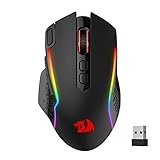
Wired gear almost always costs less for the same performance tier, because there is no battery, radio, or charging circuitry to build in. If budget is tight, a wired device gives you more performance per dollar. Wireless commands a premium for the convenience it offers, though options like the Redragon M810 Pro show that low-latency wireless is becoming more affordable. Decide how much the freedom from cables is worth to you, then find the best-performing device at that price.
Reliability and Interference
Wired connections are essentially foolproof: plug in and play, with no signal to drop. Wireless gear relies on a stable connection, and crowded 2.4GHz environments can occasionally cause interference, though quality dongles minimize this. For most home setups, premium wireless is reliable enough for daily competitive play. If you game in a signal-heavy environment or simply never want to think about connection or charging, wired remains the most dependable, hassle-free choice.
Tips
- For most gamers, premium wireless latency is now indistinguishable from wired, so choose on comfort and convenience.
- Build charging into your routine, or pick a long-battery-life model, so wireless gear never dies mid-session.
- If budget is the priority, wired gear delivers more performance per dollar than equivalent wireless.
- Choose wired for maximum reliability in signal-heavy environments or elite competitive play.
Frequently Asked Questions
Is wireless gaming gear fast enough for competitive play?
Premium wireless mice and keyboards now use low-latency technology that most players cannot distinguish from wired. For top-level competition some still prefer wired for absolute certainty, but modern wireless is genuinely fast enough for the vast majority of gamers.
How long do wireless gaming devices last on a charge?
It varies widely, from a few days to several weeks. Lightweight mice like the G305 Lightspeed can run for months on a single battery, while RGB-heavy rechargeable models need topping up every few days. Check the rated battery life before buying.
Is wired gear cheaper?
Generally yes. Without a battery, radio, and charging circuitry, wired devices cost less for the same performance tier. If you want the most capability for your money, wired is usually the better value.
Can wireless connections drop or lag?
Quality wireless gear with a good dongle is very reliable, but crowded 2.4GHz environments can occasionally cause interference. For most home setups this is rare, though wired remains the most foolproof option if reliability is your top concern.
Conclusion
The wired-versus-wireless choice is no longer about which is faster but about which fits your life. Premium wireless has all but erased the latency gap, offering freedom of movement and a clean setup at a premium price and the small cost of charging. Wired gear counters with lower prices and bulletproof reliability. Weigh convenience against budget and dependability, and pick the connection that lets you focus on the game, not the gear.