Key takeaways
- Direct vs. reflected sound: At 15 cm from your mouth your voice is about 70-75 dBA. At 60 cm, a keyboard is about 55 dBA. Move the mic from 30 cm to 15 cm and you gain roughly 6 dB of voice level by the inverse-square law, with no gain increase. That is free noise rejection no software can match.
- Capsule sensitivity: A typical USB condenser needs 25-40% Windows gain at 15-20 cm. A USB dynamic like the ATR2100x-USB or Q2U often needs 75-90% gain + close talk at 8-15 cm. If you run a dynamic at arm’s length, you crank digital gain and bring hiss and room back in.
What's inside
The best gaming mic under 100 for an untreated room is the Audio-Technica ATR2100x-USB if you have keyboard, fan, or housemate noise, the HyperX QuadCast if you want the easiest tap-to-mute cardioid condenser for Discord, and the Razer Seiren V2 X if you want the clearest plug-and-play best USB mic under 100 for streaming and voice chat.
All three stay in the sub-$100 street-price band in 2026, usually $50-$100 depending on sales and bundle, but they solve different problems. Dynamic mics reject rooms, condensers sound fuller but hear everything. Pick by your room first, not by feature list.

HyperX QuadCast 2 S – USB Microphone, with RGB Lighting, Streaming and Podcasting, with On-Board Controls, LED Lighting, Removable Shock Mount, PC, Mac, USB-C - Black
Included for 'Best Gaming Mic Under $100 in 2026 for Clear, Noise-Free Voice Chat' because the listing specifies USB Microphone and with RGB Lighting, details this guide uses to compare options.
View on Amazon
Logitech Creators Blue Yeti USB Microphone for PC, Mac, Gaming, Recording, Streaming, Podcasting, Studio and Computer Condenser Mic with Blue VO!CE effects, 4 Pickup Patterns, Plug and Play - Blackout
Included for 'Best Gaming Mic Under $100 in 2026 for Clear, Noise-Free Voice Chat' because the listing specifies Mac and Gaming, details this guide uses to compare options.
View on Amazon
FIFINE AmpliGame AM8 USB/XLR Dynamic Microphone for Gaming Streaming
Included for 'Best Gaming Mic Under $100 in 2026 for Clear, Noise-Free Voice Chat' as a relevant option in this category; details come from the product listing.
View on Amazon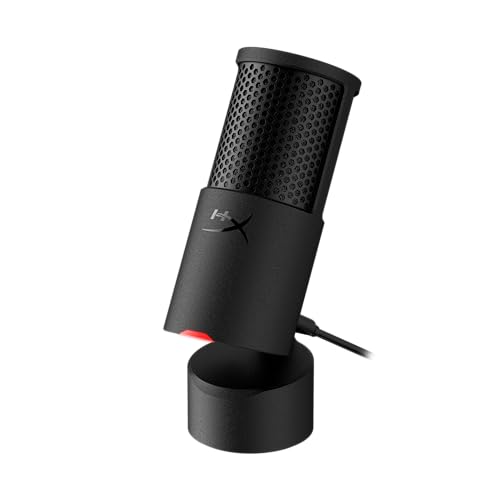
HyperX SoloCast 2 – Gaming USB Condenser Mic for PC, USB-C to USB-A, Built-in Pop Filter, Internal Shock Mount, Plug and Play, 24-bit / 96kHz, Compact Tiltable Stand – Black
Included for 'Best Gaming Mic Under $100 in 2026 for Clear, Noise-Free Voice Chat' because the listing specifies Gaming USB Condenser Mic for PC and USB-C to USB-A, details this guide uses to compare options.
View on AmazonBest gaming mic under $100: quick picks
| Mic | Capsule / Pattern | Sample rate | Freq. response | Shock mount / stand in box | Best for |
|---|---|---|---|---|---|
| Audio-Technica ATR2100x-USB | Dynamic, cardioid | 24-bit / 192 kHz | 50 Hz – 15,000 Hz | No shock mount, basic tripod + mic clip, 3/8-in and 5/8-in threads | Noisy untreated bedroom, mechanical keyboard 30-50 cm away |
| HyperX QuadCast (original) | Condenser, cardioid / omni / bidirectional / stereo | 16-bit / 48 kHz | 20 Hz – 20,000 Hz | Built-in elastic shock mount + heavy desktop stand | Shared PC for chat + occasional streaming, easy mute |
| Razer Seiren V2 X | Condenser, supercardioid | 24-bit / 48 kHz | 20 Hz – 20,000 Hz | No full shock mount, integrated tilt stand, improved shock absorption vs Mini | Best streaming microphone under 100 for tight desk setups |
| Samson Q2U | Dynamic, cardioid | 16-bit / 48 kHz | 50 Hz – 15,000 Hz | Clip, foam windscreen, small tripod, XLR + USB cables | Upgrade path: USB now, XLR interface later |
| FIFINE AmpliGame AM8 | Dynamic, cardioid | 24-bit / 96 kHz | 50 Hz – 16,000 Hz | Shock mount + sturdy round base included | Tightest budget dynamic with usable included hardware |
Why untreated rooms change the answer
A dry spec sheet rewards wide 20 Hz – 20 kHz condensers. A real gaming room with drywall, glass monitor, PC fans at 35-45 dBA, and a clicky keyboard at 55-65 dBA punishes them.
Two physics problems matter more than sample rate:
- Direct vs. reflected sound: At 15 cm from your mouth your voice is about 70-75 dBA. At 60 cm, a keyboard is about 55 dBA. Move the mic from 30 cm to 15 cm and you gain roughly 6 dB of voice level by the inverse-square law, with no gain increase. That is free noise rejection no software can match.
- Capsule sensitivity: A typical USB condenser needs 25-40% Windows gain at 15-20 cm. A USB dynamic like the ATR2100x-USB or Q2U often needs 75-90% gain + close talk at 8-15 cm. If you run a dynamic at arm’s length, you crank digital gain and bring hiss and room back in.
Worked example: voice 72 dBA at 15 cm, keyboard 58 dBA at 50 cm = 14 dB raw SNR. Pull mic to 10 cm, voice rises to ~75-76 dBA, keyboard stays 58 dBA = 17-18 dB SNR. Add cardioid null pointed at keyboard (10-15 dB rejection at 180 degrees) and Discord / NVIDIA Broadcast suppression at -12 dB residual, and intelligibility jumps from muddy to tournament-clear without buying acoustic panels.
Pickup pattern: what actually helps in game chat
Cardioid dynamic: quietest in noisy rooms
The ATR2100x-USB, Samson Q2U, and AM8 class all use cardioid dynamic capsules. They are less sensitive to distant reflections and plosives, which is why they are the default answer for best gaming mic under 100 if your PC is loud or your walls are bare.
Trade-off: thinner out-of-box sound than a large condenser and needs close mic technique. Keep it 8-15 cm, slightly off-axis, with foam filter on. If you lean back in your chair, level drops fast.
Supercardioid condenser: focused but less forgiving
The Razer Seiren V2 X uses a tighter supercardioid pattern. On-axis voice is crisp for streaming commentary, and side rejection is better than a standard cardioid Blue Yeti Nano type. The rear lobe is larger, though, so do not place a fan or open window directly behind it.
This is the sweet spot if you want a best streaming microphone under 100 that sounds bright without EQ and you can keep the room reasonably quiet.
Multi-pattern condenser: versatile, not noise-proof
The HyperX QuadCast offers cardioid, omni, bidirectional, and stereo. For gaming, leave it on cardioid 95% of the time. Omni and stereo sound fun but double room reverb in an untreated 10 x 12 ft bedroom with 0.6-0.9 second decay. Use bidirectional only for couch co-op interviews.
Background noise rejection compared
No sub-$100 USB mic has true hardware noise cancellation. What matters is capsule type + built-in DSP + how well it works with Discord, OBS, and NVIDIA Broadcast.
- Audio-Technica ATR2100x-USB: Best passive rejection. Narrow dynamic pickup + low high-frequency room pickup means fan hiss at 4-6 kHz stays 8-12 dB lower than QuadCast at same distance. No software required. Pair with Discord Krisp on Low or NVIDIA Broadcast at 60-70% strength to avoid robotic artifacts.
- Samson Q2U: Very similar rejection to ATR2100x-USB, slightly darker top end which hides sibilance and spring reverb. Best if your voice is sharp or your keyboard is high-pitched.
- Razer Seiren V2 X: Analog limiter + tighter pattern helps with shouts peaking at -3 dBFS during clutch moments. Needs 15-20 cm distance and -5 to -10 dB mic attenuation in Synapse if your fans ramp under load.
- HyperX QuadCast: Fullest low end for voice chat, but most room pickup. Requires low gain + close placement + Discord Noise Suppression set to Krisp, not Standard, in untreated rooms.
- FIFINE AmpliGame AM8: Dynamic isolation close to ATR2100x-USB, plus tap-to-mute and headphone monitoring. High-frequency roll-off hides PC whine better than budget condensers.
Settings that make a $70 mic sound like $150
Use these baseline values, then adjust by 5% increments while recording in OBS:
- Distance: Dynamic 8-15 cm, condenser 15-25 cm. Use a fist to pinky measurement: one fist + thumb is about 12-15 cm.
- Windows Sound > Input volume: Dynamic 80-90, condenser 55-70. If Windows is at 100 and you are still quiet, move closer before adding +10 to +20 dB boost.
- Discord: Input Sensitivity off for Manual, threshold -55 to -45 dB, Noise Suppression Krisp, Echo Cancellation on only if using speakers.
- OBS: Add Noise Suppression RNNoise at -25 dB, then Limiter at -2.5 dB ceiling, then Gain +3 to +6 dB only if peaks hit below -18 dBFS. Order matters: suppress, then limit, then gain.
- Razer Synapse / NGENUITY / Maono Link class apps: Enable high-pass filter at 80-100 Hz to cut desk rumble and mic-arm creaks, de-esser -3 to -6 dB at 6-8 kHz if S sounds hiss.
Reasoning: close distance maximizes direct-to-reverberant ratio, conservative Windows gain minimizes USB preamp hiss, and light suppression preserves consonants. Heavy suppression + far mic equals underwater Discord voice.
Shock mount and stand durability
Under $100, the mount often fails before the capsule. Desk thumps from controllers, keyboard vibration through MDF desks, and wobbly tripods cause more complaints than frequency response.
- HyperX QuadCast: Best included hardware. Internal elastic shock mount actually decouples keystroke thumps, and the 0.7 kg weighted base resists tipping. Hinge stays tight after a year of tilt adjustments better than most tripod legs.
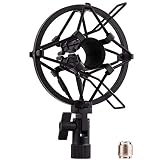
- FIFINE AmpliGame AM8 / Maono PD200X class: Include a real spider shock mount and metal base. Elastics will stretch if you hang a heavy pop filter on them, but replacement bands are cheap and standard 5/8-in threads fit $20-$35 boom arms.
- Razer Seiren Mini / Seiren V2 X: Compact tilt stand is stable for small desks and LAN transport, but transmits desk hits. Budget $25-$40 for a scissor arm with internal springs if you slam your desk.
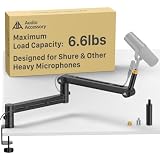
- ATR2100x-USB / Samson Q2U: No shock mount, just hard clip + mini tripod. The tripod is too short for monitor-height mouths and picks up every desk knock. Plan on a boom arm from day one; both have standard threads so fit is easy.
Durability rule: if your desk shakes, prioritize included shock mount (QuadCast, AM8 class). If your desk is solid but room is noisy, prioritize dynamic isolation and add an arm (ATR2100x-USB, Q2U).
Which should you buy? Decision matrix
- Loud fans + mechanical keyboard + bare walls: Get ATR2100x-USB or Samson Q2U. Choose ATR2100x-USB for higher 24-bit headroom and USB-C, Q2U if you want XLR for a future GoXLR / mixer upgrade.
- Quiet room + Discord + occasional Twitch / TikTok: Get HyperX QuadCast. Tap-to-mute, headphone volume dial, and fuller sound beat raw rejection when background is already below 35 dBA.
- Small desk + streaming commentary as priority: Get Razer Seiren V2 X. It is the cleanest best usb mic under 100 for voice-forward streaming without crowding a 24-inch monitor setup.
- Under $60 total with no extra arm: Get FIFINE AmpliGame AM8 class dynamic. Included shock mount + base saves $25-$40 over ATR2100x-USB + arm.
- You plan XLR in 12 months: Get Samson Q2U or ATR2100x-USB (both XLR + USB) or step to a PD200X class XLR/USB dynamic. Pure USB condensers like Seiren Mini have no upgrade path.
For most gamers searching best gaming mic under 100 in 2026, a close-talked dynamic is the safest blind buy. It forgives bad rooms, needs no cloudlifter at USB gain, and works identically in Discord, Valorant voice, OBS, and PS5 / Xbox USB input where VST filters are not available.
FAQ
Is a dynamic or condenser better for gaming?
Dynamic for untreated, noisy rooms. Condenser for treated or quiet rooms where you want richer streaming tone. If you cannot clap without hearing echo, buy dynamic.
Do I need a boom arm under $100?
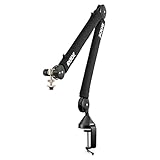
For ATR2100x-USB, Q2U, and Seiren Mini class, yes for best results. Getting the capsule to 10-15 cm without hunching does more than any $100 upgrade. For QuadCast and AM8 with heavy bases, you can delay the arm if desk space allows 20 cm placement.
Why does my USB mic pick up keyboard more than voice?
Mic is too far and gain is too high. Move mic to 10-15 cm, point the rear null at the keyboard, lower Windows input to 65-75 for condensers, enable Krisp or RNNoise, and switch Discord input from Voice Activity with -70 dB threshold to manual -50 dB.