Key takeaways
- Refresh rate over raw resolution: A 4K panel at 60Hz will feel worse in competitive titles than a 1440p display at 165Hz. In this price bracket, look for at least 120Hz — the 144Hz to 165Hz displays here are the sweet spot, and several offer dual-mode operation that trades resolution for even higher refresh.
- Panel type matters more than marketing: IPS is the safe default at this price, delivering accurate colour and wide viewing angles with response times now competitive with older TN panels. VA panels offer deeper contrast for single-player and cinematic work but can smear in dark transitions.
- Check your GPU can actually feed it: Native 4K at high refresh demands serious hardware. If you’re running anything below an RTX 5070 or RX 9070, budget for upscaling — DLSS and FSR make 4K genuinely viable on mid-range cards, but plan for it rather than being surprised.
- Ignore HDR400 claims: DisplayHDR 400 certification without local dimming means brighter highlights and little else. Treat HDR as a bonus in this bracket, not a buying criterion, and prioritise colour gamut coverage — 95% DCI-P3 or better — instead.
- Ports and ergonomics are the quiet dealbreakers: Confirm HDMI 2.1 if you’re connecting a PS5 or Xbox Series X, and check whether the stand offers height and pivot adjustment. USB-C with power delivery is worth paying for if you dock a laptop.
What's inside
Shopping for a 4K gaming monitor under $500 is trickier than it looks. The panel market in 2026 is crowded with displays that hit the resolution spec but cut corners everywhere else — 60Hz refresh rates that make fast shooters feel sluggish, HDR badges attached to panels that can’t hold a candle to real local dimming, or “gaming” branding stapled onto office monitors with 12ms response times. Meanwhile, genuinely good 4K gaming displays that used to cost $800 have quietly slid into the sub-$500 bracket, so the deals are real if you know which specs actually matter.
This guide cuts through that noise. We’ve focused on monitors that pair 3840×2160 resolution with refresh rates high enough to justify a modern GPU, sensible response times, and adaptive sync support that works on both NVIDIA and AMD hardware. Every pick below is realistically attainable within a $500 budget at typical street pricing, and we’ve flagged where each one makes sense — whether you’re driving it with an RTX 5070, a mid-range Radeon card, or a console. One QHD entry is included deliberately, because for some buyers the smarter move is more frames rather than more pixels.
As an Amazon Associate we earn from qualifying purchases at no extra cost to you. Product prices and availability are accurate as of the date shown and are subject to change.





⚡ Save on Your Next PC — Amazon Prime
Prime members get fast free shipping on the systems above, plus early access to Prime Day & Black Friday PC deals. New members get a 30-day free trial.
Watch: Best 4K Monitor Under $500 — Video Review
How to Choose 4K Monitor Under $500
- Refresh rate over raw resolution: A 4K panel at 60Hz will feel worse in competitive titles than a 1440p display at 165Hz. In this price bracket, look for at least 120Hz — the 144Hz to 165Hz displays here are the sweet spot, and several offer dual-mode operation that trades resolution for even higher refresh.
- Panel type matters more than marketing: IPS is the safe default at this price, delivering accurate colour and wide viewing angles with response times now competitive with older TN panels. VA panels offer deeper contrast for single-player and cinematic work but can smear in dark transitions.
- Check your GPU can actually feed it: Native 4K at high refresh demands serious hardware. If you’re running anything below an RTX 5070 or RX 9070, budget for upscaling — DLSS and FSR make 4K genuinely viable on mid-range cards, but plan for it rather than being surprised.
- Ignore HDR400 claims: DisplayHDR 400 certification without local dimming means brighter highlights and little else. Treat HDR as a bonus in this bracket, not a buying criterion, and prioritise colour gamut coverage — 95% DCI-P3 or better — instead.
- Ports and ergonomics are the quiet dealbreakers: Confirm HDMI 2.1 if you’re connecting a PS5 or Xbox Series X, and check whether the stand offers height and pivot adjustment. USB-C with power delivery is worth paying for if you dock a laptop.
The Best Picks Reviewed
Acer Nitro VG270K V4
The standout value proposition here: a 27-inch 4K IPS panel at 160Hz with a dual-mode feature that drops to 1080p at 320Hz when you want maximum frames in competitive shooters. It’s the most flexible monitor on this list, and the IPS panel holds up well for content work between sessions.
ASUS ROG XG27UCSR
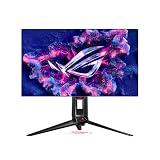
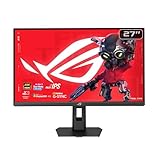
ASUS’s ROG entry pairs 4K at 162Hz with USB-C connectivity and full G-SYNC compatibility, making it the best pick for anyone who also docks a work laptop. Response times are genuinely quick and the factory calibration is above average for a gaming-first display.
ASUS TUF Gaming VG27UQ1A
Effectively the value sibling to the ROG model — 160Hz, 1ms claimed response, 95% DCI-P3 coverage and Extreme Low Motion Blur Sync, but with a simpler feature set and a lower price. The three-year warranty is a meaningful differentiator in a category where panel lottery is a real risk.
Samsung Odyssey G7 (G75F) 37″
If you want scale, this curved 37-inch 4K panel delivers a genuinely immersive single-player experience with strong VA contrast. It’s the priciest recommendation and demands desk depth, so measure before you commit — but for racing sims and RPGs it’s hard to beat.
Dell S2725QS
The sensible, understated choice: 4K IPS at 120Hz with FreeSync Premium and a genuinely good stand, aimed at buyers who split time between gaming and productivity. It won’t win refresh-rate arguments, but build quality and colour accuracy are a step above the typical budget gaming monitor.
Frequently Asked Questions
Is 4K worth it under $500, or should I buy 1440p instead?
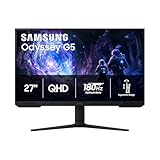
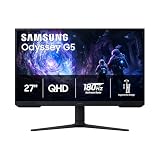
If your GPU is mid-range or older, a high-refresh 1440p display like the Samsung Odyssey G5 (G51F) will deliver a more consistently smooth experience for less money. Choose 4K if you have the hardware to drive it or if you also use the display for creative and productivity work, where the extra pixels pay off daily.
Do I need HDMI 2.1 for console gaming?
Yes, if you want 4K at 120Hz on a PS5 or Xbox Series X. HDMI 2.0 caps you at 4K/60, so verify the port specification rather than trusting the box copy — several budget monitors advertise 120Hz that’s only reachable over DisplayPort.
What refresh rate should I target at 4K?
120Hz is the practical floor for gaming in 2026, and 144Hz to 165Hz is the sweet spot in this price range. Beyond that, you’re paying for headroom most sub-$500 GPUs can’t consistently use at native resolution.
Does IPS or VA make more sense for gaming?
IPS for competitive play and mixed use, thanks to faster transitions and better viewing angles. VA for dark-room single-player gaming and film, where its superior contrast ratio genuinely improves the image — just accept slightly slower dark-scene response.
Final Thoughts
For most buyers, the Acer Nitro VG270K V4 is the smartest purchase in this bracket — its dual-mode 4K/160Hz and 1080p/320Hz flexibility means you don’t have to choose between fidelity and frames. The ASUS TUF VG27UQ1A is the value alternative if you want similar performance with a longer warranty, while the ASUS ROG XG27UCSR earns its premium for anyone who needs USB-C docking alongside serious gaming performance. All three represent genuine value at 2026 pricing, which is more than can be said for much of this category.