Key takeaways
- Immersive wraparound view that replaces dual monitors on one seamless panel.
- High refresh options up to 200Hz for smooth, engaging gaming.
- USB-C connectivity on premium models simplifies laptop docking.
- Productivity gains from expansive horizontal workspace.
What's inside
When people search for the “widest curved computer monitor,” they are usually chasing one of two things: the immersive wraparound feel of a super-ultrawide for gaming and media, or the productivity of a single panel that replaces a dual-monitor setup. The good news is that today’s widest curved displays, spanning 34-inch ultrawides up to massive 49-inch 32:9 super-ultrawides, deliver both, provided you match the panel to your desk and use case.
This review looks at the standout wide curved monitors currently available, from immersive gaming ultrawides to 49-inch dual-QHD productivity beasts. If you are weighing width against resolution and price, here is how the leading options compare.
As an Amazon Associate we earn from qualifying purchases at no extra cost to you. Product prices and availability are accurate as of the date shown and are subject to change.


🎮 Get More From Your Setup — Free
Prime Gaming gives you free PC games every month, in-game loot, and a free Twitch channel sub — plus fast free shipping on all the gear above. New members get a 30-day free trial.
Watch: Widest Curved Computer Monitor: Review & Buyer’s Guide — Video Review
Design & Build
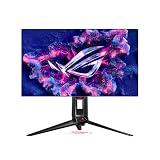
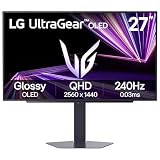
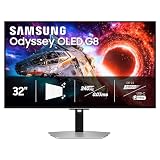
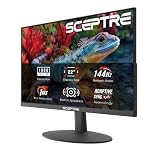
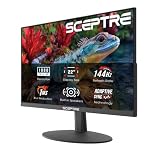
The widest options here are the 49-inch 32:9 models, including the INNOCN 49C1G, the Samsung 49-inch business curved, and the Deco Gear 5K2K, which physically span the desk footprint of two 27-inch monitors joined seamlessly. Their aggressive 1800R or 1500R curves wrap the image toward you for immersion and reduce neck movement across the width. The 34-inch ultrawides like the SANSUI and Sceptre models are more manageable, fitting standard desks while still offering a panoramic 3440×1440 canvas. Build quality on the premium Samsung and Dell units includes height-adjustable stands, USB-C power delivery, and refined chassis, while budget picks trim ergonomics to hit lower prices.
Performance
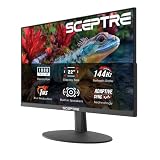
Width and resolution have to be considered together. The 49-inch 3840×1080 panels, like the INNOCN, are gloriously wide but spread pixels thin, so text is softer than on higher-resolution screens; the Deco Gear 5K2K and Samsung dual-QHD models fix that with far denser 5120×1440 resolutions for crisp productivity. On the gaming front, the SANSUI 34-inch hits up to 200Hz with HDR and strong color coverage, while the Sceptre 34-inch reaches 180Hz, both delivering smooth, immersive gameplay. The Dell S3425DW rounds things out with a 120Hz VA panel, FreeSync, and USB-C convenience for mixed work-and-play use. For pure width choose a 49-inch model; for the best balance of width and sharpness, a dual-QHD super-ultrawide or a 34-inch 3440×1440 panel is the sweet spot.
Pros & Cons
- Immersive wraparound view that replaces dual monitors on one seamless panel.
- High refresh options up to 200Hz for smooth, engaging gaming.
- USB-C connectivity on premium models simplifies laptop docking.
- Productivity gains from expansive horizontal workspace.
- Desk space demands can be significant for 49-inch models.
- Lower pixel density on 3840×1080 panels softens text clarity.
- Premium pricing on the sharpest, best-built units.
Alternatives to Consider
If desk space or budget is tight, a 34-inch 3440×1440 ultrawide gives most of the immersion at a fraction of the footprint. Productivity users who prioritize sharpness over sheer width may prefer a pair of 27-inch QHD monitors or a 5K2K super-ultrawide. Gamers chasing the highest refresh should weigh a 34-inch 200Hz panel against a wider but slower 49-inch model.
Frequently Asked Questions
How wide is too wide?
A 49-inch 32:9 monitor needs roughly the desk depth and width of two 27-inch screens. Measure your desk and viewing distance before committing to the widest options.
Do super-ultrawides replace dual monitors?
Yes. A 49-inch panel offers a seamless equivalent to two side-by-side displays without a bezel down the middle, ideal for multitasking.
Is 3840×1080 sharp enough?
It is fine for gaming and media but noticeably softer for text. For sharp productivity, choose a dual-QHD 5120×1440 panel instead.
Does curvature help?
On very wide screens, a pronounced curve keeps the edges at a more even viewing distance, improving comfort and immersion.
Verdict
For maximum width and immersion, a 49-inch super-ultrawide like the INNOCN 49C1G or a dual-QHD Samsung is the way to replace a dual-monitor setup on one screen. If sharpness and desk space matter more, a 34-inch 3440×1440 panel such as the SANSUI delivers the best all-around balance. Match width to your desk, and resolution to your work.