Key takeaways
- 180Hz QHD is now affordable and widely available across brands
- QD-OLED has reached mid-range pricing with the Odyssey OLED G5
- Strong adaptive-sync support (FreeSync and G-Sync compatible) is standard
- More sizes and curves to match any desk and play style
What's inside
Gaming monitors move fast, and 2026 has been a banner year for value. Refresh rates that once carried a premium are now standard, QD-OLED has pushed into mid-range price brackets, and 180Hz has quietly become the new baseline for competitive play. Keeping up with the news means knowing which panels actually reflect these shifts rather than just riding the marketing.
To cut through the noise, we tracked the displays generating the most buzz right now, from Samsung’s expanding Odyssey G5 family to sharp challengers from Sceptre and Acer. Here’s what the latest crop tells us about where gaming displays are heading and which trends are worth buying into.
As an Amazon Associate we earn from qualifying purchases.


🎮 Get More From Your Setup — Free
Prime Gaming gives you free PC games every month, in-game loot, and a free Twitch channel sub — plus fast free shipping on all the gear above. New members get a 30-day free trial.
Watch: Gaming Monitor News: Review & Buyer’s Guide — Video Review
Design & Build
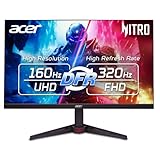
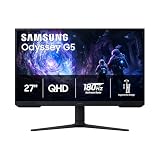
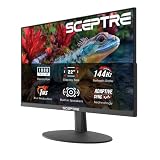
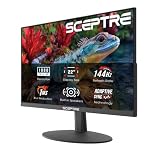
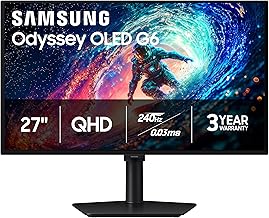
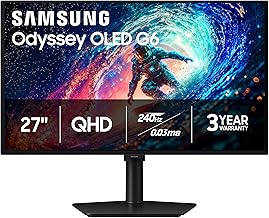
The headline story is the split between fast IPS and QD-OLED. Samsung’s Odyssey G5 range now spans a 27-inch QHD IPS at 180Hz, a 32-inch QHD variant, a 32-inch 1000R curved model, and, most notably, an Odyssey OLED G5 that brings QD-OLED to a more accessible price. Build quality has improved across the board, with adjustable stands appearing on more mid-range units and slimmer bezels becoming the norm. Sceptre’s 27-inch Prime keeps costs down with a functional stand and built-in speakers, while Acer’s KB272 targets the office-plus-play crowd with a clean, tilt-only IPS design.
Performance
The clearest trend is 180Hz QHD as the value sweet spot. The Samsung Odyssey G5 QHD panels deliver 180Hz with 1ms response, FreeSync, and HDR10, which covers the vast majority of gamers well. The Odyssey OLED G5 raises the bar dramatically with 0.03ms response and near-instant pixel transitions that IPS simply cannot match, plus deeper blacks and better motion clarity. The Sceptre Prime pushes both its DisplayPort and HDMI inputs to 180Hz, a genuinely useful detail. The Acer KB272 tops out at 120Hz FHD with 99% sRGB, aimed more at crisp color and everyday sharpness than esports reflexes.
Pros & Cons
- 180Hz QHD is now affordable and widely available across brands
- QD-OLED has reached mid-range pricing with the Odyssey OLED G5
- Strong adaptive-sync support (FreeSync and G-Sync compatible) is standard
- More sizes and curves to match any desk and play style
- OLED still costs more and carries burn-in caution for static UI
- Budget IPS models often skip height adjustment
- Marketing specs can overstate real-world response times
Alternatives to Consider
If competitive shooters are your focus and budget is tight, a 24 to 27-inch 1080p 180Hz IPS panel delivers the highest frames for the money. Immersion-first players may prefer a 32-inch curved QHD like the Odyssey G55C or G50F. And if image quality is the priority and you can absorb the cost, the Odyssey OLED G5 is the clear step up. Match the panel technology to how you actually play before chasing the biggest number on the box.
Frequently Asked Questions
Is 180Hz worth it over 144Hz?
The jump from 144Hz to 180Hz is modest but noticeable in fast games, and since many current panels include it at no premium, it’s an easy yes. The bigger leaps come from moving up from 60Hz or 75Hz.
Should I buy QD-OLED or IPS for gaming?
QD-OLED offers superior contrast, black levels, and motion clarity, making it the enthusiast choice. Fast IPS remains excellent value and avoids burn-in worries, which matters if you also do lots of static desktop work.
Is QHD or FHD better for a gaming monitor?
QHD (1440p) hits the current sweet spot for sharpness and performance on modern GPUs. FHD (1080p) is easier to drive for high frames on older or budget hardware and works well on 24 to 27-inch panels.
Do I need G-Sync or FreeSync?
Adaptive sync eliminates screen tearing and is worth having. Most current monitors, including the Odyssey G5 line, support both FreeSync and G-Sync compatibility, so you’re covered with either an AMD or NVIDIA GPU.
Verdict
The current gaming monitor news boils down to two takeaways: 180Hz QHD is now the affordable default, and QD-OLED has finally become attainable. For most players, a Samsung Odyssey G5 QHD panel at 180Hz is the smart value buy, while the Odyssey OLED G5 is the pick for anyone chasing best-in-class image quality. Focus on panel type and refresh rate over headline specs, and today’s market rewards you handsomely.