Key takeaways
- For ray tracing: The RTX 5060 Ti wins decisively, handling RT effects far better than the RX 9600 XT.
- For raw rasterization value: The RX 9600 XT often delivers more traditional frames per dollar for budget builds.
- For 1440p longevity: The 16GB RTX 5060 Ti’s larger frame buffer future-proofs high-resolution gaming.
- For upscaling quality: DLSS 4 on the 5060 Ti edges out FSR, though AMD’s solution is broadly compatible.
- For compact builds: Both offer SFF-ready models, but the 5060 Ti has more small-form-factor options.
What's inside
The mainstream GPU battle for 2026 comes down to two compelling mid-range contenders: AMD’s Radeon RX 9600 XT and NVIDIA’s GeForce RTX 5060 Ti. Both target the sweet spot of high-refresh 1080p and capable 1440p gaming at an accessible price, but they take different approaches to memory, features, and value. Choosing between them means understanding where each pulls ahead.
This head-to-head breaks down raw performance, feature sets, and real-world value so you can decide which card belongs in your next build. We’ll look at rasterization, ray tracing, upscaling technology, and the all-important price-to-performance equation to give you a clear recommendation.
As an Amazon Associate we earn from qualifying purchases at no extra cost to you. Product prices and availability are accurate as of the date shown and are subject to change.


🎮 Get More From Your Setup — Free
Prime Gaming gives you free PC games every month, in-game loot, and a free Twitch channel sub — plus fast free shipping on all the gear above. New members get a 30-day free trial.
Watch: Rx 9600 Xt Vs Rtx 5060 Ti: Full Comparison — Video Review
Quick Verdict
The RTX 5060 Ti, especially in its 16GB GDDR7 configurations, is the more well-rounded choice thanks to superior ray tracing, DLSS 4 with multi-frame generation, and a generous frame buffer that future-proofs 1440p gaming. The RX 9600 XT counters with strong rasterization value and competitive traditional performance, making it the pick for budget-focused players who prioritize raw frames per dollar over ray tracing and NVIDIA’s software ecosystem.
Radeon RX 9600 XT
AMD’s RX 9600 XT is built for value-conscious gamers who want strong traditional rasterization performance at 1080p and 1440p. It delivers smooth frame rates in the vast majority of modern titles and leans on AMD’s FSR upscaling to boost performance in supported games. The card’s appeal is straightforward: competitive frames at a friendly price, with solid efficiency and broad compatibility.
Where the RX 9600 XT shines is pure price-to-performance in rasterized workloads. For players who mostly skip ray tracing and want the most raw frames for their money, AMD’s offering makes a strong case. Its FSR technology continues to improve, closing the gap with NVIDIA’s upscaling in image quality while remaining broadly compatible across GPU brands.
GeForce RTX 5060 Ti
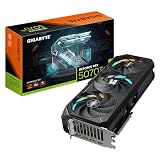
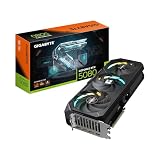
NVIDIA’s RTX 5060 Ti, available in both 8GB and 16GB GDDR7 variants, brings the full weight of the Blackwell architecture and NVIDIA’s software stack. The 16GB models, like the ASUS Dual OC and PNY Dual Fan, offer a roomy frame buffer that keeps 1440p gaming smooth even with high-resolution textures, while DLSS 4 with multi-frame generation delivers substantial smoothness gains in supported titles.
Ray tracing is where the 5060 Ti clearly leads, handling reflections and lighting effects far more gracefully than the AMD alternative. Cards like the GIGABYTE Gaming OC, MSI Shadow 2X OC, and ZOTAC Twin Edge OC come in compact SFF-ready designs with strong cooling. The combination of superior RT, DLSS 4, and a 16GB option makes the 5060 Ti the more feature-complete card for buyers who want longevity.
Head-to-Head: Which Should You Buy?
- For ray tracing: The RTX 5060 Ti wins decisively, handling RT effects far better than the RX 9600 XT.
- For raw rasterization value: The RX 9600 XT often delivers more traditional frames per dollar for budget builds.
- For 1440p longevity: The 16GB RTX 5060 Ti’s larger frame buffer future-proofs high-resolution gaming.
- For upscaling quality: DLSS 4 on the 5060 Ti edges out FSR, though AMD’s solution is broadly compatible.
- For compact builds: Both offer SFF-ready models, but the 5060 Ti has more small-form-factor options.
Frequently Asked Questions
Which card is faster overall?
It depends on the workload. The RX 9600 XT is competitive in pure rasterization, while the RTX 5060 Ti pulls ahead in ray tracing and, with DLSS 4, in supported games. The 16GB 5060 Ti is the safer all-around performer.
Is 8GB of VRAM enough in 2026?
For 1080p, generally yes, but 1440p with high textures increasingly benefits from more. This is why the 16GB RTX 5060 Ti and AMD’s generous memory are worth prioritizing for longevity.
Does DLSS 4 make the RTX 5060 Ti worth the premium?
For many gamers, yes. DLSS 4 multi-frame generation delivers significant smoothness gains in supported titles, and combined with better ray tracing, it adds real value beyond raw rasterization numbers.
Which is better for a budget build?
The RX 9600 XT typically offers stronger raw rasterization value, making it appealing for tight budgets. If you can stretch to the 16GB RTX 5060 Ti, though, you gain features and future-proofing.
Final Verdict
Both cards are excellent mainstream choices, but the RTX 5060 Ti, particularly in its 16GB GDDR7 form, is the more complete and future-proof option thanks to superior ray tracing, DLSS 4, and a larger frame buffer. Choose the Radeon RX 9600 XT if your priority is maximum rasterization value on a budget and you don’t lean heavily on ray tracing. For most builders wanting longevity and features, the 16GB RTX 5060 Ti is the smarter long-term buy.