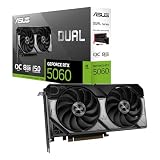
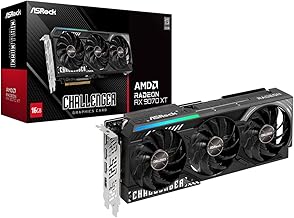
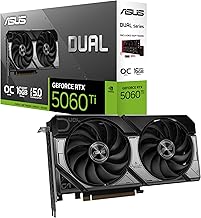
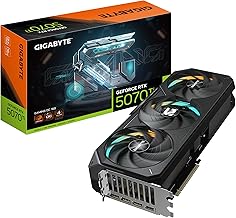
Key takeaways
- Shader throughput: The RTX 5080 packs 10,752 CUDA cores versus 8,960 on the 5070 Ti, a roughly 20% advantage that shows up most clearly in raw rasterization and ray tracing loads.
- Memory bandwidth: Both use 16GB of GDDR7 on a 256-bit bus, but the 5080 runs faster modules for around 960GB/s against roughly 896GB/s. Capacity is identical, so neither card will hit a VRAM wall before the other.
- Power and cooling: 360W TGP versus 300W. The 5080 typically wants an 850W supply and a case with real airflow; the 5070 Ti is comfortable on 750W.
- Real-world performance: Expect the 5080 to lead by roughly 15% at 4K and slightly less at 1440p, where CPU limits start compressing the gap.
- Physical footprint: Most RTX 5080 partner cards run three slots or wider, while 5070 Ti designs are more often dual-slot and short enough for compact builds.
- Media engines: Both offer dual NVENC encoders with 4:2:2 support, but the 5080 adds a second NVDEC decoder — relevant if you edit multi-stream timelines.
What's inside
Two years into the Blackwell generation, the GeForce RTX 5080 and RTX 5070 Ti have settled into their roles as the sensible high-end picks for gamers who want serious 4K performance without stepping up to halo-tier pricing. They share the same GB203 silicon, the same 16GB of GDDR7 on a 256-bit bus, and the same feature set — DLSS 4 with Multi Frame Generation, fourth-generation RT cores, and full PCIe 5.0 and DisplayPort 2.1 connectivity. On paper, they look like siblings rather than rivals.
The gap is in throughput. The RTX 5080 carries roughly 20% more shader cores and a higher power ceiling, which translates into a meaningful but not transformative lead. In 2026, with 4K 240Hz OLED panels now mainstream and Unreal Engine 5 titles leaning hard on ray tracing and neural rendering, that margin decides whether you’re comfortably above 100fps natively or leaning on upscaling to get there. Here’s how the two actually compare.
As an Amazon Associate we earn from qualifying purchases.




⚡ Save on Your Next PC — Amazon Prime
Prime members get fast free shipping on the systems above, plus early access to Prime Day & Black Friday PC deals. New members get a 30-day free trial.
Watch: RTX 5080 vs 5070 Ti: Worth It in 2026? — Video Review
Quick Verdict
Buy the RTX 5080 if you game at 4K on a high-refresh display, run heavy ray tracing, or do GPU-accelerated creative work alongside gaming — it’s the card with headroom to spare. Buy the RTX 5070 Ti if you play at 1440p or entry-level 4K, care about performance per dollar, or are building in a smaller case with a modest power supply. Neither is a bad choice; they simply sit at different points on the value curve.
Key Differences
- Shader throughput: The RTX 5080 packs 10,752 CUDA cores versus 8,960 on the 5070 Ti, a roughly 20% advantage that shows up most clearly in raw rasterization and ray tracing loads.
- Memory bandwidth: Both use 16GB of GDDR7 on a 256-bit bus, but the 5080 runs faster modules for around 960GB/s against roughly 896GB/s. Capacity is identical, so neither card will hit a VRAM wall before the other.
- Power and cooling: 360W TGP versus 300W. The 5080 typically wants an 850W supply and a case with real airflow; the 5070 Ti is comfortable on 750W.
- Real-world performance: Expect the 5080 to lead by roughly 15% at 4K and slightly less at 1440p, where CPU limits start compressing the gap.
- Physical footprint: Most RTX 5080 partner cards run three slots or wider, while 5070 Ti designs are more often dual-slot and short enough for compact builds.
- Media engines: Both offer dual NVENC encoders with 4:2:2 support, but the 5080 adds a second NVDEC decoder — relevant if you edit multi-stream timelines.
GeForce RTX 5080: The 4K Flagship Alternative
The RTX 5080 is built for people who want to run a 4K display at high refresh without constant compromise. In demanding path-traced titles it holds playable frame rates where the 5070 Ti needs more aggressive upscaling, and with DLSS 4 Multi Frame Generation engaged it comfortably saturates 240Hz panels. It’s also the better long-term buy if you plan to keep the card through the next console cycle, since the extra headroom buys you time before quality settings start dropping.
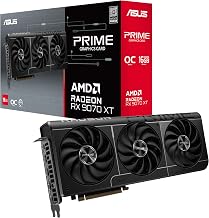
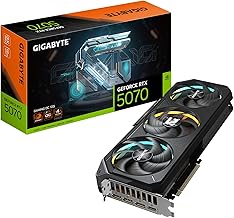
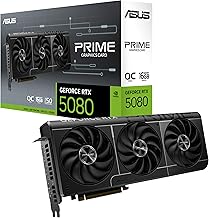
Board partners have had two years to refine their designs, and the choices are strong. The ASUS ROG Astral RTX 5080 OC is the enthusiast pick with a 3.8-slot, four-fan cooler and vapor chamber that keeps it near-silent under sustained load. The ASUS TUF Gaming RTX 5080 OC offers most of that thermal capability in a more conventional package, while the GIGABYTE RTX 5080 Gaming OC 16G pairs WINDFORCE cooling with a competitive factory clock. For small-form-factor builders, the ASUS Prime RTX 5080 OC squeezes the full chip into a 2.5-slot, SFF-ready design with dual BIOS. If value matters more than RGB, the PNY RTX 5080 OC Triple-Fan is usually the least expensive route to the same GPU, with the PNY Epic-X RGB OC adding lighting for a small premium.
GeForce RTX 5070 Ti: The Value Sweet Spot
The RTX 5070 Ti remains one of the smartest buys in the Blackwell stack. It shares the 5080’s 16GB frame buffer, which matters more than core count in texture-heavy modern titles, and it delivers well over 100fps at 1440p in virtually everything on the market. At 4K it’s still very capable — you’ll simply reach for DLSS Quality mode a little sooner in the most punishing ray-traced games.
It’s also the easier card to build around. Lower power draw means less heat dumped into your case, quieter fan curves, and compatibility with mid-range power supplies you may already own. For anyone upgrading from a 30-series or early 40-series card, the generational jump is dramatic regardless of which of these two you choose, and the 5070 Ti leaves budget for a better monitor, CPU, or faster storage.
Which Should You Buy?
- For 4K 144Hz+ gaming: Pick the RTX 5080. The extra throughput keeps native frame rates high and reduces reliance on frame generation.
- For 1440p high-refresh: Pick the RTX 5070 Ti. You’ll be CPU-limited in many titles long before the GPU runs out of steam.
- For heavy ray tracing and path tracing: Pick the RTX 5080. This is where the performance gap is widest and most noticeable.
- For small-form-factor builds: Either works, but check dimensions carefully — the ASUS Prime RTX 5080 OC is the compact option if you want the bigger chip.
- For best value per frame: Pick the RTX 5070 Ti. It delivers the large majority of 5080 performance for noticeably less outlay.
Frequently Asked Questions
Is 16GB of VRAM enough in 2026?
For 4K gaming with high textures and ray tracing, yes. A handful of titles with ultra texture packs can approach the limit, but neither card is disadvantaged here since both carry identical 16GB frame buffers.