Key takeaways
- Confusing capture resolution with passthrough resolution. A card may accept a 4K signal but record at 1080p and pass through only 4K/60Hz.
- Ignoring refresh rate. Resolution alone does not tell you whether 120Hz or 144Hz will work.
- Measuring the box instead of the installed device. Cable plugs, ventilation, and power adapters need space outside the listed dimensions.
- Using the wrong USB port. Many cards require USB 3.0 bandwidth. A USB 2.0 port can limit performance even when the HDMI connection is fast enough.
- Assuming HDMI 2.1 guarantees every feature. Check 4K/120Hz, HDR, VRR, and HDCP separately.
- Putting the card in a hot cabinet. Small enclosures still need airflow, especially during continuous recording.
What's inside
When choosing a capture card, “size” can mean two different things: the physical size of the device and the HDMI passthrough bandwidth it can handle. For most gaming and streaming setups, bandwidth matters more than the footprint. A card that accepts a 4K signal but only passes through 4K at 60Hz may not suit a 4K/120Hz console setup, even if its enclosure is compact.
The right choice depends on your source resolution, refresh rate, HDR requirements, connection type, and the space around your console or computer. Use the guide below to match the capture card’s passthrough specification to your equipment.
As an Amazon Associate we earn from qualifying purchases at no extra cost to you. Product prices and availability are accurate as of the date shown and are subject to change.



The Short Answer
For a 1080p gaming setup, choose a capture card with at least HDMI 2.0 passthrough or a stated 1080p/120Hz capability. For 1440p at 120Hz, look for at least 14.4Gbps of effective video bandwidth and explicit support for 1440p/120Hz passthrough. For 4K at 60Hz, HDMI 2.0-class passthrough with up to 18Gbps bandwidth is generally appropriate.
For PS5, Xbox Series X/S, or a gaming PC using 4K at 120Hz, VRR, and HDR, choose a card that specifically lists HDMI 2.1 passthrough. HDMI 2.1 can provide up to 48Gbps of raw bandwidth, although the actual supported resolution and refresh rate vary by product. Do not assume that a card labeled “4K” can pass through 4K at 120Hz; many support 4K capture or 4K input while limiting passthrough to 4K/60Hz.
In physical terms, most USB capture cards are small enough for a desk, shelf, or console cabinet. Allow approximately 4 to 7 inches (10 to 18cm) of length, 2 to 4 inches (5 to 10cm) of width, and at least 1 inch (2.5cm) of clearance around the ports and cables. A budget card may cost about $18 to $35, a stronger 4K/60-oriented model commonly falls around $100 to $170, and more advanced HDMI 2.1 models can cost more.
Standard Sizes
The table below describes common physical formats and their practical bandwidth ranges. These are category measurements, not a guarantee for every model. Always verify the manufacturer’s specification sheet before buying.
| Capture card type | Typical physical size | Typical weight | Common passthrough capability | Typical price |
|---|---|---|---|---|
| Mini USB capture dongle | 3.5–5 x 1.5–2.5 x 0.5–1 in (8.9–12.7 x 3.8–6.4 x 1.3–2.5cm) |
1–3 oz (28–85g) |
1080p/60Hz; some advertise 4K input with 1080p capture | $18–$35 |
| Desktop USB 3.0 or USB-C card | 4.5–7 x 2.5–4 x 0.75–1.5 in (11.4–17.8 x 6.4–10.2 x 1.9–3.8cm) |
3–10 oz (85–283g) |
1080p/60Hz or 1440p/30–60Hz; 4K/60Hz passthrough on selected models | $25–$150 |
| 4K/60 premium external card | 5.5–8 x 3–5 x 1–2 in (14–20.3 x 7.6–12.7 x 2.5–5.1cm) |
6–16 oz (170–454g) |
4K/60Hz, often with HDR and higher-quality input handling | $100–$220 |
| HDMI 2.1 high-refresh card | 5–9 x 3–5 x 1–2 in (12.7–22.9 x 7.6–12.7 x 2.5–5.1cm) |
6–20 oz (170–567g) |
4K/120Hz passthrough on models that explicitly support HDMI 2.1; VRR and HDR vary | $150–$300+ |
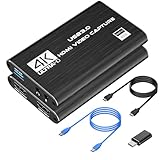
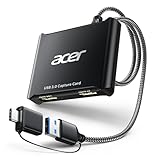
A low-cost 1080p card in the $18 to $30 range can be a sensible choice for a webcam, older console, or 1080p monitor. Products such as basic USB 3.0 capture cards often advertise 4K HDMI input while recording at 1080p/60Hz. That wording is important: “4K input” is not the same as “4K capture” or “4K/120Hz passthrough.”
A premium card around $146.99 may be designed for newer consoles and higher-resolution workflows, but its exact value depends on whether it supports the refresh rate, HDR format, VRR, and recording resolution you need. A compact enclosure does not indicate lower or higher bandwidth by itself.
How to Measure Your Space
- Measure the available shelf or desktop area. Record the usable length, width, and height in inches. Do not measure only the empty center; include nearby console stands, monitor bases, and power strips.
- Add cable clearance. HDMI connectors usually extend roughly 1.5 to 3 inches (3.8 to 7.6cm) from the card, depending on the cable’s bend radius. Leave more room behind the device than its listed depth suggests.
- Check port direction. Side-facing USB and HDMI ports require lateral clearance. For a card with ports on both ends, plan for at least 2 inches (5cm) on each cable side.
- Measure ventilation space. Leave about 1 inch (2.5cm) above and around a small dongle. A larger powered card should have approximately 2 inches (5cm) of open space around its vents.
- Confirm USB reach. USB 3.0 cables are commonly 3 to 6 feet (0.9 to 1.8m) long. A short cable may force the capture card to hang from a computer port, while an excessively long or poor-quality cable can create connection problems.
- Check the power arrangement. Bus-powered cards draw power through USB, while some advanced units use a separate adapter. Reserve a nearby outlet and check the product’s power requirement, commonly 5V USB power or approximately 5 to 15 watts for larger external units.
- Compare every signal path. Write down the source output, capture input, passthrough output, and display input. The weakest link determines the usable resolution and refresh rate.
By Room or Use Case
Bedroom or Small Desk
Choose a mini or compact USB card measuring no more than about 5 x 2.5 inches (12.7 x 6.4cm) if the setup shares space with a laptop, monitor stand, or small console. For 1080p/60Hz streaming, a $18 to $35 model is usually adequate. Keep it on the desktop rather than wedged behind a console, where HDMI plugs can put sideways pressure on the ports.
Living Room Console Setup
Measure the media cabinet before buying. A card measuring 6 x 4 inches (15.2 x 10.2cm) needs additional room for HDMI cables, USB power, and ventilation. If your TV is 4K/60Hz, look for 4K/60Hz passthrough and confirm whether HDR remains available. If the capture card sits inside a closed cabinet, use a ventilated shelf or leave the door open during long sessions.
PS5, Xbox Series X/S, or Switch 2
For a current console connected to a 4K television, first decide whether you play at 60Hz or 120Hz. A 4K/60 setup can use a quality HDMI 2.0-class card. A 4K/120 setup requires explicit HDMI 2.1 passthrough, and you should also verify VRR, HDR, HDCP handling, and the capture resolution. If a product lists only “4K passthrough” without a refresh rate, treat it as unclear rather than assuming 120Hz.
Gaming PC and High-Refresh Monitor
PC users should match the card to the monitor’s actual output. A 1440p/144Hz or 1080p/240Hz monitor may need a card with high-refresh passthrough even if the recorded stream is only 1080p/60Hz. Some cards pass the signal to the display but cannot capture at the same refresh rate; that can be acceptable if the passthrough specification is clear.
Camera, Presentation, or Work-From-Home Setup
For a camera or presentation laptop, 1080p/60Hz is usually sufficient and physical size may be the main concern. Select a compact USB-C or USB 3.0 card that fits beside the computer, then verify compatibility with your video software. A card costing $20 to $40 can be practical here, provided it has the required input and does not rely on vague 4K marketing.
Common Sizing Mistakes
- Confusing capture resolution with passthrough resolution. A card may accept a 4K signal but record at 1080p and pass through only 4K/60Hz.
- Ignoring refresh rate. Resolution alone does not tell you whether 120Hz or 144Hz will work.
- Measuring the box instead of the installed device. Cable plugs, ventilation, and power adapters need space outside the listed dimensions.
- Using the wrong USB port. Many cards require USB 3.0 bandwidth. A USB 2.0 port can limit performance even when the HDMI connection is fast enough.
- Assuming HDMI 2.1 guarantees every feature. Check 4K/120Hz, HDR, VRR, and HDCP separately.
- Putting the card in a hot cabinet. Small enclosures still need airflow, especially during continuous recording.
FAQ
What bandwidth do I need for 1080p passthrough?
For 1080p/60Hz, choose a card that explicitly supports 1080p/60Hz passthrough and use a USB 3.0 connection for capture. If you need 1080p/120Hz or higher, confirm that refresh rate separately.
Do I need HDMI 2.1 for 4K/60Hz?
Usually not. HDMI 2.0-class equipment can generally handle 4K/60Hz, subject to HDR and color-format limitations. HDMI 2.1 becomes important for 4K/120Hz, VRR, and other high-bandwidth features.
How much space should I leave around a capture card?
Allow at least 1 inch (2.5cm) around a small USB card and approximately 2 inches (5cm) around a larger powered unit. Add 2 to 3 inches (5 to 7.6cm) behind it for HDMI and USB cable bends.
Is a more expensive capture card physically larger?
Not necessarily. Price reflects bandwidth, processing, HDR or VRR support, software features, and build quality more than enclosure size. Compare the exact passthrough resolution and refresh rate before comparing dimensions or price.