Key takeaways
- Strong 1440p/4K performance: RDNA 4 delivers high frame rates in demanding games.
- Generous 16GB VRAM: Ample memory for high textures and future titles.
- Improved ray tracing: RDNA 4 closes the gap in ray-traced games.
- Modern connectivity: PCIe 5.0, DisplayPort 2.1a, and HDMI 2.1b throughout.
What's inside
The AMD Radeon RX 9070 XT has quickly become one of the most talked-about GPUs for high-refresh 1440p and 4K gaming. Built on the RDNA 4 architecture with 16GB of GDDR6, it delivers the kind of frame rates and ray-tracing improvements that make it a genuine competitor to NVIDIA’s mid-to-high tier, often at a more attractive price.
Because every board partner tunes clocks and cooling differently, real-world benchmark results vary between models. We compared the leading RX 9070 XT cards from PowerColor, ASUS, GIGABYTE, XFX, ASRock, and Sapphire to help you understand what separates them and which suits your build.
As an Amazon Associate we earn from qualifying purchases at no extra cost to you. Product prices and availability are accurate as of the date shown and are subject to change.




🎮 Get More From Your Setup — Free
Prime Gaming gives you free PC games every month, in-game loot, and a free Twitch channel sub — plus fast free shipping on all the gear above. New members get a 30-day free trial.
Watch: Radeon Rx 9070 Xt Benchmark: Review & Buyer’s Guide — Video Review
Design & Build
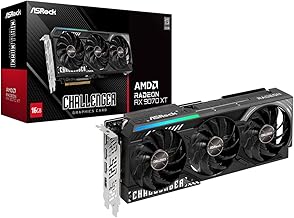
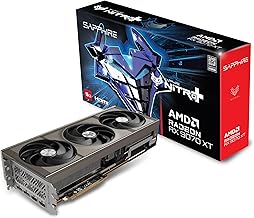
These 16GB RDNA 4 cards span value to premium coolers. The PowerColor Reaper is the compact, no-frills entry, while the ASUS Prime OC and ASRock Challenger offer larger triple-fan coolers with strong airflow. The GIGABYTE Gaming OC and XFX Swift Triple Fan step up cooling and clocks further, and the Sapphire Nitro+ sits at the top with a premium build, robust power delivery, and a refined cooler. All feature PCIe 5.0, DisplayPort 2.1, and HDMI 2.1b outputs, and most occupy around 2.5 to 3 slots, so check case clearance. Build quality scales with price, with the Nitro+ and Swift feeling the most substantial.
Performance
In benchmarks, all these cards share the same RX 9070 XT silicon, so differences come down to factory clocks, cooling, and power headroom. The Sapphire Nitro+ and XFX Swift typically post the highest sustained boost clocks thanks to their beefier coolers, translating to a small but real frame-rate edge in demanding 1440p and 4K titles. The ASUS Prime and GIGABYTE Gaming OC land in the strong middle, while the compact PowerColor Reaper trades a little sustained clock for its smaller size. Across the board the 16GB of VRAM is a real strength, giving headroom for high-texture games and future titles, and RDNA 4 brings meaningful ray-tracing gains over the previous generation.
Pros & Cons
- Strong 1440p/4K performance: RDNA 4 delivers high frame rates in demanding games.
- Generous 16GB VRAM: Ample memory for high textures and future titles.
- Improved ray tracing: RDNA 4 closes the gap in ray-traced games.
- Modern connectivity: PCIe 5.0, DisplayPort 2.1a, and HDMI 2.1b throughout.
- Cooler size: Premium triple-fan models need case clearance.
- Small model variance: Clock differences between cards are modest, not dramatic.
Alternatives to Consider
If you want the best sustained clocks and cooling, the Sapphire Nitro+ or XFX Swift are the premium picks that top the benchmarks. For a strong balance of price and performance, the ASUS Prime OC and GIGABYTE Gaming OC deliver excellent results. Small-build owners who value a compact card should look at the PowerColor Reaper, which fits tighter cases while still offering the full 16GB and RDNA 4 performance. The ASRock Challenger is a solid mid-range alternative with capable triple-fan cooling.
Frequently Asked Questions
Is the RX 9070 XT good for 4K gaming?
Yes. Its RDNA 4 architecture and 16GB of VRAM handle 4K well in most modern games, and it excels at high-refresh 1440p gaming.
Do the different models perform very differently?
They share the same GPU, so benchmark differences are modest. Premium coolers like the Nitro+ and Swift hold higher sustained clocks, giving a small edge under load.
How much does the 16GB of VRAM help?
It provides real headroom for high-texture settings, ray tracing, and future games, making the card more future-proof than 8GB alternatives.
What power supply do I need?
A quality 750W-plus PSU with the correct connectors is generally recommended. Always check the specific card’s power requirement before buying.
Verdict
The Radeon RX 9070 XT is a standout for high-refresh 1440p and 4K gaming, and RDNA 4’s ray-tracing gains make it more well-rounded than past AMD cards. The Sapphire Nitro+ and XFX Swift lead the benchmarks, the ASUS Prime OC is the balanced value pick, and the PowerColor Reaper is the best compact choice.