Key takeaways
- Per-pixel contrast and true blacks that transform HDR games and dark scenes
- 240Hz with near-instant 0.03ms response for clean, smear-free motion
- Effective matte anti-glare coating and a genuinely adjustable stand
- USB-C with power delivery simplifies a laptop-plus-desktop setup
What's inside
The Samsung 32″ Odyssey OLED G8 (G80SH) is a flat 4K QD-OLED gaming monitor that tries to serve two audiences at once: competitive players chasing a 240Hz refresh rate, and single-player enthusiasts who want the inky blacks and per-pixel contrast that only OLED delivers. At 32 inches with a 3840×2160 panel, it lands at roughly 140 pixels per inch, so text and game detail look razor-sharp without needing aggressive scaling.
This review is aimed at PC gamers running a mid-to-high-end GPU (think RTX 4070 and up) who sit around three feet from their desk and want one screen that handles fast shooters, cinematic RPGs, and the occasional spreadsheet. If you mostly play at a distance on a couch, or you need a color-critical panel for print work, this is not the monitor for you, and the sections below explain why.
As an Amazon Associate we earn from qualifying purchases.


⚡ Save on Your Next PC — Amazon Prime
Prime members get fast free shipping on the systems above, plus early access to Prime Day & Black Friday PC deals. New members get a 30-day free trial.
Watch: Samsung Odyssey OLED G8 Review — Video Review
Design & Build
Samsung has clearly matured its OLED hardware here. The G80SH uses a slim metal core stand with a small footprint, a fully adjustable height/tilt/swivel/pivot arm, and a matte anti-glare coating that is one of the better implementations on a QD-OLED to date, cutting mirror-like reflections without turning bright windows into a hazy smear. Cable routing runs through the stand neck, and the chassis stays impressively thin until the lower third where the electronics and heatsink live. Ports include DisplayPort 2.1, HDMI 2.1, and a USB-C connection with power delivery, which is enough to run a laptop and the monitor from a single cable.
Performance
In motion the G80SH is genuinely excellent. The 0.03ms pixel response means there is effectively zero smearing behind fast-moving objects, and at 240Hz the panel feels fluid in competitive titles even before you enable G-Sync or FreeSync Premium Pro. HDR is the real showpiece: because each pixel emits its own light, small highlights like muzzle flashes and neon signage pop against true black backgrounds in a way edge-lit LCDs cannot match.
The trade-offs are the familiar OLED ones. Full-screen brightness is modest, so in a sun-drenched room the picture can look dimmer than a good mini-LED display, and static HUD elements over long sessions are a theoretical burn-in risk that Samsung mitigates with pixel-shift and its OLED Safeguard+ routines. Text fringing from the QD-OLED subpixel layout is visible if you hunt for it on thin fonts, though at 4K it is far less noticeable than on 1440p OLEDs.
Pros & Cons
- Per-pixel contrast and true blacks that transform HDR games and dark scenes
- 240Hz with near-instant 0.03ms response for clean, smear-free motion
- Effective matte anti-glare coating and a genuinely adjustable stand
- USB-C with power delivery simplifies a laptop-plus-desktop setup
- Limited full-screen brightness makes it less ideal for very bright rooms
- Some subpixel text fringing on thin fonts if you look closely
- Long sessions with static UI carry a small, ever-present burn-in risk
Alternatives to Consider
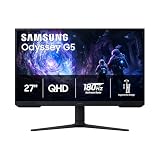
If 32 inches feels too big for a flat screen, the Samsung 27″ Odyssey OLED G8 (G80SH) packs the same 4K QD-OLED technology into a denser, sharper 27-inch panel that suits competitive players sitting closer. Gamers who prefer an immersive widescreen should look at the Samsung 34″ Odyssey OLED G8 (G85SD), a curved ultrawide that trades pixel density for a wraparound field of view. Budget-conscious buyers can step down to the Samsung 27″ Odyssey OLED G6 (G61SH), which drops to QHD resolution but keeps the QD-OLED contrast at a lower price.
Frequently Asked Questions
Does the Odyssey OLED G8 suffer from burn-in?
OLED burn-in is possible with prolonged static content, but Samsung includes pixel-shifting, logo dimming, and its OLED Safeguard+ panel-refresh cycles to minimize the risk. For typical mixed gaming and desktop use it should not be a practical concern within the warranty period.
Is 4K at 240Hz overkill for my GPU?
Driving 4K at 240Hz in demanding titles requires a high-end card and often DLSS or frame generation. In esports titles you can hit those frame rates more easily, and the monitor still looks great at lower frame rates thanks to variable refresh.
Can I use it with a MacBook or laptop over one cable?
Yes. The USB-C port delivers power alongside video, so a compatible laptop can charge and output to the display through a single connection, which is convenient for hybrid work-and-play setups.
How bright does it get for HDR?
Small highlights hit high peak brightness for punchy HDR, but sustained full-screen brightness is lower than an LCD. In a dim or moderately lit room HDR looks stunning; in direct sunlight the effect is muted.
Verdict
The Samsung 32″ Odyssey OLED G8 (G80SH) is one of the most complete 4K gaming monitors you can buy in 2026, pairing reference-grade OLED contrast with a fast, responsive 240Hz panel and a sensible feature set. Its limitations are the honest constraints of the OLED format rather than design missteps, and unless you game in a very bright room or need a color-critical production display, it earns a confident recommendation.