Key takeaways
- Resolution and size: 1440p at 27 inches is the value sweet spot in 2026. It’s a meaningful visual upgrade over 1080p without the GPU tax of 4K, and the pixel density looks sharp at normal desk distance. Below $500, avoid 4K panels — they cut corners elsewhere to hit the price.
- Refresh rate versus your GPU: A 180Hz panel is wasted if your card pushes 70fps in the games you play. Match the monitor to your hardware: 144Hz is plenty for mid-range GPUs, while 165Hz to 180Hz makes sense if you’re running competitive shooters at high frame rates.
- Panel type: Fast IPS gives the best all-round balance of color, viewing angles, and response time. VA offers deeper blacks and is common on curved models but can smear in dark scenes. QD-OLED delivers the best contrast and motion clarity, though it commands a premium and requires burn-in awareness.
- Adaptive sync and certification: FreeSync Premium and G-SYNC Compatible both eliminate tearing, and most modern monitors support both regardless of your GPU brand. Treat this as a baseline requirement rather than a differentiator — if a monitor lacks it at this price, skip it.
- Real HDR versus checkbox HDR: HDR400 on an edge-lit LCD adds brightness but little genuine impact. Only OLED panels or displays with local dimming zones deliver HDR worth enabling. Don’t pay extra for the badge alone.
What's inside
Shopping for a gaming monitor under $500 has never been more confusing. Panel technology has fragmented into fast IPS, VA, and now affordable QD-OLED, while spec sheets throw around numbers like 1ms GtG, 180Hz, HDR400, and “G-SYNC Compatible” without explaining what any of it means for the games you actually play. The result is a market where two 27-inch 1440p monitors can sit at the same price and deliver wildly different experiences.
This guide cuts through that noise. We’ve focused on 27-inch 1440p displays, the sweet spot for value in 2026, and picked six monitors that each make a clear case for a specific type of buyer, from budget-first shoppers to those who want OLED contrast without spending flagship money. Every recommendation below sits realistically within a $500 budget, and we’ve noted exactly where each one compromises so you can spend your money where it matters most to you.
As an Amazon Associate we earn from qualifying purchases at no extra cost to you. Product prices and availability are accurate as of the date shown and are subject to change.




⚡ Save on Your Next PC — Amazon Prime
Prime members get fast free shipping on the systems above, plus early access to Prime Day & Black Friday PC deals. New members get a 30-day free trial.
Watch: Best Gaming Monitor Under $500 — Video Review
How to Choose Gaming Monitor Under $500
- Resolution and size: 1440p at 27 inches is the value sweet spot in 2026. It’s a meaningful visual upgrade over 1080p without the GPU tax of 4K, and the pixel density looks sharp at normal desk distance. Below $500, avoid 4K panels — they cut corners elsewhere to hit the price.
- Refresh rate versus your GPU: A 180Hz panel is wasted if your card pushes 70fps in the games you play. Match the monitor to your hardware: 144Hz is plenty for mid-range GPUs, while 165Hz to 180Hz makes sense if you’re running competitive shooters at high frame rates.
- Panel type: Fast IPS gives the best all-round balance of color, viewing angles, and response time. VA offers deeper blacks and is common on curved models but can smear in dark scenes. QD-OLED delivers the best contrast and motion clarity, though it commands a premium and requires burn-in awareness.
- Adaptive sync and certification: FreeSync Premium and G-SYNC Compatible both eliminate tearing, and most modern monitors support both regardless of your GPU brand. Treat this as a baseline requirement rather than a differentiator — if a monitor lacks it at this price, skip it.
- Real HDR versus checkbox HDR: HDR400 on an edge-lit LCD adds brightness but little genuine impact. Only OLED panels or displays with local dimming zones deliver HDR worth enabling. Don’t pay extra for the badge alone.
The Best Picks Reviewed
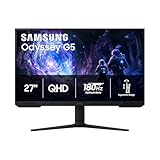
Samsung Odyssey G5 (G51F) 27″ QHD
The G51F is the sensible default for anyone who wants 1440p gaming without overthinking it, pairing a high refresh rate with Samsung’s reliable panel tuning at an aggressive price. Colors are punchy out of the box and the stand is more adjustable than most budget options, though the VA panel means dark-scene response is a step behind IPS rivals.
Acer Nitro KG271U N3bmiipx 27″ QHD
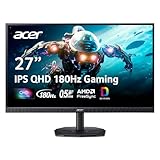
Acer’s Nitro line has long been the go-to for buyers who want IPS color accuracy on a tight budget, and the KG271U delivers 180Hz on a genuinely good panel for well under the cap. The build is plain and the stand offers tilt only, but if you’re pairing it with a monitor arm, the picture quality per dollar is hard to beat.
ASUS TUF Gaming VG27AQ3A
This is the all-rounder we recommend most often, combining a 180Hz fast IPS panel, 130% sRGB coverage, and ASUS’s Extreme Low Motion Blur Sync for genuinely sharp motion clarity in competitive titles. Built-in speakers and a fully adjustable stand round out a package that feels considerably more premium than its price suggests.
KTC H27S5C 27″ Curved QHD
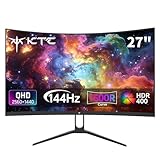
The H27S5C is the budget pick for players who prefer immersive curved displays, offering 144Hz and HDR400 certification at a price that undercuts most name-brand rivals. Expect the usual VA trade-offs in fast dark scenes, but for single-player and story-driven games, the contrast is excellent for the money.
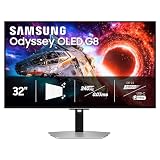
Samsung Odyssey OLED G6 (G61SH)
This is the aspirational pick, bringing genuine QD-OLED contrast, near-instant pixel response, and dramatically better HDR than any LCD in this guide. It typically sits at the very top of a $500 budget and demands sensible burn-in habits, but the jump in image quality over everything else here is immediately obvious.
Frequently Asked Questions
Is 1440p worth it over 1080p for gaming?
Yes, particularly at 27 inches, where 1080p starts to look noticeably soft. Provided your GPU can sustain reasonable frame rates, 1440p is the single biggest visual upgrade you can make in this price bracket.
Do I need G-SYNC if I have an NVIDIA card?
No. G-SYNC Compatible certification means a FreeSync monitor has been validated to work properly with NVIDIA GPUs, and nearly every monitor in this guide qualifies. Dedicated G-SYNC hardware modules add cost without meaningful benefit at this level.
Should I worry about OLED burn-in in 2026?
Modern QD-OLED panels include pixel-shifting and refresh cycles that substantially reduce risk, and warranties now typically cover burn-in. Vary your content, hide static taskbars where possible, and it shouldn’t be a practical concern for most gamers.
Is 180Hz noticeably better than 144Hz?
The difference is real but modest, and far smaller than the jump from 60Hz to 144Hz. Prioritize panel quality and response time over the last 36Hz unless you play competitive shooters at a high level.
Final Thoughts
For most buyers, the ASUS TUF Gaming VG27AQ3A is the monitor to get, delivering the best balance of motion clarity, color accuracy, and build quality within a $500 budget. If you want to stretch to the edge of that cap for a genuine image quality leap, the Samsung Odyssey OLED G6 is worth every dollar, while the Acer Nitro KG271U remains the smartest choice for anyone who wants excellent IPS performance with money left over for a better GPU.