Key takeaways
- Panel type: IPS delivers accurate color and wide viewing angles for work and content, while 4K OLED options bring perfect blacks and blazing response times for gaming — decide which matters more to you.
- Refresh rate: 60Hz is smooth for productivity and single-player games, but 120Hz-plus or dual-mode panels make fast games feel dramatically more fluid if your GPU can drive 4K.
- Connectivity: USB-C with high-wattage power delivery lets you run video and charge a laptop over one cable; also confirm you have HDMI and DisplayPort for consoles and desktops.
- HDR and color: Look for DisplayHDR certification and strong sRGB or DCI-P3 coverage for punchy highlights and reliable color in photos, video, and games.
- Size and ergonomics: 27-inch 4K is pixel-dense and sharp, 32-inch gives more workspace; a tilt/height/pivot stand keeps long sessions comfortable.
What's inside
Four times the pixels of a 1080p display, 4K remains the resolution that makes everything look better — crisper text for work, finer detail in games, and razor-sharp video. In 2026 the technology has matured to the point where you can find a genuinely excellent 4K monitor whether you want a color-accurate IPS panel for creative work or a fast, dual-mode display that games hard. The days of 4K meaning sluggish 60Hz-only screens are firmly behind us.
We lined up the year’s best 4K monitors and judged them on picture quality, motion performance, connectivity, and value across mixed use. USB-C power delivery, HDR support, and ergonomic stands now separate the standout screens from the merely sharp ones. Below is our guide to picking the right panel, followed by the 4K monitors we recommend most this year.
As an Amazon Associate we earn from qualifying purchases.


⚡ Save on Your Next PC — Amazon Prime
Prime members get fast free shipping on the systems above, plus early access to Prime Day & Black Friday PC deals. New members get a 30-day free trial.
Watch: Best 4K Monitor 2026 — Video Review
How to Choose the Right 4K Monitor
- Panel type: IPS delivers accurate color and wide viewing angles for work and content, while 4K OLED options bring perfect blacks and blazing response times for gaming — decide which matters more to you.
- Refresh rate: 60Hz is smooth for productivity and single-player games, but 120Hz-plus or dual-mode panels make fast games feel dramatically more fluid if your GPU can drive 4K.
- Connectivity: USB-C with high-wattage power delivery lets you run video and charge a laptop over one cable; also confirm you have HDMI and DisplayPort for consoles and desktops.
- HDR and color: Look for DisplayHDR certification and strong sRGB or DCI-P3 coverage for punchy highlights and reliable color in photos, video, and games.
- Size and ergonomics: 27-inch 4K is pixel-dense and sharp, 32-inch gives more workspace; a tilt/height/pivot stand keeps long sessions comfortable.
The Best 4K Monitors Reviewed
Dell S2725QS
The Dell S2725QS is our best all-rounder. A 27-inch 4K IPS panel with a 120Hz refresh, FreeSync Premium, 99% sRGB color, and USB-C connectivity makes it equally at home with spreadsheets and games. The fully adjustable stand and anti-glare finish round out a superbly balanced everyday display.
Samsung ViewFinity S8
The Samsung 32-inch ViewFinity S8 is the productivity and creative pick. Its high-resolution 4K panel, 90W USB-C power delivery, HDR10+ support, and ergonomic stand make it a one-cable hub for a laptop workstation, with plenty of space for detailed multitasking.
LG 32GX870A-B UltraGear
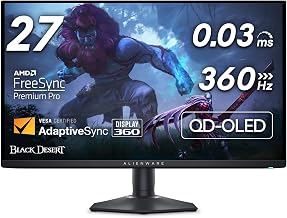
For serious 4K gaming, the LG 32GX870A-B is a 32-inch 4K OLED that runs dual-mode up to 240Hz with a 0.03ms response, NVIDIA and FreeSync Premium Pro support, HDR True Black 400, and USB-C. It fuses cinematic detail with high-refresh smoothness in one striking screen.
LG 27UP650K-W
The LG 27UP650K-W is a fantastic value 4K IPS monitor. DisplayHDR 400, a clean white design, Reader Mode, and a tilt/height/pivot stand make it a comfortable, sharp choice for work and media, delivering the core 4K experience without a premium price.
Samsung Odyssey G7 4K
The Samsung 27-inch Odyssey G7 blends 4K sharpness with a fast IPS dual-mode 180Hz refresh, G-Sync compatibility, and FreeSync Premium. Its ergonomic stand and gaming-first tuning make it a compelling middle ground for players who want resolution and speed together.
Frequently Asked Questions
Do I need a powerful GPU for a 4K monitor?
For productivity and video, almost any modern GPU handles 4K easily. For gaming at high frame rates, you will want a capable graphics card — or use a dual-mode panel that drops to a lower resolution for higher refresh when you need it.
Is 27-inch or 32-inch better for 4K?
A 27-inch 4K panel is extremely sharp and great for close viewing, while 32-inch offers more usable workspace and larger, easier-to-read text. Desk depth and how far you sit from the screen should guide your choice.
What does USB-C power delivery do?
USB-C with power delivery, like the 90W on the ViewFinity S8, sends video from your laptop and charges it back over a single cable — a clean, clutter-free setup ideal for hybrid work.
Can these 4K monitors handle consoles?
Yes. Any of these with HDMI supports the PS5 and Xbox Series X at 4K, and higher-refresh models take advantage of 120Hz console modes for smoother gameplay.
Final Thoughts
A great 4K monitor sharpens everything you do, and 2026’s field covers every priority. The Dell S2725QS is the versatile everyday winner, the Samsung ViewFinity S8 excels for creative and hybrid work, and the LG 32GX870A-B is the dream for 4K gamers who refuse to compromise on speed. Weigh panel type, refresh, and connectivity, and any pick here will deliver a stunning upgrade.