Key takeaways
- Resolution target: Match VRAM and bus width to your monitor — 6GB cards suit 1080p, while 16GB+ cards are built for 1440p and 4K.
- Power and PSU headroom: Higher-tier cards like the RTX 5080 demand more wattage and often a newer PCIe power connector, so check your PSU’s rating and cables first.
- Cooling and case fit: Triple-slot coolers on cards like the TUF RTX 5060 Ti improve thermals but need more case clearance than compact dual-fan designs.
- DLSS and architecture generation: RTX 50-series cards support DLSS 4 and PCIe 5.0, offering better upscaling and future-proofing than RTX 30-series Ampere cards.
- Budget vs. longevity: Entry-level cards cost less upfront but may need replacing sooner as game requirements climb; mid-to-high tier cards hold value longer.
What's inside
Choosing the right Nvidia graphics card in 2026 means wading through a crowded lineup of RTX 50-series and older 30-series cards, each with different memory configurations, bus widths, and price-to-performance ratios. With DLSS 4, PCIe 5.0, and GDDR7 memory now standard on newer models, it’s easy to overspend on features you don’t need or underspend and bottleneck your CPU and monitor.
This guide breaks down six popular Nvidia-based cards spanning budget 1080p builds to high-end 4K gaming rigs, so you can match the right GPU to your resolution, refresh rate, and budget without guesswork.
As an Amazon Associate we earn from qualifying purchases at no extra cost to you. Product prices and availability are accurate as of the date shown and are subject to change.


🎮 Get More From Your Setup — Free
Prime Gaming gives you free PC games every month, in-game loot, and a free Twitch channel sub — plus fast free shipping on all the gear above. New members get a 30-day free trial.
Watch: Best Nvidia Video Card For Gaming — Video Review
How to Choose a Nvidia Video Card For Gaming (2026)
- Resolution target: Match VRAM and bus width to your monitor — 6GB cards suit 1080p, while 16GB+ cards are built for 1440p and 4K.
- Power and PSU headroom: Higher-tier cards like the RTX 5080 demand more wattage and often a newer PCIe power connector, so check your PSU’s rating and cables first.
- Cooling and case fit: Triple-slot coolers on cards like the TUF RTX 5060 Ti improve thermals but need more case clearance than compact dual-fan designs.
- DLSS and architecture generation: RTX 50-series cards support DLSS 4 and PCIe 5.0, offering better upscaling and future-proofing than RTX 30-series Ampere cards.
- Budget vs. longevity: Entry-level cards cost less upfront but may need replacing sooner as game requirements climb; mid-to-high tier cards hold value longer.
The Best Nvidia Video Card For Gaming (2026)s Reviewed
MSI RTX 3050 Ventus 2X 6G OC
A solid entry point for 1080p gaming on a tight budget, this Ampere-based card delivers dependable performance in esports and older AAA titles, though its 96-bit bus and 6GB of GDDR6 limit it in newer, more demanding games.
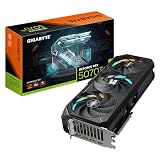
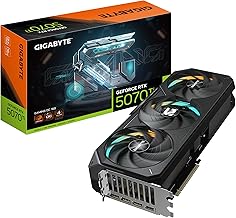
GIGABYTE RTX 5070 Gaming OC 12G
With 12GB of GDDR7 and PCIe 5.0 support, this WINDFORCE-cooled card is a strong all-rounder for 1440p gaming, offering excellent thermals and enough headroom for ray tracing at high settings.
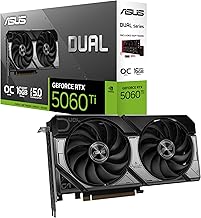
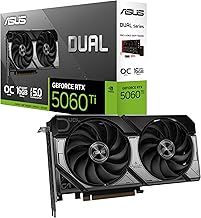
ASUS Dual RTX 5060 Ti 16GB OC
The generous 16GB VRAM pool makes this card a standout for 1440p and light 4K workloads, and its 0dB fan technology keeps things silent during idle or light browsing.
ASUS TUF Gaming RTX 5060 Ti 8GB OC
Built with military-grade components and a triple-fan cooler, this variant trades VRAM capacity for durability and thermal headroom, making it a great pick for gamers prioritizing longevity over maximum texture memory.
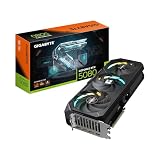
ASUS TUF Gaming RTX 5080 16GB OC
This is the flagship of the lineup, pairing 16GB of GDDR7 with the RTX 50-series architecture to deliver smooth 4K gaming and ray tracing performance for gamers who want minimal compromise.
Frequently Asked Questions
Is the RTX 3050 still worth buying in 2026?
It remains a reasonable choice for budget 1080p builds or as an upgrade from integrated graphics, but gamers targeting newer AAA titles at higher settings should look toward the RTX 5060 Ti or above.
How much VRAM do I actually need for gaming?
For 1080p, 6-8GB is generally sufficient; 1440p benefits from 12-16GB, and 4K gaming or heavy modding setups are best served by 16GB or more.
Does PCIe 5.0 make a noticeable difference over PCIe 4.0?
For most current GPUs, the practical performance difference is minimal since bandwidth demands haven’t caught up to PCIe 5.0’s ceiling, but it does offer future-proofing for upcoming hardware.
Should I prioritize a higher-tier GPU or a better CPU?
Balance matters — pairing a high-end card like the RTX 5080 with a weak CPU will create a bottleneck, so aim for a CPU that comfortably keeps pace with your chosen GPU tier.
Final Thoughts
For most gamers, the GIGABYTE RTX 5070 Gaming OC offers the best balance of price and 1440p performance, while the ASUS TUF RTX 5080 is the clear pick for those chasing 4K gaming without compromise; budget-conscious buyers will still get reliable mileage from the ASUS Dual RTX 3050.