Key takeaways
- Interface and bandwidth: SATA III is capped at 6 Gb/s, translating to roughly 550 MB/s in practice. NVMe runs over PCIe, delivering 3,500 MB/s on Gen3 and well beyond 7,000 MB/s on Gen4 and Gen5 drives.
- Latency and queue depth: NVMe was designed for flash from the ground up, with dramatically lower command overhead and deep parallel queues. SATA inherits a protocol built for spinning platters.
- Physical form factor: NVMe drives are gumstick-sized M.2 sticks that mount flush to the board. SATA SSDs are 2.5-inch units needing a data cable, a power cable, and a bay or bracket.
- Compatibility: Nearly every machine built in the last fifteen years has a SATA port. M.2 NVMe slots only became universal around 2018, and older boards may cap you at Gen3 speeds.
- Thermals: Fast NVMe drives generate real heat and often need a heatsink to avoid throttling. SATA SSDs run cool enough to ignore entirely.
- Cost per terabyte: SATA remains the cheaper tier, and value models like the fanxiang S101 1TB or Fikwot FX815 1TB regularly undercut entry-level NVMe.
What's inside
Storage is the last upgrade most PC gamers think about, and the first one they regret skipping. In 2026, the gap between a mechanical drive and any solid state drive is obvious to everyone — but the gap between the two dominant SSD types, NVMe and SATA, is far less intuitive. One of them posts numbers roughly ten times higher on a benchmark chart. The other still sells by the truckload, and for genuinely good reasons.
The right answer depends less on raw throughput than on what your motherboard supports, how many drives you’re running, and whether your games are actually bottlenecked by storage in the first place. With modern titles routinely pushing past 150 GB and asset-streaming engines becoming standard, capacity and consistency now matter as much as peak sequential speed. Here’s how the two interfaces really compare, and which one belongs in your build.
As an Amazon Associate we earn from qualifying purchases at no extra cost to you. Product prices and availability are accurate as of the date shown and are subject to change.


⚡ Save on Your Next PC — Amazon Prime
Prime members get fast free shipping on the systems above, plus early access to Prime Day & Black Friday PC deals. New members get a 30-day free trial.
Watch: NVMe vs SATA SSD: 2026 Speed Comparison — Video Review
Quick Verdict
Choose NVMe if you’re building or upgrading a system from roughly 2018 onward, you want the shortest possible load times, and you plan to use DirectStorage-enabled titles or run a console-style expansion drive. Choose SATA if you’re upgrading an older laptop or desktop, adding a bulk game library alongside an existing boot drive, or you simply want the most terabytes per dollar. For most gamers the honest answer is both: a modest NVMe boot drive paired with a large SATA SSD like the Samsung 870 EVO 1TB or Crucial BX500 1TB for the overflow library.
Key Differences
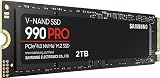
- Interface and bandwidth: SATA III is capped at 6 Gb/s, translating to roughly 550 MB/s in practice. NVMe runs over PCIe, delivering 3,500 MB/s on Gen3 and well beyond 7,000 MB/s on Gen4 and Gen5 drives.
- Latency and queue depth: NVMe was designed for flash from the ground up, with dramatically lower command overhead and deep parallel queues. SATA inherits a protocol built for spinning platters.
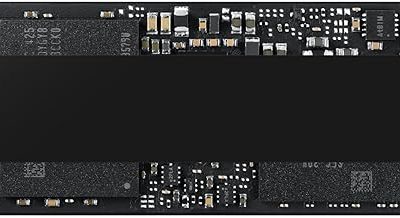
- Physical form factor: NVMe drives are gumstick-sized M.2 sticks that mount flush to the board. SATA SSDs are 2.5-inch units needing a data cable, a power cable, and a bay or bracket.
- Compatibility: Nearly every machine built in the last fifteen years has a SATA port. M.2 NVMe slots only became universal around 2018, and older boards may cap you at Gen3 speeds.
- Thermals: Fast NVMe drives generate real heat and often need a heatsink to avoid throttling. SATA SSDs run cool enough to ignore entirely.
- Cost per terabyte: SATA remains the cheaper tier, and value models like the fanxiang S101 1TB or Fikwot FX815 1TB regularly undercut entry-level NVMe.
NVMe SSDs: The Performance Standard
NVMe is what modern game engines were designed around. Texture streaming, open-world asset paging, and shader cache loads all benefit from the low latency and high random read performance that PCIe flash provides. In DirectStorage titles, where the GPU decompresses assets directly, an NVMe drive isn’t just faster — it’s a functional requirement for the feature to work as intended. Load screens that ran 25 seconds on SATA frequently drop into single digits.
The practical caveats are installation and heat. You need a free M.2 slot, and on many mid-range boards the second M.2 shares bandwidth with a SATA port or PCIe lane, so populating it can disable other hardware. Check your manual before buying. Also note diminishing returns: outside of DirectStorage workloads and large file transfers, the difference between a Gen3 and a Gen5 NVMe drive in actual gameplay is usually a second or two.
SATA SSDs: The Value and Compatibility Play
SATA’s advantage is that it works everywhere and costs less. A 2.5-inch drive drops into any laptop bay or desktop cage without worrying about lane sharing, chipset generation, or thermal pads. For anyone reviving a pre-2018 machine — where an M.2 slot may not exist at all — it’s the only meaningful upgrade path, and the jump from a hard drive is transformative regardless of interface.
The tier is well-stocked. The Samsung 870 EVO 1TB remains the reliability benchmark with mature firmware and strong sustained write behavior. The Crucial BX500 1TB and PNY CS900 1TB are dependable mainstream picks, while the TEAMGROUP T-Force Vulcan Z 1TB, fanxiang S101 1TB, and Fikwot FX815 1TB compete aggressively on price with SLC caching to keep everyday writes snappy. All land near the 520–560 MB/s interface ceiling, so choose on warranty, endurance rating, and brand track record rather than headline speed.
Which Should You Buy?
- For a new gaming build: pick NVMe as your primary drive, with a 1TB minimum and a heatsink if your board doesn’t include one.
- For an older laptop or pre-2018 desktop: pick SATA — the fanxiang S101 or Crucial BX500 delivers the biggest real-world jump for the least money.
- For a bulk game library: pick SATA as a secondary drive; most installed titles are storage-bound only during load, not gameplay.
- For long-term reliability: pick the Samsung 870 EVO, which pairs a five-year warranty with the best sustained-performance record in the SATA class.
- For DirectStorage and next-gen titles: pick NVMe, ideally Gen4, since the feature bypasses the CPU entirely and scales with drive bandwidth.
Frequently Asked Questions
Will an NVMe drive raise my frame rate?
Not directly. Frame rate is governed by your GPU and CPU. NVMe shortens load times, reduces texture pop-in during fast traversal, and smooths asset streaming stutter in open-world games — noticeable improvements, but not higher average FPS.
Can I use both an NVMe and a SATA SSD together?
Yes, and it’s the most cost-effective setup. Run Windows and your three or four active games on NVMe, then park everything else on a 1TB SATA drive. Steam and the Xbox app both support multiple library folders.
Is SATA obsolete in 2026?
No. The interface is mature rather than dead. It’s still the cheapest route to a terabyte, still the only option in millions of existing machines, and still fast enough that most players won’t notice a difference outside of load screens.
Does SSD brand actually matter?
It matters for endurance and firmware quality more than speed. Established controllers and longer TBW ratings translate to fewer surprises after year three, which is why drives like the 870 EVO and BX500 command a modest premium over budget alternatives.
Final Verdict
NVMe is the correct default for any modern gaming system — it’s faster where it counts, cheap enough at 1TB, and required for the streaming technologies shaping current releases. But SATA hasn’t lost its purpose: as an upgrade for older hardware or a high-capacity second drive, options like the Samsung 870 EVO, Crucial BX500, TEAMGROUP T-Force Vulcan Z, and fanxiang S101 deliver most of the felt benefit of solid state storage at a fraction of the cost per terabyte. Match the drive to the slot you actually have, and you’ll spend your money well either way.