Key takeaways
- The simplest way to organize a console game collection on a shelf is to sort by platform first.
The simplest way to organize a console game collection on a shelf is to sort by platform first, then by a single consistent rule inside each platform, such as alphabetical order, genre, or series. Keep the cases upright, spine out, and give your most-played titles the easiest-to-reach row. Everything else is detail.
This guide is for anyone whose games have outgrown a cardboard box or a TV stand drawer, whether you own a few dozen discs and cartridges or a decades-long collection. The goal is a shelf where you can find a title in seconds, where cases stay in good shape, and where adding a new game does not mean reshuffling everything.
Decide How You Will Sort
Before you move a single case, pick a sorting rule. Mixed rules are the main reason shelves fall apart after a month. You can combine two, but only in a fixed order, such as platform first and alphabetical within each platform.
Sort by platform
This is the default for most collectors, because cases differ in size and shape across systems. Modern disc cases are taller than cartridge cases, and handheld game boxes are smaller than both. Grouping by platform keeps shelf heights tidy and prevents crushed corners.
Sort by genre or series
If you play by mood, genre sorting makes picking a game feel natural. Racing, shooters, role-playing games, and sports each get their own block. Series sorting is a better fit if you own long franchises and like seeing the entries together in release order.
Sort alphabetically
Alphabetical order is the easiest to maintain and the easiest for guests and family to follow. It also scales well as the collection grows, because every new title has one obvious place to go. The cost is that related games get separated.
Sort by play status
Some players keep a small “currently playing” row at eye level and move finished or shelved games to the lower shelves. This works well alongside any of the other methods, and it is the only one that reflects how you actually use the collection.
Choose the Right Shelf
A shelf that fits the collection saves more effort than any clever labeling system. Measure your games first. A standard modern disc case is roughly the same height across current consoles, so a shelf with a consistent opening of that height works well and wastes little space.
- Open bookcases are cheap and flexible, but dust and sunlight reach the spines.
- Glass-front cabinets protect the cases from dust and are good for collectible editions.
- Wall-mounted ledges display covers face-out and suit small, prized selections.
- Media towers with narrow shelves fit discs and cartridges but may not hold large collector boxes.
Check the shelf’s weight rating, especially if you own a large collection. Hundreds of cases add up quickly, and a sagging shelf can bend cases and warp the shelf board over time. Keep heavier items, such as steelbook sets and big collector boxes, on the lower shelves.
Prepare the Games
Before you shelve anything, spend a short session cleaning and checking. Wipe the cases with a soft, slightly damp cloth, and make sure each case holds the correct disc or cartridge. Mismatched discs are the most common cause of confusion when the collection grows.
Replace cracked cases, and consider protective sleeves for cases with paper inserts. Check that the manual or cover art sits flat against the clear plastic, since curled paper can warp over time. Store loose cartridges in a dedicated box or a labeled drawer, not loose on a shelf, because the connectors can pick up dust.
Lay Out the Shelf Step by Step
Start by pulling everything out and grouping the games on the floor by your chosen rule. Seeing the whole collection in piles tells you how much shelf space each group needs. Leave about a quarter of each shelf empty so new purchases fit without a reshuffle.
- Place the heaviest or tallest cases on the lowest shelves.
- Put your current favorites between waist and eye level.
- Keep the cases spine out, with titles readable from the front.
- Stack nothing horizontally on top of upright games, which can bend the cases.
- Use bookends to stop partial rows from sliding sideways.
Add Labels and a Simple Tracking System
For bigger collections, a short label on the shelf edge helps. Use small tags or a printed strip to mark each platform or letter range, so you can see where a title belongs from across the room.
If you own many games, consider a simple spreadsheet or a collection-tracking app that lists each title, the platform, the edition, and whether you have played it. This helps with insurance, resale, and avoiding duplicate purchases at sales. Photograph the shelf once a year, as it takes a minute and makes a useful record.
Protect the Collection
Light, heat, and humidity cause most long-term damage. Direct sunlight fades cover art and yellows plastic, so avoid placing the shelf opposite a bright window. Keep the shelf away from radiators and heat vents, as warm air can warp cases and cause paper inserts to curl.
Discs and cartridges should stay in their cases. Dust is the enemy of both, and a closed case prevents scratches and keeps connectors clean. Do not stack cartridges without cases or leave discs on a console tray after play.
Shelf Style Comparison
| Shelf style | Best for | Main trade-off |
|---|---|---|
| Open bookcase | Large, growing collections | Dust and light exposure |
| Glass-front cabinet | Collector editions | Higher cost, limited depth |
| Wall ledge | Displaying favorites face-out | Low capacity |
| Media tower | Small rooms | Narrow shelves and limited height |
| Drawer organizer | Loose cartridges and handheld games | Titles are hidden from view |
Before You Start Checklist
- Pick one sorting rule and write it down.
- Measure your tallest cases and check the shelf opening.
- Confirm the shelf weight rating and floor stability.
- Clean cases and match every disc or cartridge to its case.
- Leave open space for future purchases.
Handling Special Editions and Odd Sizes
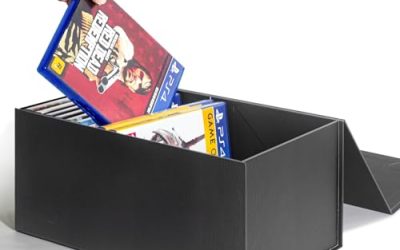
Every collection has outliers: steelbook cases, oversized collector boxes, soundtrack sleeves, and art books. Trying to force them into the same rows as standard cases wastes space and looks messy. Give them a dedicated shelf, ideally a taller one near the bottom or the top, and sort them by platform or franchise just like the rest.
Older systems add their own quirks. Cartridge cases are shorter and narrower than disc cases, and big-box computer games from past decades can be deeper than the shelf. Measure the deepest item before you buy a shelf, and give older or fragile boxes extra room so the corners do not take pressure from neighbors.
For items you rarely play but want to keep, such as sealed or limited editions, consider a closed cabinet or a lidded storage box away from sunlight. Put a printed list on the lid so you do not need to open it to know what is inside. It is a good project for a quiet weekend in 2026, and the result lasts for years.
Related guides
- Hall Effect Vs Potentiometer Controller Sticks Explained
- Low Profile Cpu Coolers For Small Form Factor Pcs
- How To Transfer Nintendo Switch Data To A New Console
Frequently Asked Questions
Should I store games upright or flat?
Upright, spine out, is the standard. It saves space, protects the cases, and lets you read titles at a glance. Flat stacking can bend cases and make lower games hard to reach.
How do I handle games from several consoles?
Group them by platform first, then sort within each group. Case sizes differ by platform, so this arrangement also looks tidier and uses shelf space better.
What is the best way to store digital-only games?
They do not take shelf space, but you can keep a list in a notes app or spreadsheet along with your physical titles. This makes it easier to see what you own across both formats.
How often should I reorganize my collection?
If you leave space for growth and stick to one rule, a light tidy every few months is enough. Large reshuffles are usually only needed when you run out of space on a shelf.
FAQ
Should I store games upright or flat?
How do I handle games from several consoles?
What is the best way to store digital-only games?
How often should I reorganize my collection?
More from Amazon
Programs that pair well with the guide above. Offers and eligibility are set by Amazon and may change.
Free shipping on eligible items, Prime Video and more. Eligible new members can start with a free trial.
Start a Prime free trialAd-free music streaming. Eligible new subscribers can start with a free trial.
Try Music Unlimited freeA Prime membership for ages 18-24 with a trial period. Eligibility is set by Amazon.
See Prime for Young AdultsAudiobooks and podcasts to listen to on the go. Eligible new members can start with a free trial.
Try Audible freeAs an Amazon Associate we earn from qualifying purchases.