Our Top Picks
Arctic MX-6 is the usual all-round pick for a non-conductive thermal paste, Noctua NT-H2 suits buyers who want a premium compound with a stated wide temperature range, and Thermal Grizzly Kryonaut or Duronaut fit enthusiasts who chase every degree on an overclocked chip. Budget builders can use Arctic MX-4. The key point for safety is simple: all of these are non-electrically-conductive, so a stray smear near the socket or on a graphics card board will not short anything, unlike liquid metal compounds.
What non-conductive means and why it matters
Conventional thermal pastes use ceramic, metal-oxide or carbon fillers suspended in a silicone or similar carrier. They are designed not to carry current. Liquid metal compounds are different: they are electrically conductive and can short small components if they spill, and Thermal Grizzly warns against using its liquid metal on aluminium coolers. For a first-time builder, someone repasting a graphics card with exposed surface-mount parts around the die, or anyone using a bare-die laptop or handheld, a non-conductive paste removes a whole class of mistakes. Reviewers broadly advise that for nearly every gaming PC a well-reviewed non-conductive paste is the right choice.

ARCTIC MX-4 (4 g) - Premium Performance Thermal Paste for All Processors
Chosen because it specifies Premium Performance Thermal Paste for All Processors.
View on Amazon
ARCTIC MX-7 (8 g) - Ultimate Performance Thermal Paste, Long Durability
Chosen because it specifies Ultimate Performance Thermal Paste and Long Durability.
View on Amazon
GENNEL G107 20g Silver Thermal Paste, CPU Thermal Grease Heat Sink Compound | High Performance Heatsink Paste, Thermal compound for CPU GPU Cooler LED IC PS4 PS5 Xbox Chipset, Non-Electrical Conductive
Chosen because it specifies CPU Thermal Grease Heat Sink Compound and High Performance Heatsink Paste.
View on Amazon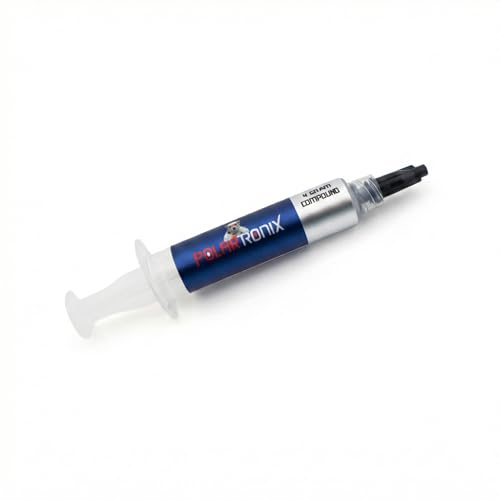
Thermal Paste for Computer CPU GPU Laptop 12.8W/mk Made in USA 4 Gram High Thermal Conductivity - Non Corrosive/Non-Conductive All Processor
Chosen because it specifies Non Corrosive/Non-Conductive All Processor.
View on AmazonARCTIC MX-4 (4 g) - Premium Performance Thermal Paste for All Processors
Chosen because it specifies Premium Performance Thermal Paste for All Processors.
View on Amazon
Thermal Grizzly Kryonaut 1 g Thermal Paste CPU GPU Overclocking | High-Performance Thermal Paste, for overclocking, non-curing, electrically non-conductive, high long-term stability
Chosen because it specifies High-Performance Thermal Paste and for overclocking.
View on AmazonARCTIC MX-7 (8 g) - Ultimate Performance Thermal Paste, Long Durability
Chosen because it specifies Ultimate Performance Thermal Paste and Long Durability.
View on AmazonThermal Paste for Computer CPU GPU Laptop 12.8W/mk Made in USA 4 Gram High Thermal Conductivity - Non Corrosive/Non-Conductive All Processor
Chosen because it specifies Non Corrosive/Non-Conductive All Processor.
View on AmazonAt a glance
| Paste | Type (maker or reviewer description) | Conductive? | Maker operating range | Best for |
|---|---|---|---|---|
| Arctic MX-6 | Carbon-based | No, non-capacitive | -50 to 150 degrees C | Most builds, easy application |
| Noctua NT-H2 | Ceramic and metal oxide | No | -50 to 200 degrees C | Premium, long service life claims |
| Thermal Grizzly Kryonaut | Enthusiast paste | No, non-capacitive | Not stated in sources | Overclockers, small gains |
| Thermal Grizzly Duronaut | Ceramic and metal oxide | No | Not stated in sources | Long-term stability |
| Arctic MX-4 | Metal-free | No | -50 to 150 degrees C | Budget tier |
Arctic MX-6: the common default
Arctic describes MX-6 as non-conductive and non-capacitive, which makes it safe in tight spaces and direct-die applications. Reviewers list an operating range of -50 to 150 degrees C and note that it does not dry out or bleed. One roundup calls it the best choice for most users because it performs within a degree or two of pastes in higher price tiers, and Tom’s Hardware places it in the second-best spot among traditional pastes in its large test. It is sold in several tube sizes, and a 4 g tube is enough for multiple applications on typical desktop processors. Its trade-off is that it is not the absolute best in any single lab test, which matters little for most gamers.
Noctua NT-H2: premium and long-lived
Noctua’s NT-H2 is a ceramic and metal-oxide compound described as non-conductive, with a listed range of -50 to 200 degrees C. One source says it is designed to last up to five years, though that is a roundup claim, not a figure in the sources from Noctua, so treat it as the maker’s positioning rather than a promise. In Igor’s Lab comparisons it sits close to MX-6, and a ten-way roundup showed NT-H2, Kryonaut Extreme, MasterGel Pro and MX-4 within about one degree of each other.
Thermal Grizzly Kryonaut and Duronaut: for tuners
Kryonaut is listed as non-conductive and non-capacitive, and roundups treat it as an enthusiast and overclocking paste. The newer Duronaut is a ceramic and metal-oxide paste aimed at long-term stability rather than a headline conductivity figure; Tom’s Hardware names it as its top paste in the 2026 update of its large paste comparison. Thermal Grizzly stopped quoting thermal conductivity in 2020, so be wary of any W/mK figure on retailer pages. Igor’s Lab reported 6.433 W/mK for Duronaut Pro on a laboratory rig, and the 8.5 W/mK number often quoted for Duronaut is not the maker’s.
Arctic MX-4 and other budget options
Arctic lists MX-4 as metal-free and non-electrically-conductive, with a -50 to 150 degrees C range and a 4 g size. Third-party sites list 8.5 W/mK, but Arctic does not publish a conductivity figure itself. Other non-conductive options include Cooler Master MasterGel Maker (listed by Cooler Master at 11 W/mK) and MasterGel Pro (8 W/mK), and Corsair XTM70, a ceramic and metal-oxide paste in a 3 g size that Igor’s Lab measured at about 4.7 W/mK. Remember that maker conductivity numbers are measured differently and cannot be compared across brands directly.
How much difference does paste make?
Less than most people expect. In the roundups above, five degrees separated the best and worst compound in one ten-way comparison, and most conventional pastes cluster within about three degrees of MX-4 under CPU loads. Cooler mounting pressure, case airflow and fan curves usually matter more. If your processor already runs well under its limit, a fresh paste with a good application will matter far more than the brand.
Application and compatibility notes
- Quantity: A pea-sized dot or thin line is typical for desktop processors. Too much can squeeze out and make cleanup harder.
- Cleanup: Isopropyl alcohol and lint-free wipes remove old paste. Let the surface dry fully before reapplying.
- Graphics cards: Many cards use thermal pads on memory and power stages. Do not replace pads with paste unless the card maker advises. Opening a card may affect its warranty, so read the terms first.
- Handhelds and laptops: Tiny dies and exposed parts make non-conductive paste even more sensible. Some laptop makers recommend specific materials.
- Phase-change pads: Honeywell PTM7950 is listed by roundups as a low-maintenance alternative on GPUs and some laptops, but its installation is different from paste.
- Pump-out and drying: Pastes can degrade over years. Repaste when temperatures rise unexpectedly, not on a fixed schedule.
Pick X if
| If you want | Choose | Why |
|---|---|---|
| One safe paste for most builds | Arctic MX-6 | Non-capacitive, wide reviewer approval |
| A premium kit with a wider range | Noctua NT-H2 | Listed up to 200 degrees C |
| Overclocking and benchmarking | Thermal Grizzly Kryonaut | Enthusiast reputation |
| Long-term stability | Thermal Grizzly Duronaut | Designed with stability in mind |
| Lowest cost tier | Arctic MX-4 | Metal-free, non-conductive |
Budget tiers
Budget: Arctic MX-4. Mid-range: Arctic MX-6 and Corsair XTM70. Premium: Noctua NT-H2 and Thermal Grizzly Kryonaut or Duronaut. Larger tubes tend to cost more but reduce the cost per application if you build often.
Alternatives
- Cooler Master MasterGel Pro or Maker: listed as non-conductive, packaged in a syringe, easy to dose.
- Corsair XTM70: a ceramic and metal-oxide paste listed as non-conductive.
- Honeywell PTM7950: phase-change pad for those who want to avoid reapplication, though it needs careful installation.
Choosing by use case
Processor on an air or tower cooler: MX-6, NT-H2 or Kryonaut all work, and the choice is mostly about tube size and handling. A smaller tube is enough for one or two applications, while a larger one suits anyone who repastes several builds. All-in-one liquid cooler: many coolers arrive with pre-applied paste, which is generally fine to use unless you remove the block, in which case apply fresh paste. Graphics card: use a non-conductive paste on the die only, and follow the card maker’s service guidance for the thermal pads. Console or handheld repaste: use a non-conductive paste and consider whether the device maker covers repairs by third parties. In all cases the goal is a thin, even layer rather than a thick one, because the paste only fills microscopic gaps between the heat spreader and the cooler plate. Thick layers can act as an insulator rather than a conductor of heat.
Application method also matters less than people think. Reviewers who compare dot, line and spread methods find small differences, so pick a method you can repeat cleanly. After mounting, tighten the cooler screws in a cross pattern so pressure is even. If you remove the cooler soon afterward and see a patchy imprint, clean and reapply instead of reusing the same paste.
One last point on safety: even non-conductive pastes can attract dust and make a mess on a socket, so keep the amount modest and clean any overflow before powering on. Keep the tube capped and stored away from heat so it stays workable between builds.
Frequently Asked Questions
Is thermal paste always non-conductive?
No. Most mainstream pastes are non-conductive, but liquid metal compounds conduct electricity. Always read the label. If you are unsure, choose a paste labelled non-conductive.
Which is safer for a graphics card repaste?
A non-conductive paste is safer because components around the die can be exposed. Arctic MX-6, Noctua NT-H2 and Kryonaut are described that way. Follow the card maker’s guidance and consider whether opening the card affects its warranty.
How often should I replace thermal paste?
There is no fixed schedule. Many pastes last several years. Replace it if temperatures climb without another cause, or whenever you remove the cooler.
Does paste brand matter more than cooler choice?
Usually not. Reviews show only a few degrees between common pastes, while the cooler, case airflow and fan speeds often make a bigger difference.
Can I mix different pastes?
Clean the old paste fully before applying a new one. Mixing residue can leave uneven coverage. Isopropyl alcohol and lint-free cloths work well for cleaning.
What if I spill paste on the motherboard?
With non-conductive paste, wipe it gently with isopropyl alcohol and a lint-free swab. If you spilled liquid metal or see damage, stop and have a qualified technician assess the board before powering on.
FAQ
How much difference does paste make?
Is thermal paste always non-conductive?
Which is safer for a graphics card repaste?
How often should I replace thermal paste?
Does paste brand matter more than cooler choice?
Can I mix different pastes?
What if I spill paste on the motherboard?
More from Amazon
Programs that pair well with the guide above. Offers and eligibility are set by Amazon and may change.
Free shipping on eligible items, Prime Video and more. Eligible new members can start with a free trial.
Start a Prime free trialAd-free music streaming. Eligible new subscribers can start with a free trial.
Try Music Unlimited freeA Prime membership for ages 18-24 with a trial period. Eligibility is set by Amazon.
See Prime for Young AdultsAudiobooks and podcasts to listen to on the go. Eligible new members can start with a free trial.
Try Audible freeAs an Amazon Associate we earn from qualifying purchases.