Our Top Picks
The best place to buy a prebuilt gaming PC depends on what you value: buy direct from a large brand such as Alienware, HP Omen, Corsair or MSI for support and a clear warranty, from a value builder such as CyberPowerPC, iBUYPOWER or Skytech for the most hardware per budget tier, or from a boutique builder such as Maingear, Origin PC or Falcon Northwest for custom parts and white-glove service. Whichever you choose, the parts list and the return policy matter more than the logo.
Four kinds of sellers
Prebuilt gaming PCs reach buyers through four channels. Knowing which one you are dealing with explains most of the differences in price, support and upgrade room.

Prebuilt Gaming PC Desktop, Intel Core i5 up to 3.6GHz, R7 350 4G GDDR5
Chosen because it specifies Intel Core i5 up to 3.6GHz and R7 350 4G GDDR5.
View on Amazon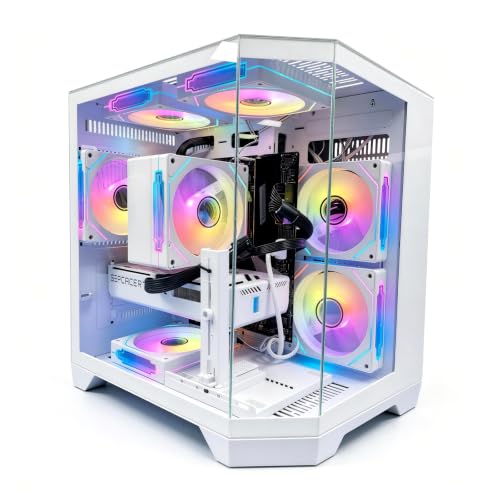
LXZ Prebuilt Gaming PC Ryzen 7 8700F RTX 5060 16GB DDR5 1TB SSD | Gaming Desktop 6 RGB fans, 650W PSU, 7x USB 2.0 + 3x USB 3.0
Chosen because it specifies Gaming Desktop 6 RGB fans and 650W PSU.
View on Amazon
ZYNEEX Prebuilt Gaming Desktop PC, AMD Ryzen 5 5500, GeForce RTX 3050 6GB,16GB DDR4 3200MHz RAM, 1TB NVMe SSD, ARGB Air Cooling, Wi-Fi,Tower Computer for Gaming, Streaming, Editing
Chosen because it specifies AMD Ryzen 5 5500 and GeForce RTX 3050 6GB.
View on Amazon
OKAMUS Prebuilt Desktop Computer, i7 CPU Up to 3.9GHz, Integrated Graphics Only Tower PC, 16GB RAM, 256GB M.2 SSD, RGB Fans x4,Win11 Home, WiFi 6+BT5.3, 400W PSU
Chosen because it specifies i7 CPU Up to 3.9GHz and Integrated Graphics Only Tower PC.
View on AmazonPrebuilt Gaming PC Desktop, Intel Core i5 up to 3.6GHz, R7 350 4G GDDR5
Chosen because it specifies Intel Core i5 up to 3.6GHz and R7 350 4G GDDR5.
View on AmazonLXZ Prebuilt Gaming PC Ryzen 7 8700F RTX 5060 16GB DDR5 1TB SSD | Gaming Desktop 6 RGB fans, 650W PSU, 7x USB 2.0 + 3x USB 3.0
Chosen because it specifies Gaming Desktop 6 RGB fans and 650W PSU.
View on AmazonZYNEEX Prebuilt Gaming Desktop PC, AMD Ryzen 5 5500, GeForce RTX 3050 6GB,16GB DDR4 3200MHz RAM, 1TB NVMe SSD, ARGB Air Cooling, Wi-Fi,Tower Computer for Gaming, Streaming, Editing
Chosen because it specifies AMD Ryzen 5 5500 and GeForce RTX 3050 6GB.
View on Amazon
KOTIN Gaming PC, Ryzen 7 9700X, RX 9070 XT 16GB, 32GB DDR5, 1TB SSD | Prebuilt Gaming Computer, 11.3In Smart Display, 360mm Liquid Cooler, WiFi 7, 850W Gold PSU, Windows 11, ARGB, 1440p 4K
Chosen because it specifies Ryzen 7 9700X and RX 9070 XT 16GB.
View on Amazon| Seller type | Examples | Best for | Trade-offs |
|---|---|---|---|
| Large brand, direct | Alienware, HP Omen, Lenovo Legion, Acer Predator, MSI | Buyers who want one company to call, on-site or mail-in service, and frequent sales events | Some models use proprietary power supplies, motherboards or cases that limit upgrades |
| Value system builders | CyberPowerPC, iBUYPOWER, Skytech Gaming | The most GPU and CPU per budget tier | Component quality varies; read the exact power supply, motherboard and memory |
| Component-brand desktops | Corsair Vengeance, NZXT Player series | Clean builds with the brand’s own cases, coolers and power supplies | Often priced above comparable value builds |
| Boutique builders | Maingear, Origin PC, Falcon Northwest | Custom configurations, careful cable work, detailed support | Premium pricing and longer lead times |
Retail chains and online marketplaces also carry many of these brands. When you buy through a third party, check who is responsible for the warranty and returns, since policies differ from the maker’s own terms.
What to read before you click buy
- The full parts list: a trustworthy listing names the CPU, GPU, motherboard, memory amount and speed, storage type, power supply wattage and rating, and cooler. If the listing says only “gaming power supply” or “RGB fans”, ask for specifics.
- Power supply: compare the stated wattage to the graphics card maker’s recommended figure and look for a recognized brand and efficiency certification where listed.
- Memory configuration: two matched modules (dual channel) perform better than one. For DDR5 systems, check that the stated speed is enabled in the BIOS profile.
- Storage: an NVMe SSD, ideally 1 TB or more. Be wary of systems that pair a small SSD with a hard drive as the only storage.
- Motherboard: a model with room for another M.2 drive and extra memory slots gives you upgrade options.
- Case and cooling: look for airflow, such as a mesh front panel, rather than only glass and lighting.
Warranty, returns and support
- Warranty length and scope: makers state the parts and labor terms. Many large brands offer one year as standard with paid extensions; some builders list longer coverage on parts.
- Return window: check how many days you have to return the system and whether a restocking fee applies.
- Shipping damage: inspect the box on delivery and test fan, GPU and drive seating if the policy asks you to report damage promptly.
- Support access: see whether phone or chat support is included, and whether service is on-site, depot or mail-in.
- Software and bloat: large-brand systems often include extra software you can uninstall.
Budget tiers and what to expect
| Tier | Typical hardware class | Where it tends to be sold |
|---|---|---|
| Budget | Ryzen 5 or Core i5, RTX 5050 to RTX 5060 or RX 9060 XT class GPU, 16 GB RAM, 1 TB NVMe | Value builders and retail chains; check power supply and RAM channels |
| Mid-range | Ryzen 7 or Core Ultra 7, RTX 5070 or RX 9070 class GPU, 32 GB RAM, 1 to 2 TB NVMe | Value builders, large brands and component-brand desktops |
| Premium | Ryzen 9 or Ryzen 7 X3D, RTX 5080 class or above, 32 to 64 GB RAM, 2 TB NVMe or more | Boutique builders, large-brand flagship lines |
Pick X if…
| If you… | Pick |
|---|---|
| want the strongest hardware per budget tier | A value builder, after reading the parts list carefully |
| want one company to handle service | A large brand sold direct, with its warranty plan |
| want a tidy build and standard parts | A component-brand desktop such as Corsair or NZXT |
| want a custom configuration and cable work | A boutique builder |
| plan to upgrade the GPU or PSU yourself | A system with standard ATX parts, not proprietary ones |
| are new to PCs | A seller with phone or chat support and a clear return window |
Red flags
- Missing or vague parts lists, especially for the power supply.
- Memory listed as a single module in a modern gaming system.
- Proprietary connectors or cases that will not accept normal parts.
- Listings that mix the graphics card name with a different model, such as an older generation or a lower-memory variant, without stating the exact model.
- Third-party sellers that cannot say who handles warranty claims.
- Used or “open box” systems with no stated warranty.
Alternatives to a new prebuilt
- Build it yourself: you control the parts, but it takes time and you handle troubleshooting.
- Local PC shops: some assemble custom builds and offer in-person support.
- Refurbished systems from the maker: can lower cost if the warranty is clear.
- Gaming laptop: for players who need portability.
How a seller type affects upgrades and repairs
Standard parts keep your options open. If a system uses a regular ATX or micro-ATX motherboard and a standard power supply, you can swap the graphics card, add memory or replace a failed fan with ordinary components. Proprietary designs, which some large-brand desktops use, may restrict you to the maker’s replacement parts and service. Ask the seller, or read reviewer teardowns of the exact model, to see how the case opens, what the power supply connectors look like and how many drive and memory slots remain.
Questions to ask before ordering
- Which exact graphics card model and memory size does the system include?
- Is the memory two modules, and what speed does it run at by default?
- Which brand and wattage is the power supply, and does it have a certification rating?
- Is Windows installed and activated, and is a recovery option included?
- How long is the warranty on parts and labor, and who pays for shipping on a claim?
- What is the return window, and is there a restocking fee?
- How long will the build take, and is there a stress-test step before shipping?
On arrival: first steps
- Inspect the box and case for damage and photograph anything unusual before you discard packaging.
- Check that the graphics card is seated and that the monitor cable goes into the graphics card, not the motherboard.
- Update Windows, graphics drivers and the motherboard BIOS as the component makers advise.
- Enable the memory’s rated speed profile in the BIOS if the system does not do so by default.
- Run your favorite games and watch temperatures with a monitoring tool. If temperatures or noise look unusual, contact support within the return window.
Weighing the value
A fair comparison looks at the cost of the same parts bought separately plus a service fee for assembly, testing, Windows and warranty. Value builders usually keep that fee small, large brands add to it through branding and support, and boutique builders add it for custom work. If the gap between the prebuilt and the parts is small, a prebuilt with a good warranty is often the easier path; if the gap is large, look closely at whether the listing uses lower-grade parts to reach its target.
Noise, thermals and case choice
Cases with mesh fronts and several fans cool better but can be louder under load, while closed glass cases look neat but may run hotter. Compact cases save space and limit cooler and graphics card size. Reviewers often point out fan curves and cooler choices when they cover a system, so read that coverage if you are sensitive to noise or plan to keep the PC close to your desk.
Frequently Asked Questions
Is it better to buy a prebuilt gaming PC from the maker or a retailer?
Buying direct usually gives clear warranty terms and easy access to support. Retailers can offer convenient returns and local pickup, but confirm who handles warranty claims, since third parties may have different policies.
Are boutique builders worth it?
They suit buyers who want custom parts, careful assembly and personal support, and who are willing to pay for it. Value builders deliver similar performance for less, if you read the parts list and accept simpler support.
What should I check in a prebuilt’s parts list?
Check the CPU, exact GPU model, memory amount in two modules, NVMe storage size, power supply wattage and brand, and the cooler type. These decide both performance and upgrade room.
Do prebuilt PCs void the warranty if I upgrade them?
Policies differ by seller. Many allow opening the case to add storage or memory, while others void warranty on altered parts or broken seals. Read the terms before you open the case.
Are large-brand prebuilts hard to upgrade?
Some are, because they use proprietary power supplies, motherboards or cases. Others use standard parts. Look at reviewer teardowns of the exact model before buying if upgrading matters to you.
When is the best time to buy a prebuilt gaming PC?
Makers frequently run sales around major shopping events, and new graphics card launches can lead to updated configurations. Compare the parts lists of sale systems, because discounts sometimes apply to older or weaker configurations.
FAQ
Is it better to buy a prebuilt gaming PC from the maker or a retailer?
Are boutique builders worth it?
What should I check in a prebuilt’s parts list?
Do prebuilt PCs void the warranty if I upgrade them?
Are large-brand prebuilts hard to upgrade?
When is the best time to buy a prebuilt gaming PC?
More from Amazon
Programs that pair well with the guide above. Offers and eligibility are set by Amazon and may change.
Free shipping on eligible items, Prime Video and more. Eligible new members can start with a free trial.
Start a Prime free trialAd-free music streaming. Eligible new subscribers can start with a free trial.
Try Music Unlimited freeA Prime membership for ages 18-24 with a trial period. Eligibility is set by Amazon.
See Prime for Young AdultsAudiobooks and podcasts to listen to on the go. Eligible new members can start with a free trial.
Try Audible freeAs an Amazon Associate we earn from qualifying purchases.