Key takeaways
- Clean handling of loud peaks. Drivers that distort or smear during explosions hide the small sounds that follow them.
- A spacious, layered soundstage. You often need to tell whether a sound is above you, below you or on the other side of a wall that is about to come down.
- Comfort at moderate volume. If you have to turn the headset up to hear footsteps over the rubble, you will tire out, and you also put your hearing at risk (see the volume table below).
The best gaming headset for The Finals is the Audeze Maxwell 2. Its 90 mm planar magnetic drivers can play a building collapse and a footstep on the floor above at the same time without the two blurring together. If you prefer an open-back wired headset, the Beyerdynamic MMX 330 Pro is the pick. The HyperX Cloud Alpha Air is a cheaper open-back option, and the SteelSeries Arctis Nova Pro Wireless is the one to buy if you play in a noisy room and need active noise cancellation.
Why The Finals is harder on headphones than most shooters
Most shooters ask a headset to find quiet cues in a fairly quiet mix. The Finals asks it to find quiet cues during a demolition. Walls, floors and whole buildings come down. In Cashout, four teams of three fight over the same vaults and cashout stations. Heavy builds can open a hole in the floor under you with almost no warning. Two commentators also talk over the match. Since launch, a common player complaint has been that enemy footsteps are harder to pick out than they are in slower shooters.
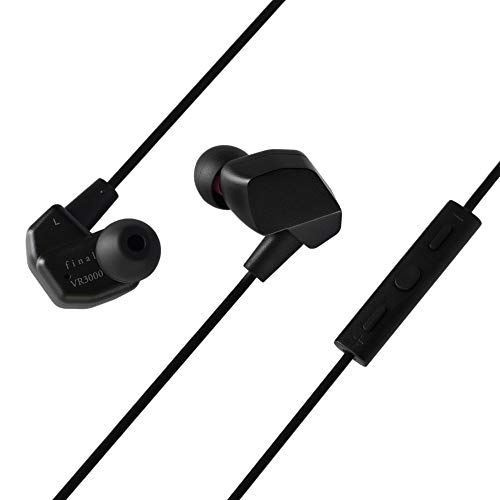
Final VR3000 Gaming Earphones for Immersive Spacious Experience - Open World Adventure, Virtual Reality & Spatial Environments - in-Line Microphone and Controls - Black
Included for 'Best Gaming Headset for The Finals: Hearing Through Chaos' because the listing specifies Open World Adventure and Virtual Reality & Spatial Environments, details this guide uses to compare options.
View on Amazon
final VR2000 Immersive 3D Live Sound Headphones with Built-in Microphone and Controls for VR, ASMR, Gaming and 360 Music
Included for 'Best Gaming Headset for The Finals: Hearing Through Chaos' because the listing specifies ASMR and Gaming and 360 Music, details this guide uses to compare options.
View on AmazonThat will get harder with the next update. Season 11, Galaxy Masters, runs until October 20, 2026, when Season 12, Prime Time, brings what Embark calls its biggest destruction overhaul since launch. Floors will sag and droop instead of simply vanishing, walls will tilt, and collapses are described as heavier and louder. Gas will no longer pass through walls, and smoke will scatter from explosions. In practice, that means more low-frequency noise for longer stretches of a match, with the same small footstep and gadget sounds underneath it.
For this game, a headset needs three things more than raw bass:
- Clean handling of loud peaks. Drivers that distort or smear during explosions hide the small sounds that follow them.
- A spacious, layered soundstage. You often need to tell whether a sound is above you, below you or on the other side of a wall that is about to come down.
- Comfort at moderate volume. If you have to turn the headset up to hear footsteps over the rubble, you will tire out, and you also put your hearing at risk (see the volume table below).
The picks
Audeze Maxwell 2: best overall
The Maxwell 2 uses 90 mm planar magnetic drivers, which are generally known for low distortion at high output. That is the property you need when an RPG goes off two rooms away while someone is reloading behind you. Audeze rates it at 10 Hz to 50 kHz and over 80 hours of wireless playback at 80 dBA. It connects over a low-latency USB-C dongle, Bluetooth 5.3, USB-C wired or 3.5 mm. The boom mic uses hypercardioid beamforming with physical and AI noise reduction. The trade-off is weight: Audeze lists 560 g, so headband fit matters more than usual. It costs about $330 to $350.
Beyerdynamic MMX 330 Pro: best open-back
The MMX 330 Pro is an open-back wired headset with Beyerdynamic’s STELLAR.45 driver, rated at 5 Hz to 40,000 Hz, with 48 ohm impedance and a weight of 318 g without the cable. Open-back cups let sound spread more naturally around your head. Many listeners find that makes it easier to judge height and distance, which is exactly the “is that above me or below me” question The Finals keeps asking. It has a cardioid condenser mic and connects with 3.5 mm cables, with an adapter for consoles.
HyperX Cloud Alpha Air: budget open-back
The Cloud Alpha Air brings the open-back design to a lower price. It uses 40 mm drivers rated at 20 Hz to 20 kHz, plus HyperX’s Bass Tube design, which keeps some low end despite the open cups. It weighs 0.60 lb (about 272 g) before adding the boom mic, which adds about 12 g. It connects by cable over 3.5 mm or USB, and HyperX’s NGENUITY software provides EQ. List price is $149.99, though stock at HyperX’s own store has been inconsistent.
SteelSeries Arctis Nova Pro Wireless: best for noisy rooms
Open-back headsets let in room noise, and the people around you will hear your game. If you share a room or play near a fan or console, active noise cancellation helps more than open cups do. The Nova Pro Wireless has ANC, two hot-swappable batteries rated at up to 22 hours each, and simultaneous 2.4 GHz and Bluetooth. It supports PC, PS5, Switch, handheld PCs and Mac, and its mic uses AI noise cancelling. It usually sells for around $300 to $350.
Spec comparison
| Headset | Design | Driver | Frequency response | Weight | Battery |
|---|---|---|---|---|---|
| Audeze Maxwell 2 | Closed, wireless | 90 mm planar magnetic | 10 Hz to 50 kHz | 560 g | 80+ h at 80 dBA |
| Beyerdynamic MMX 330 Pro | Open-back, wired | STELLAR.45 dynamic | 5 Hz to 40 kHz | 318 g | None (wired) |
| HyperX Cloud Alpha Air | Open-back, wired | 40 mm dynamic | 20 Hz to 20 kHz | About 284 g with mic | None (wired) |
| SteelSeries Arctis Nova Pro Wireless | Closed, ANC, wireless | Neodymium dynamic | Hi-Res certified | – | 2 x 22 h, hot-swappable |
Open-back, closed-back or ANC? Match it to your setup
| Your setup | Best design | Pick |
|---|---|---|
| Quiet room, PC, you want the best sense of floors and walls | Open-back | Beyerdynamic MMX 330 Pro |
| Quiet room, tighter budget | Open-back | HyperX Cloud Alpha Air |
| Moving between PC, console and phone, want wireless with top clarity | Closed planar | Audeze Maxwell 2 |
| Shared room, fan noise, or late-night play near others | Closed with ANC | SteelSeries Arctis Nova Pro Wireless |
| Long weekend sessions without charging breaks | Hot-swap or wired | Nova Pro Wireless, or either open-back |
EQ starting points for destruction-heavy matches
Every headset here can be EQ’d, either in its maker’s app or with a system-wide equalizer on PC. These are starting values to fine-tune in a practice match, not fixed rules:
| Band | What lives there in The Finals | Adjustment | Reason |
|---|---|---|---|
| 40 to 80 Hz | Collapse rumble, explosion sub-bass | Cut 3 to 4 dB | Shortens the masking tail after a building comes down |
| 150 to 300 Hz | Body of footsteps, debris thuds | Leave flat | Cutting here makes steps sound thin and far away |
| 2 to 4 kHz | Footstep attack, reloads, gadget beeps | Boost 2 to 3 dB | Helps short cues cut through the noise |
| 6 to 8 kHz | Glass, debris hiss | Cut 1 to 2 dB if fatiguing | Reduces harshness over long sessions |
In the game itself, keep the music slider low and pull the announcer volume down if the commentators talk over the fights you care about. Each sound you remove leaves more room for footsteps.
Why turning it up is the wrong fix
The usual response to explosions drowning out footsteps is more volume, and that has a cost. The widely used occupational guideline from the US National Institute for Occupational Safety and Health allows 85 dBA for 8 hours, and halves the safe time for every 3 dB above that:
| Average level | Recommended maximum per day |
|---|---|
| 85 dBA | 8 hours |
| 88 dBA | 4 hours |
| 91 dBA | 2 hours |
| 94 dBA | 1 hour |
A long evening of The Finals at a level where collapses feel huge can easily exceed those limits. A headset that keeps detail clear at moderate volume, together with the EQ cut on sub-bass rumble, protects both your awareness in the match and your hearing.