Key takeaways
- Latency: Wired is zero-latency by definition; quality 2.4GHz wireless now lands in the 20–30ms range, as with the NUBWO headset’s advertised 23ms sync. Bluetooth remains noticeably slower and is best reserved for music, chat, and mobile play.
- Freedom of movement: Wireless lets you walk away from the desk, grab a drink, or lean back on the sofa mid-cutscene. Wired tethers you to roughly a 1.2–3m radius depending on cable length and extension.
- Upkeep: Wired headsets never need charging or firmware updates. Wireless requires a routine, though the 80-hour Turtle Beach Stealth 600 and 100-hour NUBWO make that routine weekly rather than daily.
- Audio ceiling per dollar: At the same price, a wired headset typically offers better drivers and build because none of the budget went into radios and batteries. Wireless models close the gap at higher tiers.
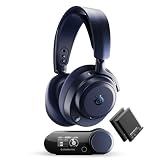
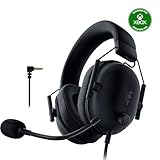
- Platform flexibility: Multi-mode wireless is far more versatile. Dual 2.4GHz-and-Bluetooth designs like the BlackShark V3 X HyperSpeed and Arctis Nova 5 cover PC, console, Switch, and phone from one headset. Wired 3.5mm is universal but single-device.
- Microphone quality: Wired analogue mics avoid wireless compression entirely. That said, cardioid designs and processing on the BlackShark V3 X and the ClearCast Gen2.X on the Nova 5 have made the difference marginal for Discord and party chat.
What's inside
- Watch: Wireless vs Wired Gaming Headset in 2026 — Video Review
- Quick Verdict
- Key Differences
- Wireless Gaming Headsets: Convenience Without the Old Compromises
- Wired Gaming Headsets: Uncompromised Signal and Value
- Which Should You Buy?
- Related Guides
- Frequently Asked Questions
- Final Verdict
- Related Articles
- Related Guides
The gap between wireless and wired gaming headsets has never been narrower than it is in 2026. Low-latency 2.4GHz protocols have matured, battery life has stretched past the point where most players ever think about charging, and multi-platform dongles now handle PC, PS5, and Switch without a second purchase. Wired headsets, meanwhile, have quietly become the value play: no radios, no batteries, and no firmware to update means more of your money goes into drivers, padding, and microphone quality.
- Watch: Wireless vs Wired Gaming Headset in 2026 — Video Review
- Quick Verdict
- Key Differences
- Wireless Gaming Headsets: Convenience Without the Old Compromises
- Wired Gaming Headsets: Uncompromised Signal and Value
- Which Should You Buy?
- Related Guides
- Frequently Asked Questions
- Final Verdict
- Related Articles
- Related Guides
That makes the decision less about raw technical superiority and more about how you actually play. A competitive shooter player on a tournament PC has different priorities than someone splitting time between a living-room console, a handheld, and a phone on the train. Below we break down where each connection type genuinely wins in 2026, and which headsets are worth your shortlist.
As an Amazon Associate we earn from qualifying purchases at no extra cost to you. Product prices and availability are accurate as of the date shown and are subject to change.


⚡ Save on Your Next PC — Amazon Prime
Prime members get fast free shipping on the systems above, plus early access to Prime Day & Black Friday PC deals. New members get a 30-day free trial.
Watch: Wireless vs Wired Gaming Headset in 2026 — Video Review
Quick Verdict
Wireless is the right default for most players in 2026 — modern 2.4GHz links are effectively latency-free for gaming, battery anxiety has largely disappeared, and models like the SteelSeries Arctis Nova 5 and Razer BlackShark V3 X HyperSpeed deliver sound quality that would have been flagship-tier three years ago. Wired remains the smarter buy if you want maximum audio fidelity per dollar, need absolute reliability at a LAN or tournament, or simply refuse to manage another charging cable. If you game primarily at a desk on a budget, wired still stretches your money further.
Key Differences
- Latency: Wired is zero-latency by definition; quality 2.4GHz wireless now lands in the 20–30ms range, as with the NUBWO headset’s advertised 23ms sync. Bluetooth remains noticeably slower and is best reserved for music, chat, and mobile play.
- Freedom of movement: Wireless lets you walk away from the desk, grab a drink, or lean back on the sofa mid-cutscene. Wired tethers you to roughly a 1.2–3m radius depending on cable length and extension.
- Upkeep: Wired headsets never need charging or firmware updates. Wireless requires a routine, though the 80-hour Turtle Beach Stealth 600 and 100-hour NUBWO make that routine weekly rather than daily.
- Audio ceiling per dollar: At the same price, a wired headset typically offers better drivers and build because none of the budget went into radios and batteries. Wireless models close the gap at higher tiers.
- Platform flexibility: Multi-mode wireless is far more versatile. Dual 2.4GHz-and-Bluetooth designs like the BlackShark V3 X HyperSpeed and Arctis Nova 5 cover PC, console, Switch, and phone from one headset. Wired 3.5mm is universal but single-device.
- Microphone quality: Wired analogue mics avoid wireless compression entirely. That said, cardioid designs and processing on the BlackShark V3 X and the ClearCast Gen2.X on the Nova 5 have made the difference marginal for Discord and party chat.
Wireless Gaming Headsets: Convenience Without the Old Compromises
The strongest argument for wireless in 2026 is that the traditional trade-offs have mostly evaporated. Sub-30ms 2.4GHz connections are imperceptible in practice, and battery figures have escalated to the point of irrelevance — the Turtle Beach Stealth 600 quotes 80 hours, the BlackShark V3 X HyperSpeed 70, and the NUBWO a full 100. Play-and-charge support, as on the Ozeino headset, means even a flat battery costs you nothing but plugging in a USB-C cable and carrying on.
Versatility is the other draw. A single dongle-plus-Bluetooth headset now spans your whole setup: the SteelSeries Arctis Nova 5 moves between PC, PS5, Switch, and mobile with over 100 audio presets tuned per game, while the Razer Hammerhead V3 X Wireless PS Edition offers the same freedom in an earbud form factor that fits in a pocket. If you own more than one platform, wireless quietly saves you from buying a second headset.
Wired Gaming Headsets: Uncompromised Signal and Value
Wired headsets win on the fundamentals. A 3.5mm or USB connection delivers uncompressed audio with no interference, no pairing, no dropouts, and no battery to degrade after two years of charge cycles. For competitive players, that reliability matters most in the moments where it counts — a wireless dropout during a clutch round is a risk wired simply doesn’t carry.
The value case is equally strong. Strip out the transmitter, receiver, and battery, and manufacturers can spend that budget on larger drivers, better earcup materials, and detachable broadcast-grade microphones. If your setup is a single desk with a single PC, and you want the best sound and mic your budget allows, wired is still the efficient answer in 2026.
Which Should You Buy?
- For competitive FPS and tournaments: Pick wired for guaranteed signal integrity — or a low-latency 2.4GHz model like the NUBWO if you want wireless without meaningful delay.
- For multi-platform households: Pick wireless. The Arctis Nova 5 or BlackShark V3 X HyperSpeed cover PC, PS5, Switch, and phone from one purchase.
- For marathon sessions: Pick wireless with a large battery — the Turtle Beach Stealth 600 or NUBWO will outlast your weekend.
- For the tightest budget: Pick wired, or a value wireless option like the Ozeino if cable-free play is non-negotiable.
- For travel and commuting: Pick wireless earbuds such as the Razer Hammerhead V3 X Wireless, which pack down far smaller than any over-ear headset.
Frequently Asked Questions
Is wireless latency still a problem in 2026?
Not over 2.4GHz. Modern dongles typically deliver 20–30ms, which is below the threshold most players can perceive during gameplay. Bluetooth is a different story — expect noticeably higher latency, so use it for chat, music, and casual mobile play rather than competitive matches.
Do wireless headsets sound worse than wired?
At the budget end, often slightly — wireless models spend part of their budget on radios and batteries. From the mid-range upward, the difference is negligible for gaming, and features like the Arctis Nova 5’s preset library can more than offset it.
How long do wireless gaming headsets really last?
Manufacturer figures assume moderate volume with lighting and effects off, so treat 80- and 100-hour claims as best-case. Even at 60–70% of the quoted number, most modern headsets need charging roughly once a week for typical use.
Can I use one headset across PC, PS5, and Switch?
Yes, if it supports both 2.4GHz and Bluetooth and ships with a compatible dongle. Multi-system models like the BlackShark V3 X HyperSpeed and Arctis Nova 5 are designed for exactly this. Always confirm PlayStation or Xbox support before buying, as console licensing still varies by model.
Final Verdict
For the majority of players in 2026, wireless is the better buy — the latency argument has been settled, batteries last long enough to forget about, and multi-platform support turns one headset into an entire setup’s audio solution. Wired keeps its place for competitive purists, desk-bound PC players, and anyone chasing the best possible sound per dollar. Decide how much you move, how many devices you own, and how much you value never thinking about charging, and the right answer becomes obvious.