Key takeaways
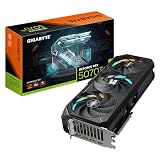
- Memory capacity: The 5070 ships with 12GB of GDDR7, while every 5070 Ti — from the GIGABYTE Gaming OC to the MSI Ventus 3X OC — carries 16GB. That extra headroom is the single biggest separator in modern texture-heavy titles.
- Memory bus and bandwidth: 192-bit on the 5070 versus 256-bit on the 5070 Ti, translating to roughly a third more bandwidth on the Ti. This is what keeps it steady at 4K where the 5070 begins to stutter.
- Raw shader performance: The 5070 Ti carries substantially more CUDA cores, RT cores and Tensor cores, which shows up as a consistent 20–25% frame rate advantage at 1440p and closer to 30% at 4K.
- Power and cooling: The 5070 sits around 250W and is happy on a quality 650W supply; the 5070 Ti pushes near 300W and is safer on 750W or more, with correspondingly larger coolers.
- Physical footprint: Both tiers offer compact options — the ASUS TUF Gaming 5070 is a triple-slot card, while SFF-ready designs like the ASUS Prime 5070 Ti and GIGABYTE Eagle OC ICE SFF specifically target small-form-factor cases.
- Shared features: DLSS 4 with Multi Frame Generation, PCIe 5.0, HDMI 2.1 and DisplayPort 2.1 are identical across both. Neither card is feature-limited relative to the other.
What's inside
Nvidia’s Blackwell mid-range has settled into a clear two-tier structure, and by 2026 the RTX 5070 and RTX 5070 Ti have become the default recommendations for anyone building a 1440p or entry-level 4K gaming PC. On paper they share the same architecture, the same GDDR7 memory technology, the same PCIe 5.0 interface and the same DLSS 4 feature set with Multi Frame Generation. In practice, the gap between them is wider than the names suggest.
The decision matters more now than it did at launch. Game engines have grown noticeably more VRAM-hungry, ray tracing is enabled by default in a growing number of AAA titles, and 1440p high-refresh monitors have become the mainstream standard rather than an enthusiast luxury. Choosing between a 12GB card and a 16GB card is no longer a rounding error on a spec sheet — it shapes how long your build stays comfortable. Below we break down the real differences, then match each card to the builds it actually suits.
As an Amazon Associate we earn from qualifying purchases at no extra cost to you. Product prices and availability are accurate as of the date shown and are subject to change.


⚡ Save on Your Next PC — Amazon Prime
Prime members get fast free shipping on the systems above, plus early access to Prime Day & Black Friday PC deals. New members get a 30-day free trial.
Watch: RTX 5070 vs 5070 Ti: Which to Buy in 2026? — Video Review
Quick Verdict
The RTX 5070 is the value pick: it delivers excellent 1440p performance at a lower price and draws less power, making it ideal for mainstream builds, smaller power supplies and players who lean on DLSS. The RTX 5070 Ti is the longevity pick: roughly 20–25% faster, with 16GB of VRAM on a wider 256-bit bus, it handles 4K, heavy ray tracing and creative workloads that make the 5070 sweat. If your budget stretches and you plan to keep the card three or more years, the Ti is the better long-term buy.
Key Differences
- Memory capacity: The 5070 ships with 12GB of GDDR7, while every 5070 Ti — from the GIGABYTE Gaming OC to the MSI Ventus 3X OC — carries 16GB. That extra headroom is the single biggest separator in modern texture-heavy titles.
- Memory bus and bandwidth: 192-bit on the 5070 versus 256-bit on the 5070 Ti, translating to roughly a third more bandwidth on the Ti. This is what keeps it steady at 4K where the 5070 begins to stutter.
- Raw shader performance: The 5070 Ti carries substantially more CUDA cores, RT cores and Tensor cores, which shows up as a consistent 20–25% frame rate advantage at 1440p and closer to 30% at 4K.
- Power and cooling: The 5070 sits around 250W and is happy on a quality 650W supply; the 5070 Ti pushes near 300W and is safer on 750W or more, with correspondingly larger coolers.
- Physical footprint: Both tiers offer compact options — the ASUS TUF Gaming 5070 is a triple-slot card, while SFF-ready designs like the ASUS Prime 5070 Ti and GIGABYTE Eagle OC ICE SFF specifically target small-form-factor cases.
- Shared features: DLSS 4 with Multi Frame Generation, PCIe 5.0, HDMI 2.1 and DisplayPort 2.1 are identical across both. Neither card is feature-limited relative to the other.
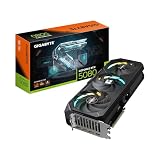
GeForce RTX 5070: The 1440p Value Champion
The RTX 5070 remains the sweet spot for the majority of gamers. At 1440p with high settings it comfortably clears 100fps in most competitive titles and holds a solid 60–80fps in demanding single-player games before DLSS enters the picture. Turn on DLSS 4 and Multi Frame Generation and those numbers climb dramatically, which is why the 5070 pairs so well with 1440p 165Hz and 240Hz panels.
Partner cards like the ASUS TUF Gaming RTX 5070 OC Edition lean into the card’s efficiency advantage with military-grade components, protective PCB coating and Axial-tech fans that keep it quiet under sustained load. The real caveat is the 12GB frame buffer. It is sufficient today at 1440p, but maxed-out ray tracing plus ultra textures at 4K can push past it, forcing texture setting compromises. If that scenario describes your library, budget for the Ti instead.
GeForce RTX 5070 Ti: The 4K-Capable Step Up
The 5070 Ti is where Blackwell’s mid-range stops making compromises. The 16GB frame buffer and 256-bit bus let it run 4K at high settings with DLSS assistance, sustain path-traced titles without collapsing, and handle video editing, 3D rendering and local AI workloads that 12GB cards simply cannot fit. It is the card to buy if you want to skip a generation.
Availability is strong across form factors. The GIGABYTE Gaming OC 16G uses a full WINDFORCE cooler for the lowest temperatures and noise in larger cases, while the MSI Ventus 3X OC offers a well-balanced triple-fan design with a factory boost near 2497MHz. For compact builds, the ASUS SFF-Ready Prime OC Edition and the GIGABYTE Eagle OC ICE SFF squeeze the same silicon into 2.5-slot, small-chassis-friendly shrouds. Laptop owners have an unusual third path: the ROG XG Mobile (2025) delivers 5070 Ti performance externally over Thunderbolt 5.
Which Should You Buy?
- For 1440p high-refresh gaming: Pick the RTX 5070. It hits the frame rates competitive play demands at a meaningfully lower cost.
- For 4K gaming or heavy ray tracing: Pick the RTX 5070 Ti. The extra bandwidth and 16GB buffer are non-negotiable at that resolution.
- For small-form-factor builds: Either works, but the ASUS Prime SFF-Ready or GIGABYTE Eagle OC ICE SFF give you Ti performance without a full-tower case.
- For content creation and AI workloads: Pick the RTX 5070 Ti. VRAM capacity is the hard limit in rendering and local model work.
- For gaming laptops: Consider the ROG XG Mobile external GPU rather than replacing an entire machine.
Frequently Asked Questions
Is the RTX 5070 Ti worth the price premium over the 5070?
If you game at 4K, use ray tracing heavily, or plan to keep the card beyond three years, yes. For pure 1440p gaming on a tighter budget, the 5070 delivers better performance per dollar.
Is 12GB of VRAM still enough in 2026?
At 1440p, generally yes. At 4K with ultra textures and full ray tracing, 12GB is increasingly the limiting factor and you may need to drop texture quality a notch.
What power supply do I need for each card?
A quality 650W unit is sufficient for the RTX 5070. For the 5070 Ti, plan on 750W or more, particularly with a high-core-count CPU.
Do both cards support DLSS 4 Multi Frame Generation?
Yes. Both are full Blackwell cards with identical DLSS 4 support, including Multi Frame Generation, plus PCIe 5.0 and DisplayPort 2.1 outputs.
Final Verdict
The RTX 5070 is the smarter buy for most 1440p gamers, offering the bulk of Blackwell’s benefits at a friendlier price and power draw. But the RTX 5070 Ti earns its premium through genuine capability rather than marketing — 16GB of VRAM, a wider bus and roughly a quarter more performance make it the card that will still feel comfortable several years from now. Buy the 5070 if you are optimizing for value today; buy the 5070 Ti if you are optimizing for the life of the build.