Key takeaways
- Choose a USB-C soundbar for PC by checking digital audio, power needs, cables, monitor hubs, and console support before you buy.
A USB-C soundbar for PC can simplify a desk, but the connector alone does not tell you how sound reaches the speakers. Before buying, find an explicit statement that the model supports USB digital audio, then check its power requirements and included cable. A product described only as USB-powered may still need a separate audio connection.
This guide is a compatibility checklist, not a tested product ranking. It helps you decide whether a soundbar fits your computer and desk before comparing sound quality or extra features.
Our top picks
 Computer Speakers for Desktop PC Monitor
- [COMPATIBLE WITH USB DEVICES] - Our USB Speakers…
- [COMPATIBLE WITH USB-C DEVICES] - Thanks to the…
- [INCREDIBLE LOUD SOUND WITH RICH BASS] - Our…
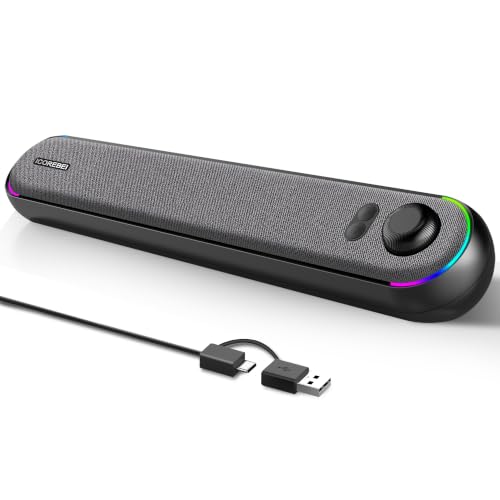 ICOREBEI Computer Speakers USB Powered SoundBar for
- Dual full-range drivers and a bass radiator deliver…
- Connect through the included USB-C-to-USB-A cable for digital…
- Pair with compatible Mac computers, Windows PCs, laptops,…
 Computer Speakers for Desktop PC
- [Sturdy Spring Clamp] Our monitor speakers, upgraded with…
- [Easy Volume Knob] The computer speakers feature a…
- [Auto-Channel-Switching]
| Product | Key specs | |
|---|---|---|
| Computer Speakers for Desktop PC Monitor | [COMPATIBLE WITH USB DEVICES] - Our USB Speakers… [COMPATIBLE WITH USB-C DEVICES] - Thanks to the… [INCREDIBLE LOUD SOUND WITH RICH BASS] - Our… | Check price |
| ICOREBEI Computer Speakers USB Powered SoundBar for | Dual full-range drivers and a bass radiator deliver… Connect through the included USB-C-to-USB-A cable for digital… Pair with compatible Mac computers, Windows PCs, laptops,… | Check price |
| Computer Speakers for Desktop PC | [Sturdy Spring Clamp] Our monitor speakers, upgraded with… [Easy Volume Knob] The computer speakers feature a… [Auto-Channel-Switching] | Check price |
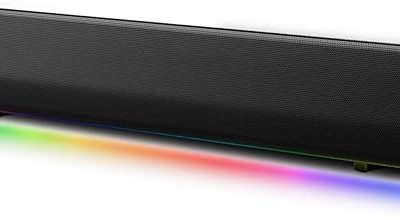
 Creative Sound Blaster GS3 Compact RGB Gaming Creative Sound Blaster GS3 Compact RGB Gaming | The soundbar offers multiple advanced RGB lighting presets,… Enjoy acoustic power of up to 24W peak… Step into an immersive soundstage with pronounced bass… | Check price |
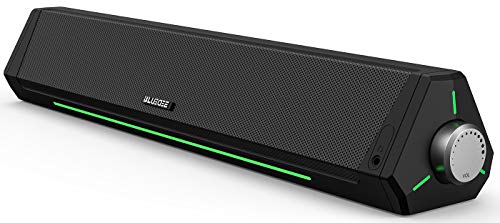 Bluedee Computer Speakers for Desktop PC Bluedee Computer Speakers for Desktop PC | 【Hi-Fi Sound Quality】Featuring dual drivers and dual diaphragms,… 【2 Ways to Connect】No need to worry about… 【Relaxing Ambiance Lights】Gentle light strips complement the avant-garde… | Check price |
 LENRUE Computer Speakers for Desktop LENRUE Computer Speakers for Desktop | ✅ Crystal-Clear Stereo Sound:Crisp audio with balanced bass… ✅ Dynamic Colorful Touch Lighting: Soft Breathing light… ✅ Space-Saving Soundbar Design:Fits under monitors/laptops—perfect slim speakers… | Check price |
 Razer Leviathan V2 X Razer Leviathan V2 X | PC Soundbar with Full-Range Drivers: Armed with two… Compact Desktop Form Factor: The most compact soundbar… USB Type C Power and Audio Delivery: Powered… | Check price |
 Desktop Computer Speakers Desktop Computer Speakers | Clear Stereo Sound with Fuller Bass: Dual full-range… One-Cable USB-C Audio and Power: Connect through a… Bluetooth 5.3 with Easy Source Switching: Stream wirelessly… | Check price |
As an Amazon Associate we earn from qualifying purchases at no extra cost to you.
USB-C power and USB audio are different questions
Look for three separate answers in the manufacturer’s specifications: what powers the soundbar, which inputs carry audio, and which computers it supports. A port photograph is not enough.
For a concrete example, Creative identifies the Stage Air V2 as supporting USB digital audio through its supplied USB-C-to-USB-A cable. That is a model-specific claim, not a promise about every soundbar with USB-C. Creative Stage Air V2 specifications
The distinction appears in other desktop speakers too. Creative’s Pebble V2 uses USB-C for power while its 3.5 mm connection supplies audio. It is a speaker pair, not a soundbar, but it illustrates why “USB-C connectivity” cannot substitute for an input list. Creative Pebble V2 connection information
Treat a listing that never explains the audio path as an unanswered compatibility question. Ask for the manual instead of guessing from “plug and play.”
Match the product to your connection plan
| Your intended setup | Documentation you need | Buying decision |
|---|---|---|
| One cable directly to the PC | USB audio support and adequate power from that port | Suitable candidate if both are confirmed |
| USB for power, headphone jack for sound | Separate AUX input and the required power supply | Accept two connections rather than expecting USB audio |
| Soundbar plugged into a monitor hub | Working USB upstream connection to the PC | Check the entire hub path first |
| Laptop dock shared between computers | Supported host operating systems and dock power capacity | Test each host before relying on the dock |
| PC plus console at one desk | Explicit support for the exact console or a separate supported input | Do not extend PC compatibility to consoles |
For broader options after these checks, use our gaming soundbar buying guide. Compare only models whose connection requirements you can satisfy.
Read the power requirement separately
Write down the required voltage, current, and whether the manufacturer specifies a separate adapter. Then compare those figures with the computer port, dock, or charger you plan to use. If the manual distinguishes normal and higher-power operation, record which applies to your setup.
Do not assume a USB-C wall charger will supply audio simply because it powers the bar. In your connection plan, label each cable “power,” “audio,” or “both.” That small exercise catches the common mistake of purchasing a bar for one-cable use when its documented arrangement requires two cables.
A separate power adapter is not automatically a disadvantage. It may suit a desk where the computer sleeps frequently or where the hub already powers several accessories. Judge the arrangement by your available outlets and how you want the soundbar to behave between sessions.
Avoid treating advertised speaker wattage as a complete compatibility specification. Your buying checklist needs the stated input-power requirement, not just a marketing output figure.
Check the cable and monitor hub
Start with the supplied cable when the manufacturer’s instructions recommend it. Confirm the host-end connector fits your PC. If replacing it, buy a cable that explicitly carries data and matches the device’s requirements; a charging-only replacement is a poor diagnostic starting point.
Monitor hubs introduce another link. Dell documents that its USB soundbar can require a separate USB upstream cable when the monitor receives video over HDMI or DisplayPort. Connecting the display cable alone does not establish that USB path. Dell SB521A user guide
For your own monitor, check its manual rather than copying another model’s diagram. Identify which connector is upstream, whether input switching also changes the USB host, and whether the soundbar cable reaches without tension. When troubleshooting, connect directly to the PC first so the hub is temporarily out of the equation.
A practical before-you-buy checklist
- Confirm the input: Find “USB audio” in the exact model’s manual, not just the retailer’s connector filter.
- Confirm the host: Check your operating system and any required software or firmware notes.
- Confirm power: Match the specified input requirement to the intended source.
- Confirm the cable: Check both connector ends, data support, and length.
- Measure placement: Allow room below the screen and in front of the monitor stand.
- Check controls: Decide whether physical volume and source buttons remain reachable.
- Plan another source: If a console is involved, verify that route independently.
Keep these answers beside the product shortlist. A soundbar that needs an extra adapter may still fit, but count that adapter and its wiring as part of the purchase.
Verify the purchase during the return period
Connect the soundbar directly to the computer using the documented USB arrangement. Select it as the output device, play speech at a modest volume, and check that its controls behave as expected. Creative’s USB setup instructions explicitly include selecting the soundbar in the computer’s sound settings. Stage Air V2 USB setup
Next, test the activities that matter at your desk: restarting the computer, waking it from sleep, launching a game, and switching to a headset. If you plan to use a dock or monitor hub, repeat those checks after adding it. Record failures rather than repeatedly changing several settings at once.
Use our PC soundbar connection walkthrough for the detailed setup sequence. If sound is delayed, follow the separate gaming soundbar input-lag guide instead of assuming a different connector shape will solve it.
Limitations to keep in mind
USB compatibility does not establish bass extension, positional accuracy, or measured latency. This article makes no claim that USB-C sounds better than USB-A, AUX, or another supported connection. Those comparisons require the actual devices and settings.
Likewise, a PC working successfully does not prove Xbox or PlayStation support. Read the exact model’s console compatibility statement. If it is missing, treat console use as unconfirmed and choose a documented alternative connection.
FAQ
Does a USB-C soundbar need an audio jack too?
Not if the intended connection supports USB digital audio and the manufacturer’s instructions allow that arrangement. A power-only USB model normally needs another supported audio input. The manual settles this question.
Can I plug it into a USB-A port?
Possibly. Some models include a USB-A-to-USB-C cable, but verify the model and power requirements before choosing an adapter. The soundbar’s USB-C socket does not require every supported computer to have USB-C.
Will it play my console through the monitor’s USB port?
Do not assume so. A monitor USB hub is not automatically a converter for HDMI sound. Check the console, monitor, and soundbar documentation for a supported route.
What should I prioritize over extra features?
Prioritize a documented audio path, suitable power, manageable cables, and a physical fit. Once those are settled, compare the listening features you actually need.
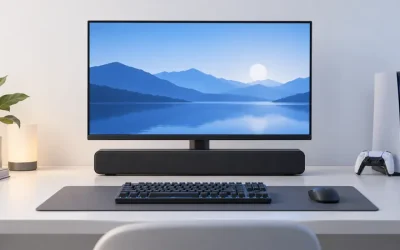
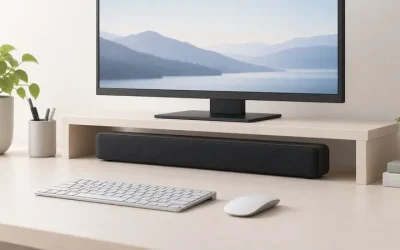
AI-generated editorial illustration of a generic soundbar; not a photograph of the products discussed.