Key takeaways
- Major multitasking boost from a dedicated second screen.
- Portable and stationary options to fit any working style.
- Single-cable USB-C setups keep the desk tidy.
- Docks add ports like Ethernet, SD readers, and extra USB alongside video.
What's inside
Adding display space can make documents, chat and development tools easier to arrange. This guide compares portable clip-on panels, monitor stands, USB-C docks and DisplayLink docks using published compatibility, output limits, driver requirements and portability.
This page uses published product details and current availability; it does not claim hands-on testing where no test record is available.
As an Amazon Associate we earn from qualifying purchases at no extra cost to you. Product prices and availability are accurate as of the date shown and are subject to change.
Quick Comparison
| Setup type | Compatibility check |
| Portable extender | Laptop size, USB-C video support and added lid weight |
| USB-C dock | Display outputs supported by the laptop and dock |
| DisplayLink dock | Driver support, resolution limits and workload suitability |
Who Should Buy — and Who Should Skip?
Buy: Choose a setup only after confirming how many external displays your laptop and operating system support.
Skip: Skip a multi-screen solution if you do not want extra drivers, cables or power requirements.



🎮 Get More From Your Setup — Free
Prime Gaming gives you free PC games every month, in-game loot, and a free Twitch channel sub — plus fast free shipping on all the gear above. New members get a 30-day free trial.
Watch: What to Compare Before Choosing
Portable Extenders vs USB-C and DisplayLink Docks
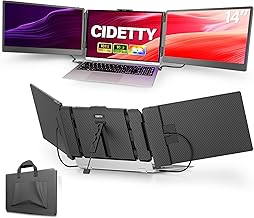
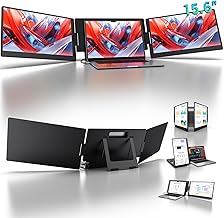
There are two clear paths to dual screens. Portable extenders like the 15.6-inch ultra-slim triple that can run as a dual, the KYY 15.6-inch, and the CIDETTY 14-inch with built-in speakers attach to your laptop lid and travel with you. They’re compact, USB-C powered, and ideal for mobile work. The stationary route uses a docking station, such as the 8-in-1 USB-C dock for HP and Dell or the Plugable UD-6950Z DisplayLink dock, feeding two full-size external monitors from a single cable. The VIVO free-standing stand-and-laptop combo is a hybrid, elevating one monitor and your laptop together for an ergonomic desk. Portable options win on flexibility; docks win on screen size and brightness.
Performance
For desk-bound productivity, a dock like the Plugable UD-6950Z is the more powerful choice, driving two large monitors at high resolution with gigabit Ethernet and audio, though it requires DisplayLink drivers on Mac. The 8-in-1 quad-display dock is versatile for mixed HDMI, DisplayPort, and VGA setups across Dell and HP machines. Portable panels shine when you’re away from your desk: the 1080p IPS screens on the KYY and CIDETTY are sharp and color-decent, perfect for email, browsing, and reference work on the go. The key limitation for both approaches is your laptop’s video-output bandwidth over USB-C. Older machines may need DisplayLink to run a second display reliably, so match your hardware to the solution.
Pros & Cons
- Major multitasking boost from a dedicated second screen.
- Portable and stationary options to fit any working style.
- Single-cable USB-C setups keep the desk tidy.
- Docks add ports like Ethernet, SD readers, and extra USB alongside video.
- DisplayLink drivers are often needed for Mac or older laptops.
- Portable panels are dimmer than full-size desktop monitors.
- Docks tether you to a desk, sacrificing portability.
Alternatives to Consider
If you want the best of both worlds, keep a portable extender like the KYY in your bag for travel and a dock like the Plugable at your desk for stationary work. Those who only need occasional extra screen space might prefer the VIVO stand paired with a single external monitor for an ergonomic, budget-friendly setup. And if your laptop has multiple native video outputs, you may not need a dock at all, just cables and stands.
Frequently Asked Questions
Do I need a docking station or a portable monitor?
Choose a dock if you work mostly at one desk and want large, bright screens. Choose a portable extender like the CIDETTY or KYY if you travel and want extra screens anywhere.
What is DisplayLink and do I need it?
DisplayLink is driver-based technology that lets a single USB port drive extra displays. It’s often required on Macs and older laptops, so check the product notes before buying a dock like the UD-6950Z.
Can these run two external 4K monitors?
Higher-end docks can, but the resolution and refresh rate depend on your laptop’s USB-C bandwidth. Verify your port supports the dual-4K output you want.
Will a portable extender work with a MacBook?
Yes, though some triple configurations need DisplayLink drivers on macOS. Dual-screen use over a full-featured USB-C port is generally more straightforward.
Verdict
For a stationary power setup, the Plugable UD-6950Z dock is the standout for driving two big monitors reliably. For mobile dual-screen work, the KYY 15.6-inch extender is the best all-around portable pick, with the CIDETTY 14-inch a lighter alternative with built-in speakers. Match the solution to whether you work on the move or at a fixed desk, and confirm your laptop’s port support first.