Our Top Picks
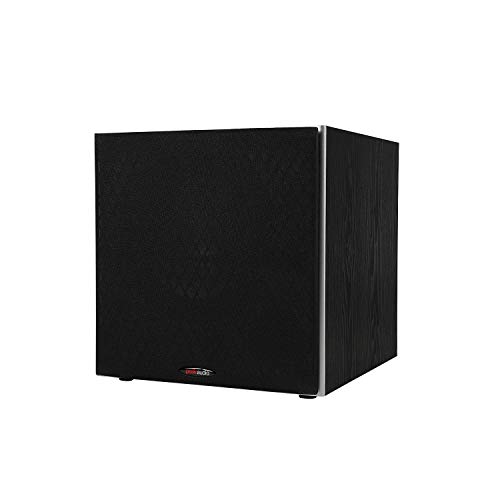
 YAMAHA 8" 100W Powered Subwoofer8 Inch (Pack of 1)13.4 x 11.5 x 11.5 inches18.7 poundsCheck on Amazon


As an Amazon Associate we earn from qualifying purchases.
Affiliate Disclosure: This article contains affiliate links. If you buy a product through a link on this page, the site may earn a commission at no additional cost to you. Products are selected on specifications and suitability, not on commission.
Our top pick: SVS SB-1000 Pro. Runner-up: Klipsch R-100SW.
Most gaming and movie audio setups share the same weak point: the speakers are too small to reproduce the lowest octave of sound. Explosions, engine notes, orchestral swells, and the dedicated LFE (low-frequency effects) channel in game and film soundtracks all live below the range that bookshelf speakers, soundbars, and desktop monitors can physically move enough air to cover. A powered subwoofer exists to do that one job. It has its own amplifier, its own large driver, and a crossover that lets it take over the bass so the main speakers can concentrate on everything above it.
It is worth being clear about what a subwoofer does not do. It will not make dialogue clearer, and it will not sharpen directional cues such as footsteps, because those sounds sit in the midrange and treble, far above a subwoofer’s operating range. What it adds is weight, pressure, and physical impact in the region you feel as much as hear. The five powered models below cover the main shapes a gaming room or home theater calls for: a sealed box with app control, a high-output ported design, a flexible unit with speaker-level inputs, a slim cabinet that hides under furniture, and a compact 8-inch model for small rooms.
1. SVS SB-1000 Pro — Sealed Precision With App-Based DSP Control

The SVS SB-1000 Pro is the control-focused pick of this group. It uses a 12-inch high-excursion driver in a sealed (acoustic suspension) cabinet, driven by SVS’s Sledge STA-325D Class D amplifier. SVS states the amplifier’s output as 325 watts RMS continuous with 820+ watts of peak dynamic power, and it is worth noting that SVS leads with the RMS figure, which is the more conservative and more comparable number. SVS publishes a frequency response of 20–270 Hz ±3 dB, the deepest low-end extension claimed by any subwoofer in this roundup, and attributes the low-end figures to the sealed design and DSP tuning rather than to port assistance.
Sealed cabinets trade raw output for control: with no port contributing extra volume near the tuning frequency, the bass tends to start and stop cleanly, which suits fast, repetitive low-frequency content such as automatic fire, racing engines, and electronic music. The trade-off is that a comparable ported box will usually play louder at its tuning point. The SB-1000 Pro compensates with DSP. A built-in processor and the SVS smartphone app provide volume, low-pass filter, phase, polarity, parametric EQ, and room gain compensation adjustments from the listening seat, which is a genuine practical advantage, since subwoofer setup normally involves repeated trips between the couch and the back panel. Rear connections are line-level RCA inputs and outputs, and the cabinet measures 13.5 × 13 × 14.76 inches with the grille fitted, small for a 12-inch subwoofer, at 26 pounds.
Specs
- Driver: 12-inch high-excursion, front-firing
- Enclosure: Sealed
- Amplifier: Sledge STA-325D Class D, 325 W RMS / 820+ W peak (manufacturer figures)
- Frequency response: 20–270 Hz ±3 dB (manufacturer figure)
- Controls: DSP via SVS app (volume, low-pass, phase, polarity, parametric EQ, room gain), rear-panel controls
- Inputs: Line-level RCA (stereo/LFE), line-level RCA outputs
- Dimensions: 13.5 × 13 × 14.76 in (H × W × D, with grille)
- Weight: 26 lb
- Finish: Black Ash
2. Klipsch R-100SW — Ported Output for Bigger Rooms
The Klipsch R-100SW takes the opposite approach to the SVS: a 10-inch front-firing spun-copper IMG woofer in a bass-reflex cabinet with a rear-firing port. Klipsch states the all-digital amplifier’s output as 150 watts continuous and 300 watts peak, and lists a maximum acoustic output of 112 dB. The published frequency response is 32–120 Hz ±3 dB, so on paper it gives up the lowest few hertz to the sealed SVS but aims for stronger output in the 30–60 Hz band where most game and film effects energy actually sits.
That ported emphasis suits larger gaming rooms and open-plan theater spaces, where a compact sealed sub can run out of headroom. The rear-firing port does impose a placement condition: the cabinet needs clearance from the wall behind it so the port can breathe, and pushing it flush against drywall can add boominess. Klipsch fits a low-pass crossover control, a 0/180-degree phase switch, gain, and an auto power function on the rear panel, with line-level/LFE RCA inputs. There is no speaker-level input, so this subwoofer assumes a receiver or processor with a proper subwoofer output. The cabinet measures 14.5 × 12.5 × 16.4 inches and weighs 24 pounds.
Specs
- Driver: 10-inch front-firing spun-copper IMG woofer
- Enclosure: Bass reflex (rear-firing port)
- Amplifier: All-digital, 150 W continuous / 300 W peak (manufacturer figures)
- Frequency response: 32–120 Hz ±3 dB (manufacturer figure)
- Maximum output: 112 dB (manufacturer figure)
- Controls: Low-pass crossover, phase 0/180°, gain, auto power
- Inputs: Line-level / LFE RCA
- Dimensions: 14.5 × 12.5 × 16.4 in (H × W × D)
- Weight: 24 lb
3. Polk Audio PSW10 — Speaker-Level Inputs for Simpler Systems
The Polk Audio PSW10 is a long-running 10-inch design built around connection flexibility. Its amplifier is stated by Polk as 50 watts RMS continuous and 100 watts dynamic (peak) power, modest figures on paper, feeding a 10-inch front-firing driver in a ported cabinet with Polk’s Power Port venting. Polk publishes an overall frequency response of 35–200 Hz, with −3 dB limits of 40–160 Hz, which is the honest way to read any subwoofer’s range: the −3 dB points describe where output is still close to full level.
The reason the PSW10 earns its place is the back panel. Alongside line-level RCA inputs, it provides speaker-level inputs and outputs, so it can sit between an amplifier and a pair of passive speakers even when the system has no subwoofer output at all. That makes it a practical addition to a stereo receiver or basic two-channel setup that predates dedicated LFE outputs. Controls include volume, a variable low-pass filter, and a phase toggle switch. The cabinet measures 14.38 × 14 × 16.13 inches and weighs 26 pounds. Expectations should be set accordingly: with 50 watts RMS, this is a small-to-medium-room subwoofer that fills in the bottom end rather than pressurizing a large theater.
Specs
- Driver: 10-inch front-firing composite cone
- Enclosure: Ported, Power Port venting
- Amplifier: 50 W RMS continuous / 100 W dynamic peak (manufacturer figures)
- Frequency response: 35–200 Hz overall; 40–160 Hz at −3 dB (manufacturer figures)
- Controls: Volume, variable low-pass filter, phase toggle
- Inputs: Line-level RCA, speaker-level inputs and outputs
- Dimensions: 14.38 × 14 × 16.13 in (H × W × D)
- Weight: 26 lb
4. Monoprice SSW-10 — A Slim Cabinet That Disappears Under Furniture
Every other subwoofer in this roundup is a cube that needs floor space. The Monoprice SSW-10 is a slab: 25.0 inches wide, 15.7 inches deep, and only 7.0 inches tall, so it can slide under a sofa or chair, sit behind a TV stand, or mount on a wall with the included brackets. For a gaming room where the floor plan is already committed to a desk, racing rig, or VR play area, that shape solves a real problem. Inside the ported slim cabinet is a 10-inch woofer powered by an amplifier Monoprice lists at 150 watts output with less than 0.5 percent total harmonic distortion. Note that Monoprice states the figure simply as output power without splitting it into RMS and peak, so it should not be compared directly against either number from the other brands without that caveat.
Monoprice publishes a frequency response of 25–150 Hz, measured at the wider −10 dB tolerance rather than the ±3 dB tolerance used by SVS and Klipsch, so the 25 Hz figure describes the edge of audible output rather than full-level output. The connection set is generous for the class: a mono LFE input, stereo line-level RCA inputs, and speaker-level inputs. A variable low-pass filter (50–150 Hz at 18 dB per octave), a 0/180-degree phase switch, and volume are all on the panel. The cabinet weighs 33.9 pounds per the listing. For nearfield gaming use, a subwoofer under the couch also delivers tactile bass at modest volume settings.
Specs
- Driver: 10-inch woofer
- Enclosure: Ported, slim low-profile cabinet
- Amplifier: 150 W output, THD < 0.5% (manufacturer figure; not split into RMS/peak)
- Frequency response: 25–150 Hz at −10 dB (manufacturer figure)
- Controls: Volume, variable low-pass filter 50–150 Hz, phase 0°/180°
- Inputs: Mono LFE, stereo line-level RCA, speaker-level
- Dimensions: 25.0 × 15.7 × 7.0 in (W × D × H)
- Weight: 33.9 lb
- Extras: On-wall mounting brackets included
5. Yamaha NS-SW050 — Compact 8-Inch Sub for Small Rooms
The Yamaha NS-SW050 is the smallest subwoofer here, built around an 8-inch cone driver in a cabinet measuring 11.5 × 11.5 × 13.375 inches and weighing 18.7 pounds. Yamaha states its output power as 50 W (measured at 100 Hz into 5 ohms at 10% THD) with 100 W of dynamic power, and a frequency response of 28–200 Hz. The enclosure uses Yamaha’s Twisted Flare Port, a front port whose flared, twisted opening is designed to reduce the air-noise (chuffing) that small ported subs can produce at high output, along with Advanced YST II active servo circuitry that monitors and corrects driver motion.
The NS-SW050 is deliberately simple. The rear panel carries a single line-level input, a volume knob, and a power switch. There is no adjustable crossover and no phase control, so bass management is expected to happen in the receiver or processor feeding it. That is a reasonable division of labor in a modern home theater, where the AVR sets the crossover anyway, but it makes the Yamaha a poor match for a bare stereo amplifier with full-range outputs and no bass management. Within its intended role, the appeal is footprint and restraint: an 8-inch sub will not reach the deepest effects notes at high volume, but in a bedroom gaming setup it fills in music and game bass without overwhelming the room.
Specs
- Driver: 8-inch cone
- Enclosure: Ported, Twisted Flare Port (front)
- Amplifier: 50 W output (100 Hz, 5 ohms, 10% THD) / 100 W dynamic (manufacturer figures)
- Frequency response: 28–200 Hz (manufacturer figure)
- Technology: Advanced YST II (Yamaha Active Servo Technology II)
- Controls: Volume, power switch (no on-board crossover or phase control)
- Inputs: Line-level RCA (single)
- Dimensions: 11.5 × 11.5 × 13.375 in (W × H × D)
- Weight: 18.7 lb
How to Choose the Right Subwoofer
Read the wattage label carefully. Manufacturers mix RMS (continuous) and peak (dynamic) figures freely. The SVS lists 325 W RMS and 820+ W peak; the Klipsch lists 150 W continuous and 300 W peak; the Polk lists 50 W RMS and 100 W dynamic. Only compare like with like: RMS against RMS, peak against peak. And remember that doubling amplifier power adds only about 3 dB of output. Placement and cabinet design matter as much as the watt number.
Check the tolerance on frequency response. A response quoted at ±3 dB (SVS, Klipsch) is a much stricter claim than one quoted at −10 dB (Monoprice). A subwoofer listed as reaching 25 Hz at −10 dB is not necessarily deeper at usable volume than one listed at 32 Hz ±3 dB. Treat all of these as manufacturer figures rather than measurements.
Sealed versus ported. Sealed designs (the SVS) generally offer tighter, more controlled bass and smaller cabinets, with less maximum output. Ported designs (the other four here) use the port to add output near the tuning frequency, which suits larger rooms and effects-heavy content, at the cost of bigger cabinets and a need for clearance around the port.
Placement beats power. Low frequencies interact with room boundaries. Placing a subwoofer in a corner reinforces output noticeably, while a poor spot can create a null where bass nearly disappears at the listening position. Buying a more powerful subwoofer does not fix a bad position; moving the one you have often does. A common technique is to set the sub at your seat, play bass-heavy content, and move around the room’s edges listening for where the bass sounds most even, then put the sub there.
Match the inputs to your system. A modern AVR or processor provides an LFE/subwoofer output, and any model here will connect to it. A stereo amplifier or older receiver without one needs either speaker-level inputs (Polk PSW10, Monoprice SSW-10) or a sub with its own crossover doing the filtering. Gamers driving powered desktop speakers should check whether those speakers offer a subwoofer output before choosing a line-level-only model.
Size the sub to the room. An 8- or 10-inch subwoofer is appropriate for bedrooms, dens, and desk setups. Larger or open-plan rooms benefit from a 12-inch driver or a high-output ported design, because moving enough air to pressurize a big space is the one job that cannot be done with settings.
FAQ
Will a subwoofer help me hear footsteps and enemy positions better?
No. Footsteps and directional cues are midrange and high-frequency sounds, and a subwoofer does not reproduce them. A subwoofer adds low-frequency weight and impact. Positional audio comes from your speakers or headphones and the game’s audio mix.
Do I need a receiver to use one of these subwoofers?
You need something that can send the subwoofer a bass signal. An AV receiver with a subwoofer/LFE output is the simplest route. Without one, choose a model with speaker-level inputs, such as the Polk PSW10 or Monoprice SSW-10, which can connect between an amplifier and passive speakers.
Where should the crossover be set?
A common starting point is 80 Hz when the main speakers are reasonably capable, letting the subwoofer handle everything below that. Small satellite or desktop speakers may blend better with a higher setting. If your receiver performs bass management, set the subwoofer’s own low-pass control to its maximum or bypass position so the two filters do not stack.
Is one subwoofer enough, or do I need two?
One correctly placed subwoofer covers most gaming rooms and small theaters. A second subwoofer’s main benefit is smoother, more even bass across multiple seats, not simply more volume. Placement and setup of a single unit should be sorted out first.
Can I put a subwoofer next to my gaming PC?
Yes, with ordinary care. Keep the cabinet a short distance from the tower rather than touching it, and route the signal cable away from power cables to avoid hum.
Conclusion
For tight, controlled bass with the most setup flexibility, the SVS SB-1000 Pro is the standout: a 12-inch sealed design, the deepest manufacturer-stated extension here, and app-based DSP that makes dialing it in genuinely easier. The Klipsch R-100SW is the better fit for larger rooms that need ported output. The Polk PSW10 remains the problem-solver for systems without a subwoofer output, thanks to its speaker-level connections. The Monoprice SSW-10 is the pick when floor space is the binding constraint, and the Yamaha NS-SW050 suits small rooms that need modest, tidy low-end support. In every case, an hour spent on placement and crossover setup improves the result more than a step up in amplifier wattage.
More from Amazon
Programs that pair well with the guide above. Offers and eligibility are set by Amazon and may change.
Free shipping on eligible items, Prime Video and more. Eligible new members can start with a free trial.
Start a Prime free trialAd-free music streaming. Eligible new subscribers can start with a free trial.
Try Music Unlimited freeA Prime membership for ages 18-24 with a trial period. Eligibility is set by Amazon.
See Prime for Young AdultsAudiobooks and podcasts to listen to on the go. Eligible new members can start with a free trial.
Try Audible freeAs an Amazon Associate we earn from qualifying purchases.