Key takeaways
- For NVIDIA RTX owners: DLSS, the most mature and polished upscaling with the widest game support.
- For Intel Arc hardware: XeSS, which taps Arc’s XMX cores on cards like the ASRock B580 for its best quality.
- For cross-vendor flexibility: XeSS, since it runs on many GPUs, not just Intel’s own.
- For compact Arc-powered systems: XeSS, ideal for mini PCs like the GMKtec and GEEKOM units with Intel Arc graphics.
- For maximum game support today: DLSS, thanks to its head start and broad developer adoption.
What's inside
Upscaling technology has become essential to modern gaming, letting your hardware render at a lower resolution and intelligently reconstruct a sharp, high-resolution image to boost frame rates. Two of the biggest names in this space are Intel’s XeSS and NVIDIA’s DLSS, each taking a different approach to delivering more performance without a visible loss in quality.
Understanding how XeSS and DLSS compare helps you choose the right hardware and get the most from your games. In this comparison we break down how each technology works, where each excels, and which one matters most for your next graphics card or mini PC purchase, referencing capable Intel Arc and AI-focused systems along the way.
As an Amazon Associate we earn from qualifying purchases at no extra cost to you. Product prices and availability are accurate as of the date shown and are subject to change.



🎮 Get More From Your Setup — Free
Prime Gaming gives you free PC games every month, in-game loot, and a free Twitch channel sub — plus fast free shipping on all the gear above. New members get a 30-day free trial.
Watch: Intel Xess Vs Dlss: Full Comparison — Video Review
Quick Verdict
DLSS is the more mature and widely praised technology, delivering excellent image quality and performance on NVIDIA GeForce hardware, and it is the choice if you own or plan to buy an RTX card. XeSS is Intel’s impressive open alternative that runs across many GPUs but performs best on Intel Arc hardware like the ASRock Arc B580, with strong quality that keeps improving. If you are building around Intel Arc or want cross-vendor flexibility, XeSS shines; for peak polish on NVIDIA, DLSS wins.
Intel XeSS
XeSS is Intel’s AI-based upscaling technology, designed to boost frame rates while maintaining image quality. Its biggest strength is flexibility: XeSS runs on a wide range of GPUs, not just Intel’s own, though it delivers its best results on Intel Arc graphics hardware that includes dedicated XMX AI cores.
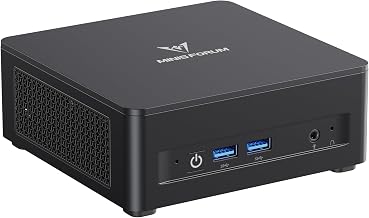
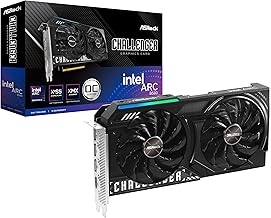
On Intel Arc cards like the ASRock Arc B580 with its 12GB of GDDR6, XeSS taps hardware acceleration for excellent quality and performance. Intel Arc graphics also appear in capable mini PCs and laptops, such as the GEEKOM GT13 MAX with its Ultra 9 185H and the GMKtec systems with Arc 140V and 140T graphics, bringing XeSS-friendly hardware to compact machines.
XeSS quality has improved steadily and now rivals competing solutions in many titles. The main trade-off is that it is newer, with somewhat less game support than DLSS and its best performance tied to Intel Arc hardware.
NVIDIA DLSS
DLSS is NVIDIA’s AI upscaling technology and the current benchmark for image reconstruction. It runs exclusively on GeForce RTX hardware, using dedicated Tensor cores to deliver sharp, high-quality upscaling with substantial frame rate gains, and its latest versions add frame generation for even bigger performance boosts.
DLSS’s biggest advantages are maturity and adoption. It is supported in a huge number of games, refined over multiple generations, and widely regarded as producing outstanding image quality with minimal artifacts. For gamers on NVIDIA hardware, enabling DLSS is often a no-brainer.
The limitation is exclusivity. DLSS only works on RTX GPUs, so it is irrelevant if you own an Intel Arc or AMD card. Your access to DLSS depends entirely on buying into NVIDIA’s ecosystem.
Head-to-Head: Which Should You Buy?
- For NVIDIA RTX owners: DLSS, the most mature and polished upscaling with the widest game support.
- For Intel Arc hardware: XeSS, which taps Arc’s XMX cores on cards like the ASRock B580 for its best quality.
- For cross-vendor flexibility: XeSS, since it runs on many GPUs, not just Intel’s own.
- For compact Arc-powered systems: XeSS, ideal for mini PCs like the GMKtec and GEEKOM units with Intel Arc graphics.
- For maximum game support today: DLSS, thanks to its head start and broad developer adoption.
Frequently Asked Questions
Is DLSS better than XeSS?
DLSS is generally more mature with wider game support and excellent quality on RTX cards. XeSS is very competitive, especially on Intel Arc hardware, and continues to improve, so the gap has narrowed considerably.
Does XeSS only work on Intel GPUs?
No. XeSS runs on many GPUs, which is a key advantage, but it delivers its best performance and quality on Intel Arc hardware like the ASRock Arc B580 that includes dedicated AI cores.
Can I use DLSS on an Intel Arc card?
No. DLSS is exclusive to NVIDIA GeForce RTX hardware. If you own an Intel Arc GPU or Arc-powered mini PC, XeSS is the upscaling technology available to you.
Do these technologies hurt image quality?
When set to quality modes, both XeSS and DLSS reconstruct images that look very close to native resolution, often with negligible differences, while delivering significant frame rate improvements.
Final Verdict
XeSS versus DLSS ultimately comes down to your hardware. If you own or plan to buy NVIDIA RTX, DLSS is the polished, widely supported choice. If you are building around Intel Arc, whether a dedicated card like the ASRock B580 or a compact Arc-powered mini PC like the GMKtec K13, XeSS is the way to unlock strong performance, with the bonus of cross-vendor flexibility. Both are excellent; let your GPU decide.