Key takeaways
- Ray tracing: NVIDIA leads clearly, especially in heavy RT titles; AMD has improved but trails.
- Upscaling: NVIDIA DLSS with frame generation is the most refined; AMD FSR is open and works on more hardware but is generally a step behind in image quality.
- Rasterization: AMD often matches or beats NVIDIA per dollar in traditional non-RT performance.
- VRAM: AMD frequently offers more memory at a given price, useful for high-res textures.
- Efficiency and features: NVIDIA leads in power efficiency and extras like better encoder support for streaming.
- Price: AMD typically undercuts NVIDIA at equivalent raster tiers.
Choosing a graphics card in 2026 still comes down to the two giants: NVIDIA and AMD. NVIDIA dominates the high end and leads in ray tracing and AI upscaling, while AMD fights hard on raw rasterization performance per dollar. Both make cards that will run any current game beautifully; the differences show up in features, pricing, and the specific tiers you are shopping.
This comparison focuses on what actually affects your gaming experience: raster performance, ray tracing, upscaling tech, VRAM, and value. Whether you are building a mid-range 1440p rig or chasing 4K flagship performance, here is how the two brands stack up.
Our top picks



As an Amazon Associate we earn from qualifying purchases at no extra cost to you. Ratings are shown as listed on Amazon.
⚡ Save on Your Next PC — Amazon Prime
Prime members get fast free shipping on the systems above, plus early access to Prime Day & Black Friday PC deals. New members get a 30-day free trial.
Watch: NVIDIA vs AMD GPUs in 2026 — Video Review
Quick Verdict
NVIDIA is the pick if you want the best ray tracing, the most mature upscaling with DLSS, and the top-end performance crown, and you are willing to pay a premium. AMD is the value play, offering excellent rasterization performance and often more VRAM per dollar, making it compelling in the mid-range where most gamers shop. Your ideal choice depends on which features you prioritize and your budget.
Key Differences
- Ray tracing: NVIDIA leads clearly, especially in heavy RT titles; AMD has improved but trails.
- Upscaling: NVIDIA DLSS with frame generation is the most refined; AMD FSR is open and works on more hardware but is generally a step behind in image quality.
- Rasterization: AMD often matches or beats NVIDIA per dollar in traditional non-RT performance.
- VRAM: AMD frequently offers more memory at a given price, useful for high-res textures.
- Efficiency and features: NVIDIA leads in power efficiency and extras like better encoder support for streaming.
- Price: AMD typically undercuts NVIDIA at equivalent raster tiers.
NVIDIA GPUs
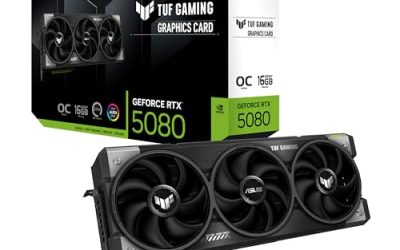
NVIDIA’s advantage is the complete feature package. Its RTX cards deliver the strongest ray tracing, and DLSS upscaling with frame generation can dramatically boost frame rates while keeping image quality high. For streamers, the NVENC encoder is excellent, and the drivers and software ecosystem are mature.
The catch is price. NVIDIA commands a premium at nearly every tier, and lower-end models sometimes ship with less VRAM than their AMD counterparts. If you want the best ray-traced visuals, the smoothest upscaling, or outright flagship performance, NVIDIA is worth the extra cost.
AMD GPUs
AMD’s Radeon cards win on value. At mid-range price points you often get equal or better traditional rasterization performance and more VRAM, which pays off as game texture budgets grow. FSR upscaling is open and works across a wide range of hardware, and recent generations have narrowed the ray tracing gap.
Where AMD lags is peak ray tracing and the polish of its upscaling versus DLSS. But for the majority of gamers playing at 1440p who care most about high frame rates per dollar, a Radeon card stretches the budget further. It is the pragmatic choice for value-focused builds.
Which Should You Buy?
- Choose NVIDIA for the best ray tracing, DLSS quality, and top-tier 4K performance.
- Choose AMD for the best rasterization and VRAM per dollar in the mid-range.
- Streamers leaning on hardware encoding may prefer NVIDIA’s encoder.
- If you play mostly competitive esports titles, raw frame rate favors AMD’s value tiers.
- Always compare the specific models in your budget, not just the brand.
Frequently Asked Questions
Is DLSS better than FSR?
Generally yes, DLSS produces cleaner upscaled images and its frame generation is more refined. FSR’s advantage is that it runs on far more hardware, including older and competing GPUs.
Does AMD really offer more VRAM?
Often, at a given price AMD cards include more memory, which helps with high-resolution textures and future titles. Check the exact models, as it varies by tier.
Which is better for 4K gaming?
NVIDIA’s flagships lead at 4K, especially with ray tracing and DLSS. AMD competes well in rasterization but trails in heavy RT scenarios.
Is NVIDIA worth the premium?
If you value ray tracing, DLSS, and streaming features, yes. If you want the most raw frames per dollar without those extras, AMD is the better buy.
Final Verdict
NVIDIA and AMD both make great GPUs; the right one depends on your priorities. Pay the NVIDIA premium for class-leading ray tracing, DLSS, and flagship 4K power. Save with AMD for excellent rasterization and generous VRAM in the mid-range. Decide which features you actually use, then compare the specific cards your budget allows.