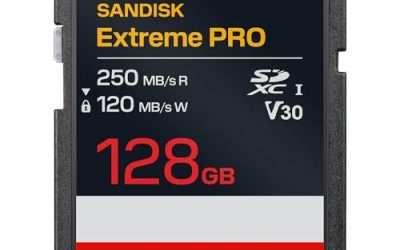
Our Top Picks
Video punishes a memory card in a way still photos never do. A photo is a burst of data you write and forget. A video is a continuous stream that must be written without a single stall for as long as you hold the button, and one slow moment can stop a recording, drop frames or corrupt the whole clip. That makes the sustained write speed, not the advertised read speed, the number that decides whether a card suits your camera, your drone, your dash cam or your action cam.
This guide is for people who record: vloggers shooting 4K on a mirrorless body, drone pilots, action camera users, and owners of security or dash cameras that write around the clock. The eight listings mix full-size SD and microSD formats, so the first step is to know which your device uses. After that, the choice comes down to the video speed class, the capacity for your bit rate, and whether the card is made for constant overwriting or for occasional bursts. The comparison below follows that order for 2026 gear.
Quick Picks

SanDisk 256GB Extreme microSD UHS I Card for 4K Video on Smartphones, Action Cams & Drones 190MB/s Read, 130MB/s Write SDSQXAV 256G GN6MN, Red/Gold
One of the consumer electronics options compared in this guide.
View on Amazon
MindStor 128GB Micro SDXC Memory Card, 90MB/s Read, U1, A1, with Adapter | For Security Cameras, Dash Cams, Trail Cameras, Home Surveillance & 1080P Loop Recording
One of the consumer electronics options compared in this guide.
View on Amazon
GIGASTONE 128GB Micro SD Card 2-Pack, A1 V30 4K Video Recording, Compatible with Security Camera, Dash cam, Drone, 95MB/s MicroSDXC Memory Card UHS-I Class 10, with 2 SD Adapter
One of the consumer electronics options compared in this guide.
View on Amazon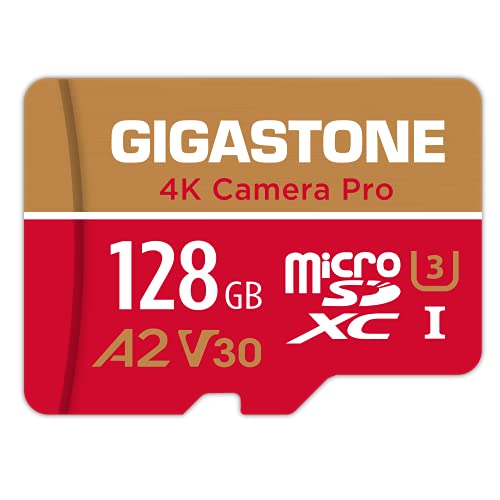
【5-Yrs Free Data Recovery】 GIGASTONE 128GB Micro SD Card, 4K Video Recording for GoPro, Action Camera, DJI, Drone, Nintendo-Switch, R/W up to 100/50 MB/s MicroSDXC Memory Card UHS-I U3 A2 V30 C10
One of the consumer electronics options compared in this guide.
View on Amazon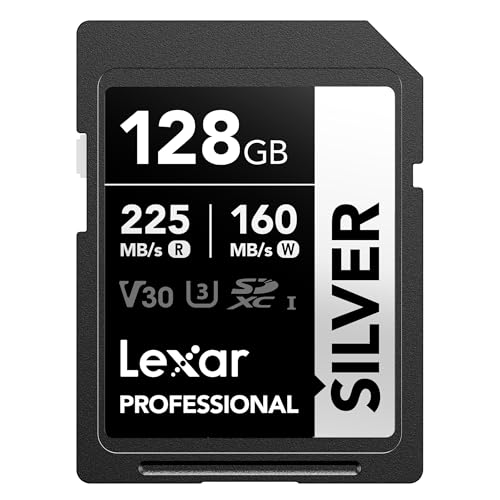
Lexar 128GB Silver SD Memory Card, 225MB/s Read, 4K, V30, U3, UHS-I | Compatible w/ Canon, Sony, Nikon, Ideal for Professional Photographer, Videographer, Enthusiast, LSDSILV128G-BNNNU
One of the consumer electronics options compared in this guide.
View on Amazon
【5-Yrs Free Data Recovery】 GIGASTONE 256GB SD Card, 4K Camera Pro, UHS-I A1 V30 SDXC Memory Card 4K UHD Video Speed up to 170MB/s Compatible with Digital Camera, with 1 Mini Case
One of the consumer electronics options compared in this guide.
View on Amazon
SanDisk 32GB Ultra 100MBs SDHC Memory Card | Up to 100MB/s read, Water-resistant design, Impact-resistant build
One of the consumer electronics options compared in this guide.
View on Amazon
SANDISK 128GB Ultra SD Memory Card, Up to 195MB/s Read Speeds, UHS-I | U1, C10, Full HD, Ideal for Compact to Mid Range Cameras & Camcorders, Backup & Transfer with SANDISK App -SDSDUVQ-128G-GN6IN
One of the consumer electronics options compared in this guide.
View on Amazon| Product | Best for | Key spec from the title |
|---|---|---|
| SanDisk Extreme 256GB microSD | Drones, action cams and 4K phones | 190MB/s read, 130MB/s write, 4K |
| MindStor 128GB microSD | Security, dash and trail cameras | 90MB/s read, U1, A1, 1080P |
| Gigastone 128GB microSD 2-Pack | Two-device households | A1, V30, 4K, 95MB/s |
| Gigastone 128GB microSD (data recovery) | GoPro, DJI and Switch owners | R/W up to 100/50 MB/s, 4K |
| Lexar 128GB Silver SD | Full-size SD cameras for 4K | 225MB/s read, V30, U3, UHS-I |
| Gigastone 256GB SD 4K Camera Pro | High-capacity 4K shooting | A1, V30, up to 170MB/s |
| SanDisk Ultra 32GB SDHC | Light, occasional recording | Up to 100MB/s read, water-resistant |
| SanDisk Ultra 128GB SD | Full HD camcorders | 195MB/s read, UHS-I, U1, C10, Full HD |
How to Choose
Learn the video speed classes
V30 guarantees a minimum sustained write of 30MB/s, and U3 means the same. That is the practical floor for 4K recording at common bit rates. U1 and Class 10 guarantee 10MB/s, which is fine for Full HD. Higher classes such as V60 and V90 exist for very high bit rate or raw video. Among these listings, the Lexar, the Gigastone V30 cards and the SanDisk Extreme are the ones aimed at 4K. The Ultra cards are Full HD cards. It also helps to read your camera’s manual for the exact bit rate it records, because a 4K mode at a modest bit rate may run fine on V30 while a high frame rate or 10-bit mode may call for a faster class. If the manual names a minimum class, treat that as the rule and ignore generic claims on the card packaging.
Match format and capacity to the device
Check whether the camera takes full-size SD or microSD, because adapters are a point of failure. Capacity depends on bit rate: higher resolution eats storage much faster, so a 128GB card is a reasonable minimum for 4K and 256GB gives a full day of shooting. Security cameras and dash cams overwrite older footage in a loop, so a smaller card works but its endurance matters more than its capacity. As a rough guide, a few hours of continuous 4K footage can consume well over a hundred gigabytes, so decide how much you shoot before you offload and size the card to that, with a spare in the bag for the day the first one fills up.
Ignore the biggest read number
The 225MB/s, 195MB/s and 190MB/s figures describe read speed and affect how quickly you offload clips. They do not guarantee that recording works. A card with a lower read number but a V30 class can record 4K without trouble. When a title gives both read and write figures, as the SanDisk Extreme does with 130MB/s write, that is the more useful comparison. Be skeptical of any listing that shows only a headline read speed.
Look for endurance and recovery
Constant recording wears flash memory. Cards sold for cameras that record all day should list endurance or a warranty, and some Gigastone listings advertise free data recovery for five years, which helps if a card fails. Budget cards cut corners on endurance and consistency, and counterfeit cards are common, so buy from sellers you trust and verify the full capacity as soon as the card arrives.
The 8 Best Options
SanDisk Extreme 256GB microSD
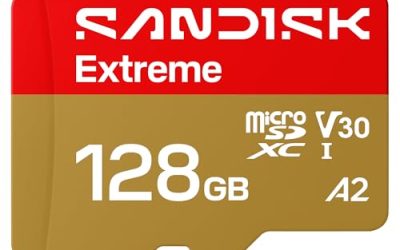
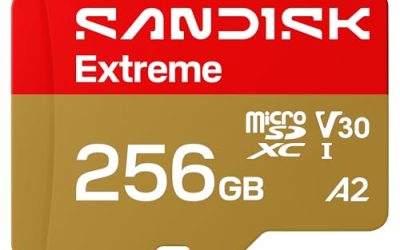
This is the performance microSD of the group. The title lists 256GB, 4K video support for smartphones, action cameras and drones, 190MB/s read and 130MB/s write. It suits a drone pilot or action camera user who shoots high bit rate footage and wants both capacity and speed.
- Strength: A stated 130MB/s write speed, well above the 4K minimum.
- Strength: 256GB of capacity for long shoots.
- Trade-off: Likely the premium tier of the microSD listings, which is more than a Full HD camera needs.
Skip it if your camera records only Full HD and you want to spend less. A single large card also concentrates risk, since losing it means losing every clip on it, so offload footage regularly.
MindStor 128GB microSD
A card for surveillance-style recording. The title lists 128GB, 90MB/s read, U1, A1, an adapter, and uses with security cameras, dash cams, trail cameras and home surveillance at 1080P. It suits anyone who needs a Full HD loop recorder.
- Strength: Positioned for continuous-style camera use.
- Strength: Includes an adapter for devices that need full-size SD.
- Trade-off: U1 is not enough for 4K video.
Skip it if you shoot 4K on a drone or action camera. Its 1080P framing is a good reminder that loop recorders rarely need the fastest card, but they do need one that tolerates constant overwriting.
Gigastone 128GB microSD 2-Pack
A two-card pack with a 4K specification. The title lists A1, V30, 4K recording, 95MB/s, microSDXC and UHS-I, with security cameras, dash cams and drones named. It suits households with two devices, such as a dash cam and a drone.
- Strength: V30 class matches 4K recording requirements.
- Strength: Two cards in one pack.
- Trade-off: 95MB/s read is modest next to premium cards.
Skip it if you want a single high-speed card or very large capacity. Keeping one card in each device and labeling them avoids the common mix-up where the wrong card ends up in the wrong camera.
Gigastone 128GB microSD (Data Recovery)
This listing adds a safety net. The title offers five years of free data recovery, 4K recording for GoPro, action cameras, DJI drones, the Nintendo Switch, and read and write speeds of up to 100 and 50 MB/s. It suits buyers who want a recovery option along with 4K capability.
- Strength: Five-year free data recovery is a meaningful extra.
- Strength: Broad device compatibility named in the title.
- Trade-off: A 50MB/s write is lower than the performance tier.
Skip it if you need the fastest write speeds for high bit rate video.
Lexar 128GB Silver SD
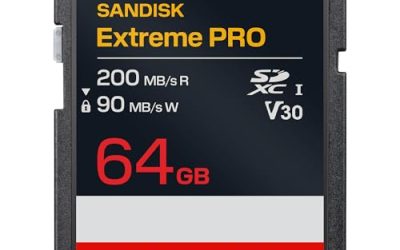
The full-size choice for serious camera work. The title lists 225MB/s read, 4K, V30, U3 and UHS-I, with Canon, Sony and Nikon named and professionals as the target audience. It suits photographers and videographers using full-size SD cameras.
- Strength: V30 and U3 markings suit 4K recording.
- Strength: The fastest read speed among the 4K cards, so offloads are quick.
- Trade-off: 128GB can fill quickly at high bit rates.
Skip it if you need a microSD or more capacity. Because the card is full size, it will not fit a drone or action camera that takes microSD, so confirm the slot type first.
Gigastone 256GB SD 4K Camera Pro
The high-capacity full-size option. The title lists 256GB, A1 and V30, UHS-I SDXC, 4K UHD video and up to 170MB/s, with five years of free data recovery. It suits people who record long 4K sessions and want space and a safety net.
- Strength: 256GB provides room for a full day of shooting.
- Strength: V30 class and a recovery offer are both stated.
- Trade-off: Less established than the major name brands.
Skip it if you want a more widely known brand.
SanDisk Ultra 32GB SDHC
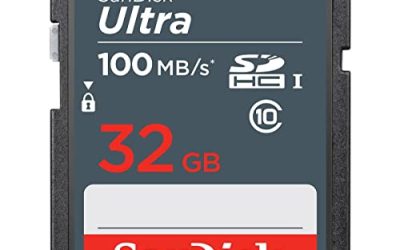
This one is a casual card. The title lists up to 100MB/s read, a water-resistant design and an impact-resistant build, but it says nothing about video classes or resolution. It fits occasional recording on a simple camera.
- Strength: A durable build is stated.
- Strength: A low-cost, small-capacity entry point.
- Trade-off: No video class appears in the title, so it is not suited to 4K.
Skip it if you record regularly or in 4K. The small 32GB capacity also fills in a short session of Full HD footage, which makes it a spare more than a main card.
SanDisk Ultra 128GB SD
A Full HD camcorder card. The title lists 195MB/s read, UHS-I, U1, C10 and Full HD, aimed at compact to mid-range cameras and camcorders. It suits buyers shooting 1080p who want more capacity.
- Strength: 128GB provides a lot of Full HD recording time.
- Strength: A recognized brand and a clear Full HD target.
- Trade-off: U1 class is not intended for 4K.
Skip it if your camera records 4K.
Which One Fits Your Situation
You fly a drone or use an action cam
The SanDisk Extreme 256GB is the strongest match, with stated read and write speeds and 4K positioning.
You run a dash cam or security camera
The MindStor 128GB is aimed at exactly that use, with 1080P and surveillance wording in the title.
You shoot 4K on a full-size SD camera
Choose the Lexar 128GB Silver SD for speed, or the Gigastone 256GB if capacity matters more.
You want recovery coverage
Either Gigastone listing with the five-year recovery offer adds a backstop if a card fails.
Common Mistakes
- Shopping by read speed instead of the video class that governs recording.
- Putting a U1 card into a camera that records 4K and then blaming the camera for dropped frames.
- Buying too little capacity for 4K, where footage fills a card quickly.
- Skipping a full-capacity check on a new card, which is how counterfeits slip through.
- Never formatting the card in the device that uses it.
Related guides
- How To Fix Stick Drift On Xbox And Ps5 Controllers
- How Long Does A Gaming Laptop Last Before Upgrade
- Gaming Chairs For Tall People Over 6 Foot 3
Frequently Asked Questions
Do I need V30 for 4K?
For most 4K recording, yes, because V30 guarantees a 30MB/s sustained write. Some cameras demand V60 or V90 for the highest bit rates, so check the manual.
Is microSD good enough for video?
Yes, for devices that use it. Drones, action cameras and many dash cams are designed around microSD, and the quality depends on the class, not the size.
How much capacity do I need?
Plan on 128GB as a starting point for 4K and 256GB for long sessions. Full HD or loop recording works with smaller cards.
Why did my recording stop?
The most common cause is a card with a write speed lower than the camera needs. A fuller or aging card also slows down, so format regularly and replace worn cards.