Our Top Picks
The Elgato 4K S is the best capture card in this group for streaming PS5, Xbox Series X|S or Switch 2: it is the only one here that lists 4K60 capture and high-frame-rate passthrough from a recognized capture brand. If you only stream at 1080p60 and want to spend less effort, the acer and Guermok USB 3.0 cards cover the basics. A capture card is a box that takes your console’s HDMI signal, passes it to your display and sends a copy to a PC so you can stream or record it.
Quick List
- VIXLW 4K HDMI Capture Card – best for a basic plug-and-play 1080p60 setup with loop-out
- Elgato 4K S – best for high-resolution console capture and high-refresh passthrough
- Dcyfol USB 3.0 Capture Card – best for a compact 1080p60 card with passthrough
- Guermok 4K USB 3.0 to USB-C Card – best for a slim aluminum stick style with a USB-C adapter
- acer USB 3.0 HDMI Capture Card – best for a branded 1080p60 card with loop-out and mic input
- Guermok USB 3.0 Capture Card (2K30 model) – best for audio flexibility with mic, line-in and monitoring ports
Which One Is Right for You?
| If you… | Choose |
|---|---|
| stream PS5 or Xbox Series X|S and want 4K60 capture headroom | Elgato 4K S |
| want a simple card that shows up as a webcam-style device | VIXLW 4K HDMI Capture Card |
| want a branded 1080p60 option with a mic input | acer USB 3.0 HDMI Capture Card |
| run a mixer or headphones for monitoring and want many audio ports | Guermok USB 3.0 Capture Card (2K30 model) |
| travel with your gear and prefer a thin stick shape | Guermok 4K USB 3.0 to USB-C Card |
| just need to get a gaming console onto OBS | Dcyfol USB 3.0 Capture Card |
Almost every card here captures 1080p at 60 frames per second, so the decision is about input limits, audio ports and how much of the signal your display receives. Choose by your console’s output, your PC’s USB 3.0 port and your streaming resolution rather than the “4K” word in the titles. If you also want to record from a camera or a second PC, check that the card is listed as a standard video-class device, since those work with most meeting and streaming software without special drivers. And if you stream from a laptop, give extra thought to heat and port count, because a capture session keeps the USB controller busy.

Capture Card, 4K HDMI Video Capture Card, Game Capture Card, 1080P 60FPS Video Capture Device, HDMI to USB 3.0 Capture Card for Streaming, Work with Camera/Xbox/PS4/PS5/PC/OBS
Chosen because it specifies 4K HDMI Video Capture Card and Game Capture Card.
View on Amazon
Elgato 4K S Capture Card for PS5, Xbox Series X/S, Switch 2
Chosen because it specifies Xbox Series X/S and Switch 2.
View on Amazon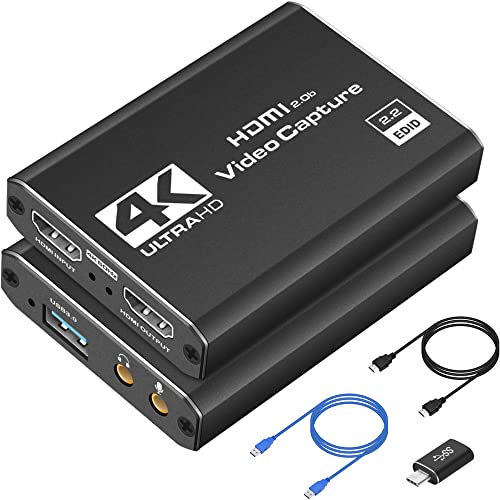
Capture Card 4K HDMI Video Streaming to USB 3.0 1080P 60FPS Capture Device
Picked as a relevant option in this category.
View on Amazon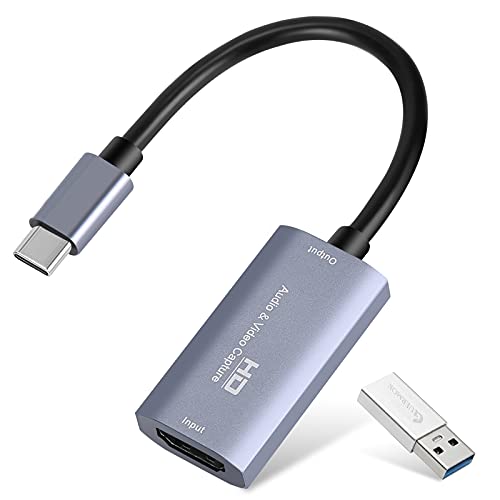
Guermok Video Capture Card, 4K USB3.0 HDMI to USB C, 1080P 60FPS & 2K 30FPS
Chosen because it specifies 4K USB3.0 HDMI to USB C and 1080P 60FPS & 2K 30FPS.
View on Amazon
acer USB 3.0 HDMI Capture Card, 4K HDMI Loop-Out, 1080P 60Hz for Streaming
Chosen because it specifies 4K HDMI Loop-Out and 1080P 60Hz for Streaming.
View on Amazon
Guermok USB 3.0 HDMI Capture Card, 1080P 60FPS & 2K30 Video Capture Device
Chosen because it specifies 1080P 60FPS & 2K30 Video Capture Device.
View on AmazonAll 6 Picks in Detail
1. VIXLW 4K HDMI Capture Card – Best for a Basic 1080p60 Setup with Loop-Out
As an Amazon Associate we earn from qualifying purchases at no extra cost to you.

This USB 3.0 card captures at up to 1080p and takes video input up to 4K at 30 or 60Hz, plus 1080p at 120 or 144Hz. The listing is explicit that it does not support 4K120 or 144Hz input and that output tops out at 2K30. It is plug and play, shows up as a webcam-style device, supports Windows and Mac, and has an HDMI loop-out and a mic input. The listing also says it will not occupy the CPU and offers optional audio capture. For a first card, that clear statement of what the unit cannot do is useful: if your console runs at 4K120, the card will not accept that signal, so you would lower the console output while streaming.
- Capture: up to 1080p
- Input: 4K30/60Hz and 1080p120/144Hz
- Output: up to 2K30Hz
- Audio: mic-in, 3.5mm TRS headset-style plug only
- Size: about 3 x 2 x 1 inches
Pros
- No driver or external power required
- Honest listing about unsupported 4K120 input
Cons
- Capture is 1080p, not 4K
- Mic input accepts only a TRS headset-type connector
Next to the acer card, it offers similar capture specs with a less familiar brand name.
2. Elgato 4K S – Best for High-Resolution Console Capture

The Elgato 4K S is built for PS5, Xbox Series X|S and Switch 2. Its listing advertises 4K60 capture, high-frame-rate play in 1440p120 or 1080p240, HDR10 support with tone mapping on Windows, and a 3.5mm analog input for chat or commentary. Elgato’s own documentation describes the high-frame-rate modes as passthrough, so confirm what your recording quality will be at those settings.
- Capture: up to 4K60, per the listing
- High-refresh: 1440p120 or 1080p240 passthrough per Elgato
- HDR: HDR10 with tone mapping on Windows; Elgato documents HDR capture at lower frame rates
- Audio: 3.5mm analog input
- Size: about 4.4 x 2.8 x 0.7 inches, roughly 0.2 pounds
Pros
- Supports the newest consoles by name
- Plug-and-play USB with standard capture software
Cons
- Needs a capable PC and a USB 3.0 Type-C connection
- HDR capture comes with limits at high resolutions
It sits above the other five on specs and brand support, and below them in simplicity, since it expects a decent PC.
3. Dcyfol USB 3.0 Capture Card – Best for a Compact 1080p60 Card

The Dcyfol card captures 1080p at 60 frames per second over USB 3.0 and lists plug-and-play operation with OBS Studio, Streamlabs and XSplit. It supports passthrough so you can play without lag while recording, according to the listing, and names Switch, PS5, Xbox Series X, DSLR cameras and PCs. It is aimed at beginners who want a simple path from console to stream. Because the listing gives few numeric limits beyond 1080p60, treat it as a straightforward 1080p card and confirm the maximum input resolution before pairing it with a console set to a higher output mode. Podcast and camera use are also mentioned, so it can double as a general HDMI-to-USB bridge.
- Capture: 1080p at 60fps
- Interface: USB 3.0
- Software: OBS Studio, Streamlabs and XSplit named
- Passthrough: yes, per the listing
- Size: about 1 x 1 x 2.7 inches; roughly 0.46 pounds listed
Pros
- Simple, driverless setup
- Small enough for a laptop bag
Cons
- “4K” in the title refers to input; capture is 1080p60
- Passthrough resolution limits are not stated; confirm on listing
Compared with the VIXLW, it states fewer input numbers, so you must verify your console’s output mode.
4. Guermok 4K USB 3.0 to USB-C Card – Best for a Slim Stick Style

This silver aluminum card has input up to 4K at 30Hz and output up to 2K30 or 1080p60. The aluminum body is said to dissipate heat, and the package includes a USB 3.0 to USB-C adapter. A listing note warns that if the adapter makes the device appear as USB 2.0, you should try the other side of the adapter. That quirk matters if you plan to use a USB-C laptop port, since the adapter is the weak link in the chain. The listing names a long list of platforms, from Windows 7 through Mac and Linux to Android, but the 4K30 input ceiling is the hard limit for console users who want a 4K60 signal.
- Input: up to 4K at 30Hz
- Output: 2K30 or 1080p60
- Body: aluminum alloy, about 7.5 inches long
- Included: USB 3.0 to USB-C adapter and a manual
- OBS note: restart the software after setting up audio
Pros
- Metal body and slim shape
- Adapter included for USB-C ports
Cons
- Input is 4K30, which will not accept a 4K60 signal
- Adapter quirks can cause slow USB speeds
It is the stick-shaped alternative to the acer, with a lower maximum input than the other Guermok model.
5. acer USB 3.0 HDMI Capture Card – Best for a Branded 1080p60 Card with Loop-Out

The acer card takes 4K input, outputs 1080p at 60Hz and includes an HDMI loop-out and a mic input for commentary. The listing says it uses YUY2 rather than MJPEG for richer colors and names Switch and Switch 2, PS5 and PS4, Xbox, DSLR cameras, PC, macOS and Android. It is for buyers who prefer a recognizable brand name and simple 1080p streaming. Its flat, wide body is larger than the stick-style cards, so check desk space. Because it targets live streaming, online classes and video calls, it also doubles as a way to bring a camera into Zoom or Teams.
- Input: 4K
- Output: 1080p at 60Hz
- Format: YUY2, per the listing
- Audio: mic-in for commentary
- Size: about 6.3 x 5.2 x 0.6 inches per the listing field
Pros
- HDMI loop-out keeps your display feed live
- Names both Switch generations
Cons
- Exact 4K input frame rate is not stated; confirm on listing
- Weight is not listed
Against the Elgato it offers less headroom but a simpler route to a clean 1080p60 stream.
6. Guermok USB 3.0 Capture Card (2K30 Model) – Best for Audio Flexibility

This second Guermok card captures up to 1080p60 or 1440p30 and accepts input up to 4K60 or 1080p120, with HDMI pass-through up to 4K60 in YUV420 mode and 4K30 in RGB/YUV444 mode. It adds mic-in, audio-in, headphone monitoring and speaker output, and works with UVC and UAC software including OBS Studio, Zoom and Teams. The listing notes that the product is a capture device and requires capture software. In other words, you still need OBS or a similar program to do the recording. Its multiple audio outputs are the headline difference, letting you monitor through headphones or speakers directly from the card without routing audio through the PC.
- Capture: 1080p60 and 1440p30
- Input: up to 4K60 and 1080p120
- Pass-through: 4K60 (YUV420) or 4K30 (RGB/YUV444)
- Audio: mic-in, audio-in, headphone and speaker ports
- Size: about 4.1 x 2.4 x 2.4 inches; roughly 0.15 pounds
Pros
- Most audio connections of the group
- Clear statement of pass-through limits
Cons
- 4K60 pass-through only in a reduced color mode
- Capture still tops out at 1080p60
It beats the other Guermok card on input rating and audio, and it is the better choice for a mixer-based stream.
Specs Compared
| Product | Max capture | Input limits | Pass-through | Audio | Interface / size |
|---|---|---|---|---|---|
| VIXLW 4K HDMI Capture Card | 1080p (60fps stated in title) | 4K30/60Hz; 1080p120/144Hz | HDMI loop-out | Mic-in (TRS) | USB 3.0; 3 x 2 x 1 in |
| Elgato 4K S | 4K60 | Up to 4K60; 1440p120; 1080p240 passthrough | HDMI pass-through | 3.5mm analog in | USB 3.0 Type-C; 4.4 x 2.8 x 0.7 in |
| Dcyfol USB 3.0 Capture Card | 1080p60 | Confirm on listing | Yes, limits not stated | Confirm on listing | USB 3.0; 1 x 1 x 2.7 in |
| Guermok 4K USB 3.0 to USB-C | 1080p60 or 2K30 | Up to 4K30 | Confirm on listing | Confirm on listing | USB 3.0 with USB-C adapter; 7.5 in |
| acer USB 3.0 HDMI Capture Card | 1080p60 | 4K (frame rate: confirm) | HDMI loop-out | Mic-in | USB 3.0; 6.3 x 5.2 x 0.6 in |
| Guermok USB 3.0 (2K30 model) | 1080p60 or 1440p30 | 4K60; 1080p120 | 4K60 (YUV420) / 4K30 (RGB) | Mic-in, audio-in, headphone, speaker | USB 3.0; 4.1 x 2.4 x 2.4 in |
How We Chose These
We read each assigned listing for capture resolution, input limits, passthrough behavior, audio ports, software support and size, then compared the Elgato card against its own published documentation. A listing that states its limits clearly ranked higher than one that leans on a “4K” label alone. We favored cards with passthrough, because streaming without a delayed display is the main reason to buy one. We have not run these cards with a console, so we make no claims about latency, picture quality or reliability beyond what the listings state.
What to Look For
Input, capture and passthrough are three different numbers
Input is what the card accepts from your console. Capture is what it records or sends to the PC. Passthrough is what it sends on to your monitor or TV. A card sold as “4K” often accepts a 4K input but captures at 1080p60, and may pass through a lower rate than your console outputs. Read all three. If you play at 1440p120 or 1080p240 on a high-refresh monitor, make sure the passthrough rating covers it, or you will be forced down to 60Hz while streaming.
USB bandwidth
USB 3.0 carries 5 Gbps. Uncompressed 1080p60 video needs roughly 3 Gbps, and 4K60 needs far more, so cards compress the stream. Plug the card straight into a USB 3.0 port on the PC, not into a hub, and avoid long extension cables. If your PC says the device is USB 2.0, try another port or cable. The Guermok listing explicitly warns about adapter orientation, a reminder that wrong ports waste a card’s potential.
Audio routing
Many cards offer a mic input so you can add commentary. Note which connector: the VIXLW accepts only a 3.5mm TRS headset-style plug, so some desktop mics will not work. The second Guermok card adds line-in, headphone and speaker ports, which suits a mixer. Bring a clear plan for game audio, chat audio and microphone before you buy, and confirm whether the card exposes them as one or several audio devices in OBS.
Compatibility with consoles and PCs
Newer consoles can output HDR or variable refresh rate, and cards may not handle those features. Elgato notes that HDR capture on Windows has limits at higher resolutions. If your console outputs HDR, either turn it off for streaming or choose a card that documents tone mapping. For PCs, a 4K capture session asks for a modern processor, so check the vendor’s system requirements before ordering.
Latency and what it means for play
Latency is the delay between an action on your console and its appearance in the captured stream. With passthrough, your own screen is not delayed, because the signal goes straight to the monitor; only the stream copy lags by a fraction of a second. That is fine for viewers but matters for you only if you look at the PC preview instead of your display. Avoid playing on the preview window in OBS, and use the loop-out or passthrough output on a real display for anything competitive.
Software to pair with the card
The card only delivers video; the software does the streaming. OBS Studio is free and works with standard video-class devices, and the listings here also name Streamlabs, XSplit, VLC and meeting apps. Add the card as a video capture device, set the resolution and frame rate to match its limits, and add its audio as a separate source. Save a scene for each game so you can switch quickly, and test a short recording before going live.
A worked example
Say you stream a PS5 at 1080p60 to Twitch with a microphone and want to keep a 1440p120 monitor for playing. You need passthrough that supports the high-refresh signal, a mic path, and USB 3.0 on your PC. Of these six, the Elgato best matches the passthrough claim, while the acer and Dcyfol suit you if you drop to 1080p60 for the stream and play on a standard monitor. Always match the lowest limit in the chain, because the weakest link sets the experience. As a quick check, write down your console output, the card’s input and passthrough rating, the PC’s USB port, and the stream resolution. If any one of those four is lower than the others, that is the number you will actually get.
Questions
Do I need a capture card to stream from a console?
Many consoles have built-in streaming, but a capture card lets you use PC software like OBS for overlays and scenes. It also lets you record gameplay without using the console’s own capture limits.
Is 4K capture necessary?
For most streams, no. Platforms often cap streams at 1080p or 1440p, and a 1080p60 capture is adequate. 4K capture matters mostly if you record high-quality video for later editing.
What does passthrough mean?
Passthrough sends the console’s signal to your display with little delay while the card sends a copy to the PC. Cards with loop-out or passthrough let you play on a monitor or TV without waiting for the PC’s video feed.
Why does my capture look washed out?
Washed-out video often comes from HDR signals captured without tone mapping. Turn HDR off in console settings for streaming, or use software that supports tone mapping.
Can I use one with a laptop?
Yes, as long as the laptop has a USB 3.0 port and enough processing power for your streaming software. Keep it plugged into power during long sessions, since capture and encoding use more battery.
Do I need an external power supply?
Most USB capture cards here are listed as plug and play with no external power, but your USB port must supply enough power. Avoid unpowered hubs, and try a rear-panel port on a desktop PC for the most stable power and bandwidth.
Update History
- October 14, 2026 – Initial publication; product set drawn from current catalog listings.
- Check the product page for current specifications and availability before buying.
Sources
- Manufacturer product and specification pages for Elgato
- Retailer listing titles, bullet points and specification fields for each product