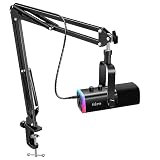
Our Top Picks
 Aokeo Professional Microphone Pop Filter Mask Shield ForPop Filter12 x 6.2 x 1.1 inches0.4 poundsCheck on Amazon
For most streamers using a desk microphone, the best overall pick on this list is the Aokeo dual-layer pop filter with a flexible gooseneck clamp, because it sits a few inches in front of the mic without touching it, clamps to a stand or boom arm, and tackles the hard P and B sounds that make streams harsh. A pop filter is a thin screen or foam cover that breaks up the burst of air from plosive consonants before it hits the microphone capsule. The FIFINE U1 is the compact metal-mesh alternative, and the foam and mask-style options below suit specific microphones.
Quick List
- PEMOTech Three-Layer Pop Filter Mask – best for handheld and close-talking vocal use
- Aokeo Dual-Layer Pop Filter with Gooseneck – best for desk mics like the Blue Yeti
- FIFINE U1 Metal Mesh Pop Filter – best for a compact, durable screen on streaming mics
- Aokeo Three-Layer Pop Filter Mask – best for a layered mesh, foam and etamine cover on handheld mics
- Microphone Isolation Ball Wind Shield – best for large studio mics that want a full foam enclosure
- Blue Yeti Foam Mic Cover – best for a slip-on windscreen for the Blue Yeti
Which One Is Right for You?
| If you… | Choose |
|---|---|
| Use a Blue Yeti and want a classic screen on a clamp | Aokeo Dual-Layer Pop Filter with Gooseneck |
| Want a small metal-mesh screen that resists wear | FIFINE U1 Metal Mesh Pop Filter |
| Sing or talk into a handheld microphone | PEMOTech Three-Layer Mask or Aokeo Three-Layer Mask |
| Own a Blue Yeti and want zero setup | Blue Yeti Foam Mic Cover |
| Record with a large studio condenser on a stand | Microphone Isolation Ball Wind Shield |
| Want a layered shield that blocks air and moisture | Aokeo Three-Layer Pop Filter Mask |
The deciding factors are mic shape and how you speak. A gooseneck screen suits any mic that has space in front of it. A slip-on foam cover suits a mic with a fixed shape. If you eat the mic, talk loudly or move around, a layered cover that touches the mic does more than a screen that hangs a few inches away.

Pop Filter,PEMOTech [Upgraded Three Layers] Metal Mesh & Foam & Etamine Layer Microphone Windscreen Cover Handheld Mic Shield Mask,Microphone Accessories for Vocal Recording,Youtube videos,Streaming
Chosen because it specifies Microphone Accessories for Vocal Recording and Youtube videos.
View on AmazonAokeo Professional Microphone Pop Filter Mask Shield For Blue Yeti and Any Other Microphone,Mic Dual Layered Wind Pop Screen With Flexible 360° Gooseneck Clip Stabilizing Arm
Picked as a relevant option in this category.
View on Amazon
FIFINE U1 Mic Pop Filter Screen with Metal Mesh for Streaming Podcast | Compact Microphone Pop Shield Windscreen, for Recording Studio, YouTube Videos
Chosen because it specifies Compact Microphone Pop Shield Windscreen and for Recording Studio.
View on Amazon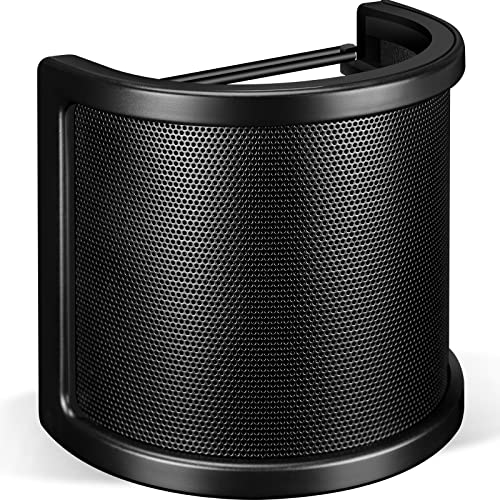
Aokeo Pop Filter, [Upgraded Three Layers] Metal Mesh & Foam & Etamine Layer Microphone Windscreen Cover Handheld Mic Shield Mask,Microphone Accessories for Vocal Recording,YouTube Videos,Streaming
Chosen because it specifies Microphone Accessories for Vocal Recording and YouTube Videos.
View on Amazon
Microphone Wind Shield Pop Filter Microphone Isolation Ball, Acoustic Filter for Record Studios Mic, Sound-Absorbing Foam Five-sided Seal Design to Effectively Reduces Noise and Reflections
Chosen because it specifies Acoustic Filter for Record Studios Mic.
View on Amazon
Blue Yeti Pop Filter Foam Mic Cover / Accessory for Blue Yeti Microphone
Picked as a relevant option in this category.
View on AmazonIt also helps to think about your microphone type before anything else. Large-diaphragm condensers and USB desk mics hear air bursts very easily, so a screen on a gooseneck or a full foam ball earns its place. Dynamic broadcast mics are more forgiving when you speak slightly off-axis, so a lighter foam cover may be enough. If you share a microphone with other people, a cover you can wash or replace has a hygiene benefit that a hanging screen does not. And if your desk is crowded, the slip-on and mask styles remove one more arm and clamp from the clutter, while the clamp-on screens give you the most adjustable placement.
All 6 Picks in Detail
1. PEMOTech Three-Layer Pop Filter Mask – Best for Handheld and Close-Talking Vocals
As an Amazon Associate we earn from qualifying purchases at no extra cost to you.
The PEMOTech listing describes an upgraded three-layer design combining a metal mesh, foam and etamine layer, sold as a microphone windscreen cover and a handheld mic shield mask. Unlike a screen on a gooseneck, this style is held between your mouth and the mic, or sits on the mic head, so it cuts air blasts and spit at the source. It suits singers, podcasters and voice-over artists who use a handheld or hand-supported mic, and anyone who talks very close to the capsule.
Because the listing text is short, confirm the mask’s size and how it attaches on the product page. A mask built for handheld use will not clip onto a mic stand the way a gooseneck screen does, so decide whether holding or hanging suits your workflow.
- Three layers: metal mesh, foam and etamine
- Handheld mic shield mask format
- Acts as a windscreen cover as well as a pop shield
- Intended for vocals and close speaking
- Size and attachment details to confirm on the page
A good way to use this style is to hold the mask or position it so it sits a short distance from the mic head, then speak or sing across it at a slight angle instead of straight in. Spend a minute checking that it does not block your view or snag a cable. Because it uses three materials, expect a gentle softening of the very top of your voice, which many people find flattering on a bright microphone. Wash or replace it when the foam picks up moisture.
Pros
- Layered design handles strong plosives
- Works at very short distances
Cons
- Not a clamp-on screen for desk use
- May alter tone slightly at close range
Compared with the Aokeo three-layer mask, the two share the same layer structure, so the choice comes down to listing details and availability.
2. Aokeo Dual-Layer Pop Filter with Gooseneck – Best for Desk Mics Like the Blue Yeti

This listing is the classic pop filter: a round dual-layer screen on a flexible arm with a clamp, named for use with the Blue Yeti and any other microphone. The two layers break up the air from plosives before it reaches the capsule, while the flexible neck lets you aim the screen straight in front of the mic. It is the setup most streamers picture when they think of a pop filter, and it keeps the screen off the microphone so the sound path stays open.
The clamp attaches to a boom arm or stand, which is why this is the strongest all-rounder. Check the clamp opening and the neck length on the product page, because a short neck on a thick arm can be awkward to position. Place the screen about 2 to 4 inches in front of the mic and speak a few inches behind it.
- Dual-layer screen design
- Flexible gooseneck with a clamp
- Named for the Blue Yeti and other microphones
- Pop screen sits in front of the mic
- Clamp size and neck length to confirm on the page
Setup takes a minute: clamp the base to the boom arm or stand, bend the neck so the round screen sits centered in front of the capsule, and leave a couple of inches between screen and mic. If your microphone is a Blue Yeti on its original base, you may need to clamp to a nearby arm or a desk edge. A short test of hard consonants like pop, bubble and paper, said at normal volume, will show whether the screen is positioned well.
Pros
- Familiar, effective, easy to position
- Does not touch the microphone
Cons
- Neck can sag over time
- Extra clutter on a small desk
Next to the FIFINE U1, the Aokeo is the more conventional gooseneck choice, while the FIFINE aims for a smaller, metal-mesh look.
3. FIFINE U1 Metal Mesh Pop Filter – Best for a Compact, Durable Screen on Streaming Mics

FIFINE markets the U1 as a compact microphone pop filter screen with metal mesh, intended for streaming, podcasts and recording studios, and described as a pop shield and windscreen. Metal mesh does not hold moisture the way fabric can, so it tends to be easier to wipe clean and keep presentable on camera. It suits streamers and podcasters who want a neat, small screen that does not dominate the desk.
Because the product listing is short, check the screen diameter, the clamp type and the neck length on the product page. A small screen is less obtrusive but covers a narrower arc, so it works best with a mic that sits directly in front of your mouth.
- Metal mesh screen
- Compact size aimed at streaming and podcasting
- Windscreen and pop shield roles named in the title
- Designed for studio, YouTube and streaming use
- Diameter and clamp type to confirm on the page
The compact size suits desks that already hold a monitor, keyboard, lights and a camera. Position the mesh right in front of the capsule and let the neck hold it steady, then clean it from time to time with a damp cloth. Because the listing title is short, confirm the neck length and whether the clamp opens wide enough for your boom arm or stand tube, since a mismatch is the most common reason people return a screen.
Pros
- Durable, easy to wipe clean
- Small footprint on the desk
Cons
- Narrower coverage than a larger screen
- Metal mesh can slightly alter high-frequency detail
Compared with the Aokeo gooseneck screen, the FIFINE is the neater and more durable option, while the Aokeo gives more flexible positioning.
4. Aokeo Three-Layer Pop Filter Mask – Best for a Layered Cover on Handheld Mics
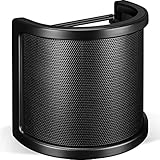
The second Aokeo listing is the three-layer mask, with a metal mesh, foam and etamine layer in the same configuration as the PEMOTech. It is a handheld mic shield mask designed to block spit and plosives when you speak or sing right up against the microphone. For streamers who use handheld dynamic mics, it adds hygiene and protection at the same time.
It is not a clamp-on desk filter, so decide whether you prefer to hold the mask or the mic. Confirm the fit and how it attaches on the product page.
- Metal mesh, foam and etamine layers
- Handheld mic shield mask format
- Acts as windscreen and pop filter
- Aimed at vocals and close-range speaking
- Attachment and size details to confirm on the page
If you already use an arm with a handheld-style mic, the mask can double as a hygiene layer, which matters for shared microphones or events. It is not intended to replace a clamp-on screen on a desk, so consider how you will hold or place it. Measure the mic head if you can, and read the size on the product page before ordering, because masks that are too small slip off and ones that are too large leave gaps.
Pros
- Strong layered plosive protection
- Helps keep the mic cleaner
Cons
- Awkward for hands-free desk setups
- Layers may soften brightness a little
Compared with the PEMOTech mask, the two are close siblings, so pick whichever page gives clearer sizing details.
5. Microphone Isolation Ball Wind Shield – Best for Large Studio Mics Wanting a Full Foam Enclosure

This listing is a microphone wind shield and pop filter in the form of an isolation ball, a sound-absorbing foam enclosure with a five-sided seal design for record-studio microphones. Instead of a screen hanging in front of the mic, the ball fits around the capsule, damping both plosives and reflections nearby. It suits a large studio condenser on a stand where you want a more complete cover than a flat screen.
Fit is the question. Foam balls come in set sizes, and the opening must match your microphone and mount. Confirm the internal dimensions and compatible mics on the product page before you order.
- Five-sided foam isolation ball
- Wind shield and pop-filter roles named in the title
- Meant for record-studio microphones
- Sound-absorbing foam construction
- Internal size to confirm on the page
A foam ball gives you a bit of both worlds: some pop reduction and some reflection control, in a single piece that sits right on the mic. Because it covers the capsule, you will speak into the foam, so keep a little distance to preserve clarity. Match the ball to the mic with a tape measure rather than guessing, and keep spare foam handy if you share the mic with others, since foam picks up moisture and odors over time.
Pros
- Covers the capsule more completely than a flat screen
- Also tames nearby reflections
Cons
- Fits only certain microphone sizes
- Bulky around small mics
Compared with the FIFINE U1, this is the heavier-duty choice for studio microphones, while the FIFINE suits streaming mics on a desk.
6. Blue Yeti Foam Mic Cover – Best for a Slip-On Windscreen on the Blue Yeti

The simplest option here is a foam mic cover made for the Blue Yeti. It slips over the top of the microphone and acts as a windscreen, reducing breath noise and light plosives with no stand, clamp or neck to arrange. For someone who wants to keep their Yeti on its original stand, it adds protection with almost no setup.
Foam covers do less against hard plosives than a screen sitting a few inches away, and they only fit the model they were made for. Treat it as a light-duty fix, and consider a gooseneck screen if you speak close and loud.
- Foam slip-on cover
- Made for the Blue Yeti per the title
- No clamp or stand needed
- Acts as a windscreen
- Fit with other Yeti variants to confirm on the page
As a stopgap it is hard to beat: slide the cover on, keep the mic on its stand, and you immediately soften breaths and plosives. If you later find it is not enough, add a gooseneck screen on a boom arm; the two can sometimes be combined on a larger mic. Check the product page to confirm that it fits the Yeti variant you own, since the Yeti line includes several versions with slightly different shapes.
Pros
- Instant setup
- Takes no desk space
Cons
- Limited plosive control
- Only fits specific microphones
Compared with the Aokeo gooseneck screen, this one is easier but less effective for strong consonants.
Specs Compared
| Model | Type | Layers or material | Mounting | Best mic type |
|---|---|---|---|---|
| PEMOTech Three-Layer Mask | Handheld shield mask | Metal mesh, foam, etamine | Confirm on listing | Handheld mics |
| Aokeo Dual-Layer | Screen on gooseneck | Two layers | Flexible neck with clamp | Blue Yeti and desk mics |
| FIFINE U1 | Screen | Metal mesh | Confirm on listing | Streaming and podcast mics |
| Aokeo Three-Layer Mask | Handheld shield mask | Metal mesh, foam, etamine | Confirm on listing | Handheld mics |
| Isolation Ball Wind Shield | Foam ball | Sound-absorbing foam | Fits over mic; confirm size | Studio condensers |
| Blue Yeti Foam Cover | Slip-on foam | Foam | Slips over mic | Blue Yeti |
How We Chose These
This guide is based on desk research of listings and manufacturer pages. We took the six accessories in the current catalog and read their listing titles together with manufacturer and retailer pages. We grouped them by design: screen on a gooseneck, mask for handheld mics, foam ball and slip-on foam cover. Then we compared the stated layers, mounting approach and the microphones each one names. We favored designs that explain how they attach and what they are made of. When a title did not state a size or clamp type, we said to confirm it on the product page rather than guessing.
What to Look For
Screen, Foam or Mask: Pick the Style
A screen on a gooseneck sits a few inches in front of the mic and disperses air before it arrives, with minimal effect on tone. Foam covers fit directly over the capsule and reduce breath noise and light wind, but they dull high frequencies a little. Mask-style filters, used by singers and handheld-mic users, sit between your mouth and the mic. Choose the style that matches how you actually hold or place your mic.
Layers and Materials
Two-layer nylon screens are the standard, since the gap between layers breaks the air stream. Metal mesh resists wear and wipes clean, but its holes are a little larger. Foam absorbs moisture and spit, which is useful for handheld use, but it must be kept clean. Multi-layer masks combine materials to improve protection, at the cost of a slightly softer top end.
Placement and Distance
Place the screen about 2 to 4 inches from the microphone and keep your mouth about 2 to 3 inches beyond it, for a total mouth-to-mic distance of roughly 4 to 6 inches. Too far from the mic and the screen does little; too close and you may touch it, making noise. Rule of thumb: if you see the screen wobble when you say a hard P, it is working.
Fit, Clamp and Compatibility
For a gooseneck screen, check the clamp opening against your boom arm or stand tube, and check neck length so it can reach the front of the mic. For slip-on foam covers, check the exact microphone model. For ball-style shields, check the internal dimensions. Worked example: a Blue Yeti on its desk stand needs a screen with a neck long enough to reach around the base, or a slip-on cover made for its shape.
Keeping It Clean
Wipe metal mesh with a damp cloth and let it dry. Wash nylon screens gently with mild soap, and replace foam covers when they harden or smell. A clean filter keeps both the sound and your setup looking fresh.
Questions
Do streamers really need a pop filter?
If you hear harsh bursts on P and B sounds or breath noise, a pop filter helps. Dynamic mics used a few inches away often need less, but a filter is cheap protection.
How far should a pop filter be from the microphone?
Most users place the screen about 2 to 4 inches from the capsule. Keep your mouth a few more inches beyond the screen.
Is foam or metal mesh better?
Metal mesh is durable and easy to clean, while foam absorbs moisture and works as a windscreen. The better choice depends on whether you want a screen or a cover.
Will a pop filter change how my voice sounds?
A good screen has very little effect on tone. Heavy foam covers can soften high frequencies slightly.
Can I use one filter on any microphone?
Gooseneck screens fit most microphones, but slip-on covers and ball shields are made for specific models. Check the compatibility details on the product page.
Is an isolation ball a pop filter?
It works as one, because the foam enclosure breaks up plosive air blasts and also softens nearby reflections. It is bulkier than a screen and must match your microphone’s size, so choose it only if it fits.
Update History
- October 20, 2026 – Initial publication; product set drawn from current catalog listings.
- Check the product page for current specifications and availability before buying.
Sources
- Manufacturer and seller product pages for Aokeo, FIFINE, PEMOTech and Blue
- Retailer listing titles and specification fields for each pop filter