Our Top Picks
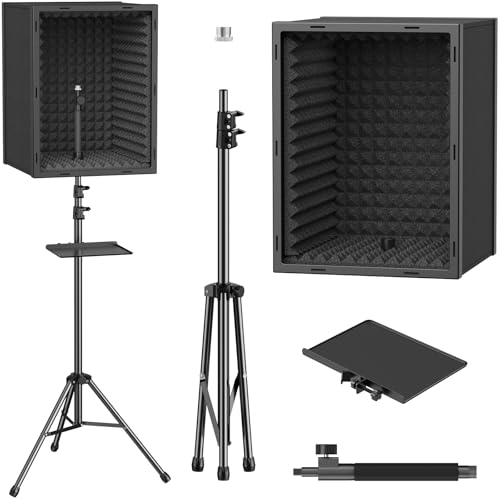 TONOR Microphone Isolation Shield for Studio with Tripod21.9''L x 17.5''W x 7.7''H10.1 poundsCheck on Amazon
The best overall pick here for a noisy room is the TONOR enclosed vocal booth shield, because its box-style foam enclosure surrounds the microphone on five sides and comes with a tripod stand, giving you more reflection control than any flat foldable panel. A microphone isolation shield is a curved or boxed layer of acoustic foam placed behind and around the mic to soak up your voice’s reflections from walls, desks and windows. One honest caveat: no shield can silence a loud room, so pair any pick with a close-talking dynamic microphone. The foldable Moukey and Aokeo panels are lighter, easier-to-store alternatives.
Quick List
- TONOR Isolation Shield with Tripod – best for a box-style vocal booth with stand included
- Moukey Isolation Shield with Table Stand – best for desktop recording with a built-in pop filter
- Aokeo Foldable Isolation Shield – best for mounting on an existing mic stand or arm
- Foldable 3-Panel Isolation Shield – best for condenser mics on a boom arm
- GDPONRM Isolation Ball – runner-up accessory: a foam ball that covers the mic itself, not a panel shield
- Generic Isolation Ball Wind Shield – runner-up accessory: a similar foam ball for studio condenser mics
Which One Is Right for You?
| If you… | Choose |
|---|---|
| Want maximum coverage and have floor space for a stand | TONOR Isolation Shield with Tripod |
| Record on a desk and want a pop filter and stand in one box | Moukey Isolation Shield with Table Stand |
| Already own a mic stand with a standard thread | Aokeo Foldable Isolation Shield |
| Use a boom arm and a condenser microphone | Foldable 3-Panel Isolation Shield |
| Need a very small, portable add-on for a studio condenser | GDPONRM Isolation Ball |
| Want the cheapest foam cover and accept less coverage | Generic Isolation Ball Wind Shield |
Think first about the type of shield. Panel shields wrap around the back of the mic and reduce reflected sound from behind it, while the ball-style covers surround only the capsule. If your problem is room echo, a panel or booth helps most. If your problem is traffic, a neighbor or a keyboard, the mic type and distance matter more than any foam.
TONOR Microphone Isolation Shield for Studio with Tripod Stand, Vocal Booth
Chosen because it specifies Vocal Booth.
View on Amazon
Moukey Microphone Isolation Shield, with Pop Filter& Table Stand, Foldable Mic Shield with Triple Sound Insulation, High Density Mic Sound Shield for Recording Studio, Podcasts, Singing, Broadcasting
Chosen because it specifies with Pop Filter& Table Stand and Foldable Mic Shield with Triple Sound Insulation.
View on Amazon
Aokeo Microphone Isolation Shield, Foldable Mic Shield with Triple Sound Insulation, Reflection Filter with 3/8" and 5/8" Mic Threaded Mount for Recording Studio, Podcasts, Singing, and Broadcasting
Chosen because it specifies Foldable Mic Shield with Triple Sound Insulation and Podcasts.
View on Amazon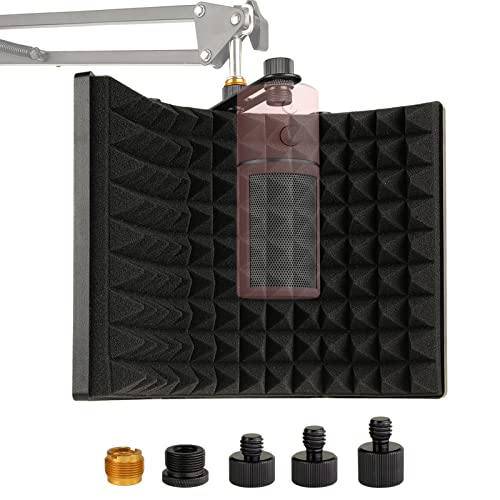
Microphone Isolation Shield, Foldable 3-Panel Sound Absorbing Foam for Condenser Mic, High Density Acoustic Shield with Adapters for Mic Arm Stand -Portable Vocal Booth for Home Recording Studio
Chosen because it specifies Foldable 3-Panel Sound Absorbing Foam for Condenser Mic.
View on Amazon
GDPONRM Microphone Wind Shield Pop Filter Isolation Ball, Acoustic for Record Studios Mic, Sound-Absorbing Foam Five-sided Seal Design to Effectively Reduces Noise and Reflections, black
Chosen because it specifies Acoustic for Record Studios Mic and black.
View on Amazon
Microphone Wind Shield Pop Filter Microphone Isolation Ball, Acoustic Filter for Record Studios Mic, Sound-Absorbing Foam Five-sided Seal Design to Effectively Reduces Noise and Reflections
Chosen because it specifies Acoustic Filter for Record Studios Mic.
View on AmazonAll 6 Picks in Detail
1. TONOR Isolation Shield with Tripod – Best for a Box-Style Vocal Booth
As an Amazon Associate we earn from qualifying purchases at no extra cost to you.

The TONOR is described as a studio isolation shield with a tripod stand, in a framed foam box form that works as a personal vocal booth. Product materials describe five high-density foam and sound-absorbing panels with reinforced plastic frames at the front and back and an interior large enough to hold a microphone with some room around it. It suits singers, voice-over artists and streamers who record in a bare room and want to cut the boxy, echoing character of their voice.
Because it is a freestanding unit, plan for floor space. The telescoping pole adjusts through a wide height range per the maker, though listings are inconsistent about the exact figures, so check the dimensions on the product page before you buy. Think of it as semi-permanent studio furniture, not a travel accessory.
- Framed box-style design with several foam panels
- Tripod stand with adjustable height included
- Adapter for 3/8 inch to 5/8 inch mic threads per the maker
- Microphone weight limit stated by the maker at about 4.4 lb
- Heavier and larger than foldable shields
In a typical use case, you place the tripod behind your desk or beside your computer, raise the pole until the mic sits at mouth height inside the box, and speak toward the open front. Because the enclosure is deep, it also works for recording acoustic instruments or voice-over in a shared apartment. Allow time for assembly, since the frame, foam panels and pole need to be put together before first use, and confirm the maker’s maximum microphone weight against your mic and shock mount.
Pros
- Most coverage of any shield on the list
- Includes its own stand
Cons
- Bulky and takes up floor space
- No independent absorption rating published for the foam
Compared with the Moukey desktop shield, this is the stronger choice for a standing recording position, while the Moukey is easier to move and store.
2. Moukey Isolation Shield with Table Stand – Best for Desktop Recording with a Pop Filter

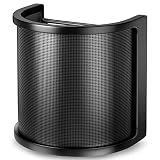
The Moukey listing bundles a foldable shield with a pop filter and a table stand. It uses triple-layer insulation with a high-density foam front, a lighter plastic rear and steel clips that secure it to the stand. The panels fold, so it packs away flat when you are done. For streamers who talk into a mic on a desk, a small bundle that handles both the reflections and the plosives is convenient.
The table stand keeps its height modest, so it works best with a desk microphone rather than a tall floor-standing setup. Retailer text mentions panels that can be angled to fit the mic’s position. If you plan to use it on a boom arm, check whether this listing’s mount supports that.
- Foldable multi-panel design with high-density acoustic foam
- Pop filter included per the title
- Table stand included
- Triple sound-insulation layering named in the title
- Steel clips on the back for stand mounting per retailer text
In practice it sits well beside a laptop or small monitor, with the mic clipped in front of the foam and the pop filter a few inches from your mouth. Because it folds, it is also a decent choice for anyone who streams from a shared room and wants to clear the desk after a session. Look at the page to see exactly how the foam angle can be adjusted and how the stand attaches, since small details like that affect stability on a light desk.
Pros
- All-in-one bundle for a desk
- Folds flat for storage
Cons
- Table stand limits how tall the mic can sit
- Lighter rear panel offers less structure than a framed box
Next to the Aokeo shield, this one trades flexible mounting for the convenience of a stand and pop filter in the box.
3. Aokeo Foldable Isolation Shield – Best for Mounting on Your Own Stand or Arm

The Aokeo listing describes a foldable shield with triple sound insulation and a reflection filter, plus 3/8 inch and 5/8 inch mic threaded mounts. That pair of mounts is the key detail: you can attach it directly to a standard mic stand or arm, instead of buying a separate stand. It suits people who already own the stand hardware and just want the foam.
The wrap-around shape reduces reflections arriving from behind and from the sides, helping a condenser microphone sound drier. It is not a booth, so it will not remove sounds that travel straight to the capsule from the front, such as a fan pointed at you. Placement and mic angle matter as much as the foam itself.
- Foldable panel design with triple insulation per the title
- Reflection-filter style for the back of the mic
- 3/8 inch and 5/8 inch threaded mounts included
- No stand named in the title; confirm on the page
- Fits on a boom arm or stand per the mount sizes
Mounting is the whole appeal. Thread it onto the stand you already use, tilt the wings forward so they curve around the mic, and aim the open side at your mouth. If the mic sits on a boom arm, balance the arm for the extra weight and check that the shield does not block your view of the monitor. The foam is the same family of material found in more expensive shields, but the construction and thickness are worth confirming on the page.
Pros
- Flexible mounting on hardware you own
- Light and easy to store
Cons
- You may need to supply a stand
- Does not enclose the mic fully
Compared with the generic three-panel shield below, the Aokeo gives you explicit thread mounts in the title, which saves guessing.
4. Foldable 3-Panel Isolation Shield – Best for Condenser Mics on a Boom Arm

This listing is a foldable three-panel shield made from sound-absorbing foam, aimed at condenser mics and supplied with adapters for use on a mic arm. The three-panel format is the classic reflection filter: a central panel behind the mic and two side wings that curve toward the sides. Mounted on a boom arm, it keeps the mic close to your face while the foam cuts the echo from the wall behind it.
Since the title does not name a brand, rely on the product page for dimensions, foam thickness and the specific adapters. For a streamer in an untreated bedroom, the improvement is in how roomy or hollow the voice sounds, not in blocking outside noise.
- Three foldable foam panels
- Designed for condenser microphones
- Adapters for mic-arm mounting named in the title
- High-density foam per the title
- Brand and dimensions not stated; confirm on the page
For setup, thread the supplied adapter onto the arm, mount the shield behind the microphone and fold the side wings forward until the mic sits inside the curve. Keep the foam a short distance behind the capsule, not touching it, so the mic can still breathe. If the arm droops, tighten the tension or switch to a stronger arm, because a three-panel shield adds more weight than most people expect.
Pros
- Simple, familiar reflection-filter shape
- Works with boom arms
Cons
- Limited detail in the title
- May add weight that stresses a light arm
Compared with the Moukey bundle, this has no stand or pop filter in the title, so it fits people who have those already.
5. GDPONRM Isolation Ball – Runner-Up Accessory: A Foam Cover for the Mic Itself

This listing is not a panel shield. It is described as a wind shield and pop filter isolation ball, a five-sided sound-absorbing foam enclosure that surrounds the microphone for record-studio use. That design damps reflections right at the capsule and softens plosives, but it does not wrap around a whole recording area the way a booth does. It belongs here as a runner-up accessory for people who want a small, low-cost way to deaden their mic without a large panel.
Fit matters. A foam ball must be sized to the microphone and mount, and it generally suits large studio condensers on a stand rather than slim handheld or USB mics. Confirm the opening size on the product page before ordering.
- Five-sided foam enclosure design
- Marketed for record-studio microphones
- Combines wind shield and pop-filter roles per the title
- Compact and portable
- Internal size and compatible mic list to confirm on the page
Use it the way you would use a fuzzy mic windshield, but expect a larger and denser enclosure. It sits over the head of a stand-mounted microphone, and you speak through the opening. This approach works best when the microphone is on a stable stand and the room is only mildly reflective. For a loud room, the ball alone will not be enough, and a close-talking dynamic microphone remains the stronger fix.
Pros
- Very portable and easy to store
- Doubles as a pop filter
Cons
- Not a true room-isolation shield
- Only fits certain microphone sizes
Compared with the next ball, the two are close in concept, so choose by fit and page details.
6. Generic Isolation Ball Wind Shield – Runner-Up Accessory: A Second Foam Mic Cover

The final listing is another microphone wind shield and pop filter isolation ball, with a sound-absorbing foam, five-sided seal design for studio microphones. Like the GDPONRM, it covers the capsule instead of shielding the space behind it. It is useful if your goal is a drier, more intimate vocal and fewer breath pops, and if you accept that it cannot cut down on loud noises elsewhere in the room.
The same fit questions apply: check the interior opening and the supported mic shapes before ordering. If you stream with a boom-mounted dynamic mic, a ball cover is rarely necessary; the arm and a pop filter are usually enough.
- Five-sided foam seal design per the title
- Wind shield and pop-filter combination
- Intended for studio microphones
- Brand not stated in the title
- Check inside dimensions and mount compatibility
If you buy it, treat it as an upgrade to a pop filter rather than a room treatment. Slide it over the mic, check that the cable exits cleanly, and keep the capsule centered so the foam does not press against it. Keep it dry and away from heat, since foam can degrade, and wipe the outside gently rather than washing it. For streamers on small dynamic mics, a standard pop filter is usually the better fit.
Pros
- Small, light and inexpensive in concept
- Reduces breath pops
Cons
- Does not isolate the room
- Poor fit with the wrong microphone
Next to the GDPONRM, the choice comes down to which listing’s size and fit details match your microphone.
Specs Compared
| Model | Type | Stand included | Mount threads | Pop filter |
|---|---|---|---|---|
| TONOR Isolation Shield | Framed foam box / vocal booth | Tripod | 3/8 to 5/8 inch adapter per maker | Confirm on listing |
| Moukey with Table Stand | Foldable multi-panel shield | Table stand | Confirm on listing | Yes |
| Aokeo Foldable | Foldable reflection filter | Confirm on listing | 3/8 inch and 5/8 inch | Confirm on listing |
| Foldable 3-Panel | Three-panel foam shield | Confirm on listing | Adapters for mic arm | Confirm on listing |
| GDPONRM Isolation Ball | Foam ball cover (runner-up) | No | Confirm on listing | Built in as wind shield |
| Generic Isolation Ball | Foam ball cover (runner-up) | No | Confirm on listing | Built in as wind shield |
How We Chose These
This guide is based on desk research. We took the six listings in the current catalog and compared what each title and the manufacturer or retailer pages say about shape, number of panels, included stand, thread mounts and pop filter. Two listings are foam ball covers that surround the microphone rather than panel shields, so we labeled them plainly as runner-up accessories. We favored designs that surround the mic with more absorptive material and that state how they mount. Where a title lacked a value, we marked it to confirm on the product page. We do not claim measured absorption figures, because none of the listings publishes a verified rating.
What to Look For
What a Shield Can and Cannot Do
An isolation shield absorbs your voice before it bounces off walls and returns to the mic, so recordings sound drier and closer. It does little against noise that originates elsewhere in the room, because sound still reaches the front of the capsule. For a noisy room, the most effective moves are using a dynamic microphone, speaking within a few inches of it and turning off fans or appliances. Treat a shield as one layer of a plan.
Panel Shield, Booth or Ball
A three-panel foldable shield is the classic choice and works well on a boom arm or desk stand. A boxed vocal booth surrounds the mic more fully, giving stronger reflection control but needing floor space. A ball cover sits right on the capsule, suiting large studio condensers but offering limited help with room sound. Choose the shape that fits both your microphone and your available space.
Foam Thickness, Layers and Weight
Thicker, denser foam absorbs lower frequencies better, but it also weighs more. Most consumer shields use foam about 1 to 2 inches thick. If you mount the shield on a boom arm, add its weight to your microphone and shock mount, and check that the total stays under the arm’s rating. A shield that is too heavy will cause droop.
Mounts, Stands and Placement
Check the thread sizes. Most mic stands use 5/8 inch threads, while many accessories use 3/8 inch, and adapters bridge the two. Place the shield behind or around the mic, with the mic about 4 to 6 inches from your mouth. Rule of thumb: if you hear the room when you clap near the microphone, add shield coverage behind and beside it, and consider hanging a thick blanket or acoustic panel on the wall behind you for further help. Worked example: a streamer with a bare wall behind the monitor might clamp a three-panel shield on the arm and add a thick moving blanket behind the chair.
Choosing the Microphone That Works With a Shield
Shields help condenser mics most, since condensers pick up the room readily. Dynamic mics reject more of the room by design, so a shield adds less, though it still tames reflections close to the capsule. Cardioid patterns pick up mostly from the front, which pairs naturally with a shield behind. If you hear a hollow, boxy character on your recordings, a shield is likely to help. If you mainly hear sounds from outside the room, change the mic type, the distance or the room itself before spending more on foam.
Questions
Do microphone isolation shields block outside noise?
Not really. They mainly cut reflections from the room behind the mic, so they help with echo more than with traffic or neighbors.
What is the best mic type to use with a shield in a noisy room?
A dynamic microphone used close to your mouth rejects more background sound than a sensitive condenser. A shield then adds a little extra control over reflections.
Can I put a shield on a boom arm?
Yes, if the arm can carry the combined weight of the mic, mount and shield. Several listings here include 3/8 inch and 5/8 inch mounts or arm adapters.
Is a foam ball the same as an isolation shield?
No. A ball covers the capsule and softens plosives, while a panel shield or booth surrounds the area behind and beside the mic.
Do I still need a pop filter?
Often yes, because a shield does not stop air blasts from hard consonants. Some listings include a pop filter, and foam balls act as one.
How big a room do I need for the TONOR booth?
You need enough floor space for a tripod stand and the box. Check the dimensions on the product page against your recording corner.
Update History
- October 20, 2026 – Initial publication; product set drawn from current catalog listings.
- Check the product page for current specifications and availability before buying.
Sources
- Manufacturer and seller product pages for TONOR, Moukey and Aokeo
- Retailer listing titles and specification fields for each shield