Our Top Picks
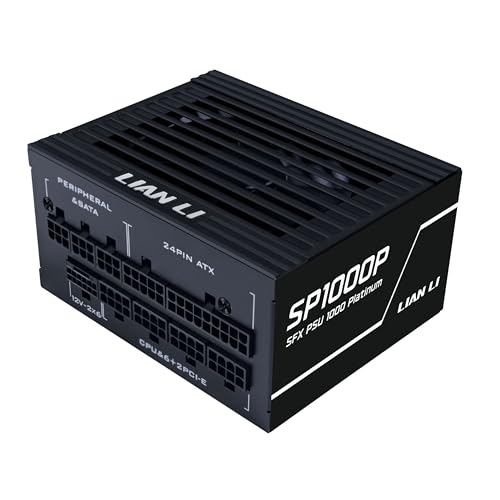 LIAN LI SP1000P 1000W SFX Power Supply4.92 x 2.5 x 3.94 inches4.92 x 2.5 x 3.94 inches4.92 poundsCheck on Amazon
 ASUS ROG Loki SFX-L 1000W Platinum Power Supply1000W|Black4.9 x 4.9 x 2.5 inches4 poundsCheck on Amazon
The best 1000W SFX power supply on this list is the Lian Li SP1000P. It packs a fully modular, 80 Plus Platinum, ATX 3.1 design with a native 12V-2×6 cable into the standard small-form-factor SFX shell, which means it will fit almost any mini-ITX or compact case that accepts SFX units. It suits builders of small, high-end gaming PCs who want to run a flagship graphics card and a high-core-count processor without moving to a bulky full-size supply. One important honesty note: not every product in this list is a true 1000W SFX unit. The ASRock PG-1000PSF and ASUS ROG Loki are real 1000W small-form-factor supplies, the be quiet! Pure Power 13 M and Corsair RM1000e are full-size ATX units, and the Lian Li SP750 V2 is a 750W SFX model. We explain which case and which build suits each one so you do not buy a power supply that physically cannot fit.
Top 3 Picks
Best overall: Lian Li SP1000P. It delivers 1000W in a true SFX body (about 125 by 100 by 63.5 millimeters), with a 92 mm fluid dynamic bearing fan, a zero-RPM mode at light loads, Japanese 105 degree Celsius capacitors per the maker, and a long warranty. It is the cleanest answer for a compact build that needs a lot of power.
LIAN LI SP1000P 1000W SFX Power Supply, 80 Plus Platinum, Black (SP1000P.B)
Included for 'Best 1000W SFX Power Supply in 2026' because the listing specifies 80 Plus Platinum and Black (SP1000P.B), details this guide uses to compare options.
View on Amazon
ASRock Phantom Gaming PG-1000PSF 1000W SFX Power Supply, 80 Plus Platinum, ATX3.1 & PCIe 5.1 Ready, Fully Modular, 10-Year Warranty, 12V-2x6 Connector
Included for 'Best 1000W SFX Power Supply in 2026' because the listing specifies 80 Plus Platinum and ATX3.1 & PCIe 5.1 Ready, details this guide uses to compare options.
View on Amazon
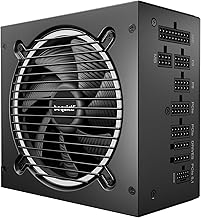
be quiet! Pure Power 13 M 1000W Power Supply, 80+ Gold, Cybenetics Platinum | PCIe 5.1, ATX 3.1, Fully Modular PSU, LLC Topology, Semi-Passive Fan, Single-Rail, For Overclocked GPUs, 10 Year Warranty
Included for 'Best 1000W SFX Power Supply in 2026' because the listing specifies 80+ Gold and Cybenetics Platinum, details this guide uses to compare options.
View on AmazonASUS ROG Loki SFX-L 1000W Platinum Power Supply
Included for 'Best 1000W SFX Power Supply in 2026' as a relevant option in this category; details come from the product listing.
View on Amazon
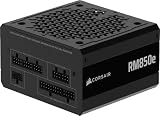
CORSAIR RM1000e (2025) ATX 3.1 PCIe 5.1 Ready 1000W Power Supply – Black
Included for 'Best 1000W SFX Power Supply in 2026' because the listing specifies Black, details this guide uses to compare options.
View on Amazon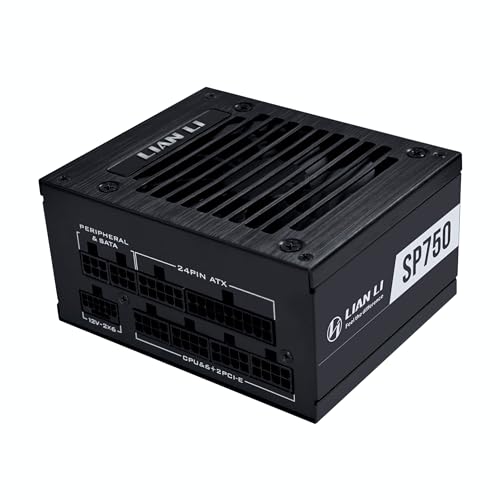
LIAN LI SP750 V2 750W SFX Power Supply, 80 Plus Gold, Black (SP750G.B)
Included for 'Best 1000W SFX Power Supply in 2026' because the listing specifies 80 Plus Gold and Black (SP750G.B), details this guide uses to compare options.
View on AmazonBest for value in a full-size case: Corsair RM1000e (2025). If your case takes a standard ATX power supply, the RM1000e gives you 1000W, ATX 3.1 compliance, a native 12V-2×6 connector and a quiet 120 mm fan with a zero-RPM mode. You do not pay the engineering premium for the SFX form factor, so it is the sensible budget-minded 1000W choice for roomy cases.
Best premium for style and quiet operation: ASUS ROG Loki SFX-L. Its larger 120 mm fan lets the unit run slower and quieter than a typical 92 mm SFX unit, and it adds addressable lighting and a bundled 600W 16-pin cable. It needs a case that supports the slightly deeper SFX-L format, so check clearance first.
Quick Comparison
| Product | Best for | Key specs |
|---|---|---|
| Lian Li SP1000P | Compact builds needing full 1000W | SFX, 1000W, 80 Plus Platinum, ATX 3.1, fully modular, native 12V-2×6, 92 mm fan |
| ASRock Phantom Gaming PG-1000PSF | Small builds with ARGB and cable protection | SFX, 1000W, 80 Plus Platinum, ATX 3.1 and PCIe 5.1, 12V-2×6 with TempGuard, 92 mm FDB fan |
| be quiet! Pure Power 13 M 1000W | Quiet, full-size ATX builds | ATX, 1000W, 80 Plus Gold with Cybenetics Platinum, ATX 3.1, semi-passive 120 mm fan |
| ASUS ROG Loki SFX-L 1000W Platinum | Quiet SFX-L cases with lighting | SFX-L, 1000W, Platinum, 120 mm axial fan with zero-RPM mode, 16-pin 600W cable, ARGB |
| Corsair RM1000e (2025) | Straightforward ATX 1000W build | ATX, 1000W, ATX 3.1, PCIe 5.1, native 12V-2×6, fully modular, 120 mm fan |
| Lian Li SP750 V2 750W | Mid-power SFX builds | SFX, 750W, 80 Plus Gold, ATX 3.1, 12V-2×6 cable, 92 mm FDB fan |
How We Chose
We built this guide from manufacturer specifications, product listings and published reviews and certification summaries, not from our own bench work. We looked first at whether each supply matches the form factor and wattage in the keyword, because a 1000W SFX unit is a narrow category. We then compared efficiency certifications, ATX 3.1 and PCIe 5.1 support, the presence of a native 12V-2×6 connector, fan size and zero-RPM behavior, connector counts, physical dimensions, and warranty length. Where retailer listings disagree, as they do on several of these units, we use the manufacturer’s stated figure and tell you to confirm on the product page. We do not claim to have run any unit ourselves, and we do not quote noise or efficiency figures beyond what the maker or a published certification states.
1. Lian Li SP1000P – Best for Compact Builds That Need Full 1000W
As an Amazon Associate we earn from qualifying purchases at no extra cost to you.
The Lian Li SP1000P is the reference answer to the question this keyword asks. It is a 1000W power supply in the standard SFX shell, which measures roughly 125 millimeters long, 100 millimeters wide and 63.5 millimeters tall according to retailer specifications. That footprint lets it go into small cases that would never accept a full-size ATX supply, yet it is certified 80 Plus Platinum, supports ATX 3.1 and PCIe 5.1, and brings a native 12V-2×6 cable for modern graphics cards. It is fully modular, so you only connect the cables you need, which is critical in a small case where airflow and cable space are scarce.
The design details point to a unit built for density. Lian Li lists a single +12V rail of about 83 amps, Japanese 105 degree Celsius capacitors and a 92 mm fluid dynamic bearing fan. The fan stays off at light loads, with the maker and retailers describing a zero-RPM mode that holds until roughly 40 percent load, which for a 1000W unit is around 400W. That is more than enough headroom for a browsing or light gaming session to run silently. Published reviews note that when the supply is pushed hard for long periods the small fan becomes audible, which is a fundamental property of cramming 1000W into a 92 mm fan envelope rather than a flaw unique to this unit.
Key specs
- Form factor: SFX, with an ATX adapter bracket supplied per some retailer listings.
- Output: 1000W, single +12V rail, about 83 amps.
- Efficiency: 80 Plus Platinum certified.
- Standards: ATX 3.1 and PCIe 5.1 compatible, native 12V-2×6 cable.
- Cooling: 92 mm FDB fan with zero-RPM mode at light loads.
- Warranty: 10 years per Lian Li and major retailers.
Pros
- True 1000W in an SFX case, which is rare and valuable for small builds.
- Platinum efficiency reduces waste heat inside a cramped chassis.
- Native 12V-2×6 cable simplifies powering modern high-end graphics cards.
- Long warranty and Japanese capacitors signal long-term durability intent.
Cons
- Small fan can become audible under sustained heavy load.
- Limited number of PCIe and peripheral connectors compared with full-size units, so plan your cable needs.
- SFX cables are short, which is helpful in small cases but tight in a large tower.
Compared with the ASRock PG-1000PSF, the nearest alternative, the SP1000P is the more neutral, understated choice with a strong reputation for power density. The ASRock adds cable-overheat protection when paired with its matching cable and a 5V lighting boost, so choose Lian Li if you want the cleanest, simplest 1000W SFX and ASRock if those extra features appeal. Both are the right class of supply for a compact system with a flagship GPU.
2. ASRock Phantom Gaming PG-1000PSF – Best for Small Builds with ARGB and Cable Protection

The ASRock Phantom Gaming PG-1000PSF is the other genuine 1000W SFX unit on the list, and it brings a few features that set it apart from the Lian Li. It is certified 80 Plus Platinum, compliant with ATX 3.1 and PCIe 5.1, fully modular and covered by a 10-year warranty. It uses a 92 mm fluid dynamic bearing fan with ASRock’s Auto iCool control, which keeps the fan quiet at moderate loads. ASRock states that the native 12V-2×6 connector is dual-color and uses a TempGuard design intended to help spot connection problems and protect against overheating. The unit also includes a 5V boost function meant to keep addressable lighting stable.
Those cable-side details are the main reason to look at this model. The 12V-2×6 connector family has had a high-profile history of melted or discolored plugs when connectors are not fully seated or are bent sharply, so any feature that makes seating visible and adds thermal awareness is useful. ASRock also sells a separate L-shaped 12V-2×6 cable with a temperature sensor that works with its Phantom Gaming and Taichi power supplies, and this PSU belongs to that family. The sensor feature on that cable only functions with the matching ASRock supplies, so the combination makes the most sense if you plan to buy both.
Key specs
- Form factor: SFX, about 125 by 100 by 63.5 millimeters per retailer listings.
- Output: 1000W with a continuous +12V output of around 83 amps.
- Efficiency: 80 Plus Platinum, with a Cybenetics certificate that lists Platinum efficiency and a quiet noise class.
- Standards: ATX 3.1, PCIe 5.1, dual-color native 12V-2×6 with TempGuard.
- Cooling: 92 mm FDB fan with Auto iCool control.
- Extras: 5V boost for addressable RGB, 100 percent Japanese capacitors per the maker, 10-year warranty.
Pros
- True 1000W SFX with Platinum efficiency and modern connector standards.
- Connector design aims to make seating errors easier to spot.
- Pairs with ASRock’s matching sensor cable for added protection.
- 10-year warranty matches the best in the SFX class.
Cons
- Some retailer listings contain inconsistent efficiency wording, so confirm the certification on the maker’s page.
- Connector counts are limited by the small format, and listings differ on the exact number of PCIe leads.
- Sensor protection only works with matching ASRock cable and supply combinations.
Against the Lian Li SP1000P, the ASRock gives you a few more features aimed at modern graphics cards and lighting, while the Lian Li has a leaner reputation for density and voltage regulation. If your build is a small case with an RTX-class card and you plan to use ASRock’s L-shaped cable, this is the natural pick. If you want the simplest, no-frills 1000W SFX, choose the SP1000P.
3. be quiet! Pure Power 13 M 1000W – Best for Quiet Full-Size ATX Builds

The be quiet! Pure Power 13 M 1000W is included in this list because shoppers searching for a 1000W unit often land on it, but it is important to be clear about what it is: a full-size ATX power supply, not an SFX one. The maker lists dimensions of about 150 by 85 by 160 millimeters, which will not fit a case designed only for SFX supplies. If you have a mid-tower or full tower with a standard ATX power supply bay, it is a strong, quiet choice. If your case is a mini-ITX box with an SFX bay, skip it, since an adapter bracket does not make a larger body fit into a smaller space.
The Pure Power 13 M is certified 80 Plus Gold, and the listing notes a separate Cybenetics Platinum efficiency certification, a difference that can look confusing on the box. It is ATX 3.1 compliant and PCIe 5.1 compatible, fully modular, and carries a 10-year warranty. It uses a 120 mm fan in a semi-passive design, which means the fan does not spin at low loads. Connector counts are generous for a 1000W unit: reviews describe one 12+4-pin PCIe connector good for 600W, four 6+2-pin PCIe connectors, two EPS connectors, six SATA and two Molex.
A practical way to think about this unit is as the quiet-office-meets-gaming-rig option. Because it has a large fan and a semi-passive design, the fan stays off during web browsing, video playback and light work, and a well-ventilated case lets it stay off for a large portion of a normal day. When a long game session pushes the load up, the fan spins up gradually, and the big blades move more air per revolution than a small SFX fan. The maker’s certification summaries mention a very low noise class, but real-world noise depends on your case, fan curve and where the computer sits, so treat the numbers as a guide rather than a promise.
Key specs
- Form factor: ATX, roughly 150 by 85 by 160 millimeters.
- Output: 1000W continuous with a single +12V rail.
- Efficiency: 80 Plus Gold, with a Cybenetics Platinum efficiency certificate mentioned in the listing.
- Standards: ATX 3.1 compliant, PCIe 5.1 compatible, native 12+4-pin connector.
- Cooling: 120 mm fan with semi-passive operation.
- Warranty: 10 years.
Pros
- Large 120 mm fan can move air at lower speeds than a 92 mm SFX fan.
- More connectors than SFX units, helpful for multi-drive or multi-device builds.
- Modern connector standards and a 10-year warranty.
- Efficiency certifications reported by independent labs are strong for the class.
Cons
- Not SFX, so it cannot go into small-form-factor cases.
- Gold on the box versus Platinum in some listings can be confusing; confirm what you are buying.
- Bulkier cables than SFX models, which can be harder to route in tight builds.
The closest alternative is the Corsair RM1000e (2025), another ATX 1000W unit with a native 12V-2×6 connector. The be quiet! model leans toward silence and a longer warranty, while the Corsair has a shorter warranty per most sources but is widely available and well supported. If your case is full size and you value quiet operation, the be quiet! is a first-rate pick. If you need an SFX supply, go back to the Lian Li or ASRock.
4. ASUS ROG Loki SFX-L 1000W Platinum – Best for Quiet SFX-L Cases with Lighting

The ASUS ROG Loki SFX-L 1000W Platinum is the quiet-focused option in the 1000W compact class. It uses the SFX-L format, which has the same footprint and height as SFX but is about 25 millimeters deeper, measuring about 125 by 125 by 63.5 millimeters. That extra length allows a 120 mm fan instead of a 92 mm one. ASUS describes an Axial-tech PWM fan with dual ball bearings, a zero-RPM mode when load is at or below roughly 40 percent, and addressable lighting that works with its Aura software. The maker also cites a Cybenetics quiet-noise certification, which suits builders who want a near-silent system at everyday loads.
The unit is fully modular and 80 Plus Platinum. ASUS lists a 10-year warranty for the power supply itself, with the lighting covered for a shorter period, and bundles a 16-pin PCIe cable good for 600W along with an ATX adapter bracket. Retailer listings for older stock describe the standard as ATX 3.0 and PCIe 5.0, while the maker’s current specifications state ATX 3.1, so confirm which revision the listing in front of you carries if that matters for your graphics card.
Think about the case as carefully as the supply. SFX-L cases are a smaller group than SFX cases, and the extra depth can collide with a tall radiator, a drive cage or a large graphics card in some layouts. Measure the space between the back panel and the nearest obstruction, and leave room for cables to curve gently rather than bend sharply at the connector. If your case supports both SFX and SFX-L but the manual lists a restriction on one orientation, follow the case maker’s guidance on fan direction so the supply pulls in cool air instead of recycling warm exhaust.
Key specs
- Form factor: SFX-L, about 125 by 125 by 63.5 millimeters.
- Output: 1000W with a single +12V rail.
- Efficiency: 80 Plus Platinum, with Cybenetics Platinum and quiet-class certificates per ASUS.
- Cooling: 120 mm Axial-tech PWM fan, zero-RPM mode, addressable lighting.
- Cables: fully modular, with a 16-pin 600W PCIe cable and multiple 8-pin PCIe leads per the maker.
- Warranty: 10 years on the PSU, shorter on the lighting.
Pros
- Larger fan can run slower, which tends to mean lower noise at the same airflow.
- Styled to match ROG builds, with lighting that can be coordinated through Aura software.
- Ships with an adapter bracket to help it sit in an ATX bay.
- Strong efficiency certifications and a long warranty.
Cons
- SFX-L is longer, so many SFX-only cases will not take it.
- Listings from different sellers show inconsistent standards, weights and fan details.
- Lighting adds a feature you may not need and carries a shorter warranty.
Compared with the Lian Li SP1000P, the ROG Loki trades the smallest size for a bigger fan, so it is the better pick when your case is SFX-L ready and quiet operation is the top priority. If your case only supports standard SFX, the SP1000P or the ASRock is the correct choice. Always measure the available depth in your case before ordering any SFX-L supply.
5. Corsair RM1000e (2025) – Best for a Straightforward ATX 1000W Build

The Corsair RM1000e (2025) is the most conventional product here, and that is exactly why many builders choose it. It is a full-size ATX supply, fully modular, ATX 3.1 compliant and PCIe 5.1 ready, with a native 12V-2×6 cable good for 600W. It uses a 120 mm fan with a zero-RPM mode that keeps the fan off at low and moderate loads. Reviews list connector counts of four PCIe 6+2-pin leads, six SATA and two Molex, along with the 12V-2×6 cable, which is enough for a high-end single-GPU gaming PC.
Several details deserve a careful look. Most reputable sources list the warranty at seven years, although one retailer description says ten, so confirm the term on the product page before you rely on it. Dimensions are listed at about 150 millimeters deep, but sources differ by a few millimeters depending on whether the cables are included, so if your case is tight, allow about 160 millimeters. Efficiency is an 80 Plus Gold certification, and some listings add that Cybenetics certified it to a higher efficiency tier, which is a useful bonus rather than the headline.
For many builders, the strongest argument for this model is simplicity. You get 1000W, a modern connector and enough cables for a single high-end card without the density engineering of an SFX unit. That also means more thermal headroom: a larger body and a larger fan can handle sustained loads with less strain, and the longer cables reach the far corners of a mid-tower without extensions. If you are building in a case that supports both ATX and SFX, think about whether the space saving of SFX is worth the extra noise and cost, or whether a conventional supply like this one leaves you with a calmer, easier build.
Key specs
- Form factor: ATX, around 150 millimeters deep, allow roughly 160 millimeters for cables.
- Output: 1000W, single +12V rail.
- Efficiency: 80 Plus Gold, with a higher Cybenetics tier noted in some listings.
- Standards: ATX 3.1, PCIe 5.1, native 12V-2×6 connector.
- Cooling: 120 mm rifle-bearing fan with zero-RPM mode.
- Warranty: most sources list seven years; verify on the product page.
Pros
- Widely available full-size 1000W with modern connector support.
- Larger fan and zero-RPM mode keep light-load operation silent.
- Good value for builders who do not need the SFX form factor.
- Four PCIe leads give flexibility for older or mixed GPU setups.
Cons
- Not SFX, so it cannot go into small-form-factor cases.
- Fan can become audible at full load, as published reviews note.
- Warranty is shorter than the 10-year terms on several rivals here.
Against the be quiet! Pure Power 13 M, the Corsair is the more mainstream, easier-to-find choice, while the be quiet! emphasizes noise and a longer warranty. They are close in capability. If you already know your case has a standard ATX bay and want a safe, well-supported 1000W supply for a high-end gaming PC, the RM1000e is a rational default.
6. Lian Li SP750 V2 750W – Best for Mid-Power SFX Builds

The Lian Li SP750 V2 is not a 1000W supply, and you should understand that before you buy it for this keyword. It is a 750W SFX power supply, 80 Plus Gold certified, ATX 3.1 compliant, and it ships with a native 12V-2×6 cable for modern graphics cards. It stays in the list because many compact builds do not actually need 1000W, and the SP750 V2 shows the practical alternative: a smaller, easier-to-cool supply that still powers a mainstream or upper-midrange gaming PC.
It uses the same 92 mm fluid dynamic bearing fan approach as the SP1000P, with a zero-RPM mode that holds the fan off until roughly 40 percent load, or about 300W on this unit. That covers a lot of everyday use. It is fully modular, has an aluminum housing and Japanese capacitors, and carries a 10-year warranty according to Lian Li, doubling the warranty of the earlier version. Retailer cable counts vary between listings, and some may blend details of the earlier model, so check the official spec sheet for the exact leads.
Do the arithmetic before you choose it. A system with a 250W graphics card, a 120W processor and 80W for everything else draws about 450W, and a 750W supply would run at 60 percent load, which is a comfortable place for both efficiency and noise. Even a 350W graphics card with a 200W processor and 100W of extras totals 650W and leaves about 13 percent of headroom, which is workable but less relaxed. If you suspect you will upgrade the graphics card within a year or two, stepping up to the 1000W model now is usually a wiser plan than replacing the supply later.
Key specs
- Form factor: SFX, within the 63.5 millimeter height specification.
- Output: 750W, single +12V rail.
- Efficiency: 80 Plus Gold.
- Standards: ATX 3.1, PCIe 5.0 ready, native 12V-2×6 cable.
- Cooling: 92 mm FDB fan with zero-RPM mode.
- Warranty: 10 years.
Pros
- Right-sized for many mainstream and midrange builds.
- Same compact shell and modern connector as larger SFX units.
- Lower output means less stress on the small fan and quieter operation under typical gaming.
- Long warranty and fully modular cabling.
Cons
- Only 750W, so it does not satisfy a search for a 1000W unit.
- Not suitable for a flagship graphics card paired with a high-end processor.
- Gold rather than Platinum efficiency, so slightly more heat at the same load.
The nearest alternative is the SP1000P, which uses the same design language with more power and higher efficiency. Choose the SP750 V2 when your total system draw, including worst-case spikes, stays well under 700W. Choose the SP1000P when you plan to run a graphics card in the 500W class or intend to upgrade later.
How to Choose a 1000W SFX Power Supply: A Worked Example
Begin with the numbers, because buying a power supply on wattage alone leads to either wasted money or an unstable system. Take a realistic high-end compact build: a flagship graphics card with a board power of about 575W, a high-core-count Ryzen 9 processor that can draw up to roughly 230W at its power limit, and about 100W for the motherboard, memory, a couple of NVMe drives, fans and a pump. Adding those gives 575 + 230 + 100 = 905W of worst-case sustained draw. A 1000W supply would run that build at about 90 percent of its rated output, which is within spec but leaves little headroom, and in a small case it means the fan will be working hard.
Now take the more common case: a graphics card in the 300W class, the same processor and the same 100W of extras. That is 300 + 230 + 100 = 630W. A 1000W unit would sit at 63 percent load, where it is still efficient and moderately quiet, and a 750W unit would sit at 84 percent, which is tight if the processor and graphics card peak together. Because a processor rarely holds its maximum while a game is running, real gaming draw is usually lower than this arithmetic, but short spikes from modern graphics cards can briefly exceed the average. That is why ATX 3.1 specifies tolerance for power excursions above the rated wattage, and why a 20 to 30 percent margin over your worst-case total is a sensible target.
Wall draw is the second calculation. If your system pulls 905W from the power supply at 91 percent efficiency, the power supply draws about 905 / 0.91 = 995W from the wall, and the difference of about 90W is released as heat inside your case. A standard 15 amp household circuit at 120 volts can supply 1800W peak, and the common planning rule of 80 percent for continuous loads gives 1440W, so a 1000W PC leaves room for a monitor and a few other devices. Higher efficiency reduces that heat, which is why Platinum units matter more in a small case than in a large tower.
Decision matrix: match your build to a pick
| Your build | Case format | Best pick |
|---|---|---|
| Flagship GPU, high-core CPU, mini-ITX case | SFX | Lian Li SP1000P |
| Same, but you want sensor-equipped cabling and ARGB support | SFX | ASRock PG-1000PSF |
| Quiet small build, case supports extra depth | SFX-L | ASUS ROG Loki SFX-L |
| Mid-tower, high-end GPU, quiet priority | ATX | be quiet! Pure Power 13 M 1000W |
| Mid-tower, mainstream 1000W build | ATX | Corsair RM1000e (2025) |
| Compact build, GPU under about 350W | SFX | Lian Li SP750 V2 |
Check the physical fit first
Form factor is the first filter. A standard SFX supply is about 125 millimeters long, 100 millimeters wide and 63.5 millimeters tall. SFX-L keeps the same 125 millimeter length and 63.5 millimeter height but grows from 100 to about 125 millimeters in depth, which in practice means roughly 25 millimeters more room behind the mounting plate, so check your case manual for explicit SFX-L support. ATX supplies are about 150 millimeters wide, 86 millimeters tall and typically 140 to 180 millimeters deep. Several small cases have an ATX-style mounting hole pattern but only accept SFX or SFX-L, and some mini-ITX cases need a bracket. Supplies that include an adapter bracket help, but a bracket only changes the mounting plate, not the body size.
Connector counts and cables
Count what your graphics card needs. A card with a 12V-2×6 connector needs one native 16-pin cable from a modern supply, or a manufacturer-approved adapter that uses several 8-pin leads. Check how many CPU EPS leads your motherboard wants, one or two, and how many SATA or Molex connectors your drives and accessories require. Compact supplies have fewer connectors than full-size ones. Only use the modular cables that came with your exact supply model. The pinout on the power supply side of modular cables is not standardized across brands, and even different series from the same brand can differ, so mixing cables can damage components.
Fan behavior and noise
Small fans have to spin faster to move the same air. A 92 mm fan in an SFX supply is more likely to become audible under sustained high load than a 120 mm fan in an SFX-L or ATX unit. Zero-RPM modes stop the fan at light loads, which helps for desktop use, but in a sealed small case, heat can build up and bring the fan on sooner than the spec sheet suggests. If silence matters, favor the larger fan if your case allows it, and plan good case airflow so the supply draws cool air.
Warranty and protections
Look for a warranty of at least seven years on a 1000W unit and for the full set of protections, including over-current, over-voltage, under-voltage, short-circuit, over-temperature and over-power protection. Keep your receipt, because many manufacturers require proof of purchase from an authorized seller for warranty service.
SFX, SFX-L and ATX Explained
The three formats you will see are not interchangeable, and misunderstanding them is the most common reason a power supply arrives and cannot be installed. ATX is the full-size standard used in most mid-tower and full-tower cases. SFX is a smaller standard used in mini-ITX and some micro-ATX cases. SFX-L is a deeper variant that keeps the same mounting footprint as SFX but adds depth so a bigger, quieter fan can fit. Many compact cases are labeled by the supplies they accept, for example SFX only, SFX and SFX-L, or SFX, SFX-L and ATX. The case manual or manufacturer page is the authority.
The trade-off is real. A true 1000W SFX unit has to dissipate its heat through a smaller shell and a smaller fan, so it is more likely to be audible near full load than a 1000W ATX unit. Builders who run a flagship graphics card in a small case often accept that noise in exchange for the tiny footprint, or they undervolt the graphics card and set a lower processor power limit to keep the whole system well below the supply’s maximum. A supply that spends most of its life at 50 to 60 percent load will always be quieter and cooler than one running near its limit.
Installing a Power Supply Safely
Switch the supply off at its rocker switch and unplug the power cord before touching any internal components, and hold the power button for a few seconds after unplugging to drain residual charge from the motherboard. Never open the power supply case, since capacitors inside can hold a dangerous charge even when the unit is unplugged. Mount the supply with the fan facing the ventilated side of the case when possible, and make sure no cable is pinched against the fan or a heat sink.
Plug the 12V-2×6 connector in until it is fully and evenly seated and, where the connector has a dual-color or latch indicator, confirm there is no gap. Avoid bending the cable sharply near the connector; many manufacturers advise leaving a straight run of at least about 35 millimeters before any bend, and a right-angle connector or a case with enough clearance helps. Do not use damaged, kinked or bent-pin cables, do not stack adapters on adapters, and do not mix cables from a different supply. If a connector feels hot after heavy gaming, shut the system down, unplug it and check that every connector is fully seated before resuming use.
Maintenance and Troubleshooting
Dust is the main enemy of a compact supply. Every few months, with the system off and unplugged, blow dust from the intake and fan opening using short bursts of compressed air while holding the fan still with a soft tool so it does not overspin. If the system shuts down under heavy load, suspect an overloaded supply, a poorly seated connector or a graphics card spike, and check your total power calculation. If you hear clicking or grinding, the fan bearing may be failing, and a unit with a long warranty should be returned through the maker rather than opened. Spend a minute each year checking that every cable is still firmly seated, that the supply’s intake is not blocked by a dust filter or a cable bundle, and that the power cord and wall outlet are in good condition. If the supply smells burnt, makes popping sounds or trips a breaker, switch it off, unplug it and stop using it, then contact the manufacturer or a qualified technician instead of trying a repair yourself.
ATX 3.1, PCIe 5.1 and 12V-2×6 in Plain Language
ATX 3.1 is the current revision of the power supply design standard, and PCIe 5.1 is the matching graphics-card power specification. Together they define how a supply should handle the sudden power spikes that modern graphics cards produce, and they introduced the 12V-2×6 connector, an updated version of the earlier 12VHPWR plug. The new connector shortens the sense pins so that a card is less likely to draw full power if the plug is not seated properly. A supply labeled ATX 3.1 compliant has been designed to ride through larger short excursions than older designs, which matters when a graphics card briefly pulls far more than its average draw.
For buyers, the practical takeaway is to look for a native 12V-2×6 cable from the same manufacturer as the supply, an ATX 3.1 or PCIe 5.1 claim in the maker’s specifications, and a lab certificate where available. Older ATX 3.0 supplies can still run modern graphics cards, but the later revision tightens the standard and improves the connector. If your card uses a 12VHPWR socket, the same cable generally works, and a supply that advertises a 600W cable is meant to feed a card up to that limit.
Efficiency Labels: What Gold and Platinum Actually Mean
The 80 Plus program measures efficiency at set loads, such as 20, 50 and 100 percent, and awards levels from Bronze to Titanium. Gold requires roughly 90 percent efficiency at half load on 115 volt input, and Platinum raises that to roughly 92 percent. Cybenetics runs a separate program that grades efficiency and noise independently, which is why you may see a supply listed as 80 Plus Gold but with a Cybenetics Platinum efficiency certificate, as with some of the units here. These labels measure different things and use different conditions, so they are not contradictory.
The difference between Gold and Platinum on a 1000W unit running at 500W is about two percentage points, which works out to roughly 10 to 15 watts less heat. That is small for electricity cost, but inside a sealed compact case it can be the difference between a fan that stays off and one that spins up. Treat efficiency as a tiebreaker rather than a deciding factor, and prioritize fit, connector set, fan size and warranty first.
Cable Management in Small Cases
Small-form-factor builds succeed or fail on cable routing. Modular supplies let you leave unused cables in the box, which frees airflow and space. Plan which cables you need before you install: the 24-pin motherboard cable, one or two EPS cables for the processor, the graphics card cable, and only the SATA or Molex leads you actually use. Route cables along the edge of the chassis and use hook-and-loop ties rather than tight plastic ties that can pinch insulation.
The graphics card cable deserves the most attention. Leave a gentle curve instead of a tight bend near the connector, and make sure the side panel does not press on the plug. If your case is so tight that the cable must bend sharply right at the socket, consider a right-angle cable designed for your supply or a different case. Keep cables away from fan blades and heat sinks, and recheck connectors after the first few hours of heavy use because thermal expansion can loosen a marginal fit.
Pairing a Power Supply with Your Graphics Card
Graphics card makers publish a recommended minimum power supply wattage, and it is based on a typical system, not your specific build. A card that lists an 850W recommendation will usually run on a smaller supply with a modest processor, but it will not tolerate a unit that is poor quality or lacks the right connectors. Use the recommendation as a floor, add your processor’s power limit and a generous allowance for peripherals, and then buy a supply with comfortable headroom. If you plan to overclock, raise the power limit on the card, or run several storage drives, step up in wattage rather than down.
Also consider the upgrade path. A compact case is hard to rebuild, so paying for a 1000W SFX unit now can avoid a second teardown when the next graphics card arrives. On the other hand, if you are certain you will stay with a mid-power card, a smaller supply will run cooler and quieter, which is often the better experience in a small box.
Common Mistakes When Buying a 1000W SFX Supply
The first mistake is trusting the title of a listing. As this guide shows, product pages and search results mix SFX, SFX-L and ATX units and different wattages, so always read the form factor and output in the specification table, not just the headline. The second mistake is buying on peak wattage alone. A supply that can deliver 1000W continuously is different from one that advertises a peak figure, so look for the continuous output figure on the +12V rail.
A third mistake is reusing cables from an old supply. Even when the connectors look identical, the pin assignments on the supply end can differ, and a mismatch can send the wrong voltage to a component. Use only the cables supplied with your new unit, and keep the old set away from the build so there is no chance of mixing them. The fourth mistake is forgetting about the room around the supply: dust filters, a bottom intake or a shroud can restrict airflow, and a supply that cannot draw cool air will run its fan harder and last less long.
The last mistake is overspending on wattage while skimping on the rest. A 1000W supply does nothing to help a system that is limited by cooling, memory speed or storage. If your build is heavily constrained by space, the better investment may be a more efficient cooler or a graphics card with a lower power limit, which reduces the demand on the power supply in the first place.
Keeping a Compact High-Wattage Build Quiet
A 1000W supply is rarely the loudest part of a PC at idle, but under gaming load it can become the part you notice. The simplest fix is to lower demand. Setting a modest power limit on the graphics card, often 10 to 20 percent below the default, usually costs only a few percent of frame rate and removes a large share of the heat that the supply, the case fans and the cooler have to deal with. The same logic applies to the processor, where a lower power limit can trim tens of watts with a small effect on gaming.
Airflow is the second lever. Point the supply’s intake at a vented panel so it is not breathing air already warmed by the graphics card, keep dust filters clean, and leave a gap between the supply and any cable bundle. If your case allows it, a slim intake fan on the side of the case can lower the temperature around the supply and keep a zero-RPM fan off for longer. Finally, resist the urge to chase a bigger number on the box. A supply operating between 40 and 70 percent of its output is usually in its quiet, efficient zone, which is the best argument for sizing the unit to the build rather than to the largest wattage you can afford.
Frequently Asked Questions
Is a 1000W SFX power supply enough for an RTX 5090?
For many builds it is, provided the rest of the system is moderate. A flagship card with a board power around 575W plus a high-end processor and accessories can approach 900W, so you are running near the limit and the fan will be busy. Pay attention to the card maker’s recommended minimum and consider a lower power limit or an undervolt for a quieter result.
Can I use an ATX power supply in an SFX case?
Usually no. The ATX body is physically larger than the SFX bay, and an adapter bracket only changes the mounting plate. Only use an ATX supply if your case is listed as supporting ATX, which is common for larger micro-ATX and mid-tower cases but uncommon for mini-ITX ones.
What does SFX-L mean?
SFX-L is a deeper version of SFX with the same front-panel size but about 25 millimeters more depth. The extra length lets the manufacturer fit a 120 mm fan. It only fits in cases that list SFX-L support.
Do I need a native 12V-2×6 cable?
If your graphics card has a 12V-2×6 or 12VHPWR socket, a native cable from the power supply maker is the best option because it removes an adapter and a point of failure. Adapters that combine several 8-pin leads exist, but should come from the maker of your supply and be specified for your model.
Is 80 Plus Platinum worth it over Gold?
The difference is a couple of percentage points of efficiency, which means a bit less heat and a bit lower electricity use under load. In a small case, that heat reduction can help the fan stay quieter, so Platinum is a sensible choice for compact high-wattage builds, though a good Gold unit is still a solid choice.
How long should a power supply last?
Quality supplies commonly come with 7 to 10 year warranties and many last longer in normal use. Heat, dust and heavy loads shorten life, so keep the case clean and avoid running the unit near its limit for long periods.
Does the fan stop completely at idle?
Models with a zero-RPM or semi-passive mode switch the fan off at low load, often below about 40 percent of rated output. In a hot or sealed case the fan may spin up sooner, and the behavior varies by model, so check the manufacturer’s description.
Should I buy a bigger supply than I need?
A margin of 20 to 30 percent over your worst-case draw is wise, but a much larger supply adds cost and, at very low loads, can be slightly less efficient. Match the supply to the card and processor you plan to run, and leave headroom for a future upgrade only if you expect one.
Our Recommendation by Situation
For a compact flagship build, buy the Lian Li SP1000P, or the ASRock PG-1000PSF if you want the added connector protection features. If your case supports SFX-L and quiet operation is the priority, choose the ASUS ROG Loki. If you own a standard ATX case, the be quiet! Pure Power 13 M and Corsair RM1000e give you 1000W without the compact-form-factor constraints. If your system draws less than 700W at worst case, the Lian Li SP750 V2 is the smaller, easier-to-cool answer. Always confirm the form factor, connector set and warranty on the product page before you order.