Key takeaways
- Wattage headroom: Size the PSU above your current draw so it runs efficiently and leaves room for a future GPU upgrade. 750W to 850W suits most builds.
- Efficiency rating: An 80 Plus Gold or better rating wastes less energy as heat, runs cooler, and often means quieter operation under load.
- ATX 3.1 and 12V-2×6: Modern standards handle GPU power spikes cleanly and include the native connector today’s cards use, avoiding messy adapters.
- Modular cabling: Fully modular units let you connect only the cables you need, improving airflow and making cable management far tidier.
- Warranty and capacitors: A long warranty and high-quality capacitors signal a unit built to last, which matters for a component that protects everything else.
What's inside
The power supply is the unsung hero of a gaming PC. It never shows up in a benchmark, yet a quality unit protects every expensive component from voltage spikes, runs quietly, and gives you the headroom to add a hungrier graphics card later. Skimp here and you risk instability, or worse, damage to the parts you cared about most.
With new ATX 3.1 standards and native 12V-2×6 connectors now common, this is a great time to buy. Below we round up the power supplies that combine efficiency, reliability, and future-ready cabling, so your rig stays stable through years of demanding play.
As an Amazon Associate we earn from qualifying purchases.


🎮 Get More From Your Setup — Free
Prime Gaming gives you free PC games every month, in-game loot, and a free Twitch channel sub — plus fast free shipping on all the gear above. New members get a 30-day free trial.
Watch: Best Psu For Gaming — Video Review
How to Choose a Gaming Power Supply
- Wattage headroom: Size the PSU above your current draw so it runs efficiently and leaves room for a future GPU upgrade. 750W to 850W suits most builds.
- Efficiency rating: An 80 Plus Gold or better rating wastes less energy as heat, runs cooler, and often means quieter operation under load.
- ATX 3.1 and 12V-2×6: Modern standards handle GPU power spikes cleanly and include the native connector today’s cards use, avoiding messy adapters.
- Modular cabling: Fully modular units let you connect only the cables you need, improving airflow and making cable management far tidier.
- Warranty and capacitors: A long warranty and high-quality capacitors signal a unit built to last, which matters for a component that protects everything else.
The Best Gaming Power Supplies Reviewed
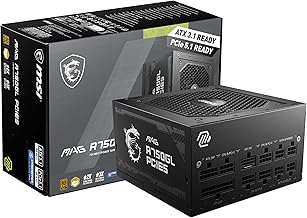
MSI MAG A750GL
The MSI MAG A750GL is a compact, fully modular 750W unit with 80 Plus Gold efficiency, ATX 3.1 readiness, and a native dual-color 12V-2×6 cable. Its 10-year warranty makes it a dependable mid-power pick.
MSI MPG A850GS
Stepping up to 850W, the MPG A850GS adds server-grade capacitors, dual 12V-2×6 cables, and low-noise operation. It is a strong choice for higher-end GPUs that demand clean, stable power.
ASUS ROG Strix 1200W Platinum
The ROG Strix 1200W is a premium powerhouse with 80 Plus Platinum efficiency, GaN MOSFETs, and a GPU-first voltage stabilizer. It is built for extreme rigs with top-tier graphics and overclocked CPUs.
Corsair RM850e (2025)
The Corsair RM850e is a quiet, fully modular 850W unit with ATX 3.1 compliance and 105°C-rated capacitors. Its low-noise design and reliability make it a favorite for balanced enthusiast builds.
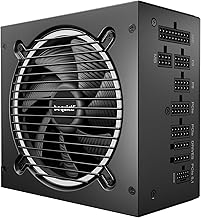
be quiet! Pure Power 13 M 850W
True to its name, the Pure Power 13 M runs whisper-quiet with a semi-passive 120mm fan and up to 94.4% efficiency. ATX 3.1 support and a 10-year warranty make it a superb all-rounder.
Frequently Asked Questions
How many watts do I need for gaming?
Most single-GPU builds are happy with 750W to 850W. High-end rigs with a power-hungry graphics card and overclocked CPU may want 1000W or more for headroom.
Is 80 Plus Gold enough?
Gold is the sweet spot for efficiency and value. Platinum and Titanium offer marginal gains that matter mostly for high-wattage or always-on systems.
Do I need an ATX 3.1 power supply?
It is not mandatory, but ATX 3.1 handles modern GPU power spikes better and includes the native 12V-2×6 connector, avoiding bulky adapters on newer cards.
Is a modular PSU worth it?
Yes. Fully modular units improve airflow and cable management by letting you use only the cables you need, which is well worth it in most builds.
Final Thoughts
For most gamers, the Corsair RM850e and MSI MPG A850GS strike the ideal balance of power, quiet operation, and future-ready cabling. If you want near-silent running, the be quiet! Pure Power 13 M is superb, while extreme builds should reach for the ASUS ROG Strix 1200W Platinum.