Key takeaways
- Emulation ceiling: Decide which era you want to relive. Budget Linux units handle NES through PS1 flawlessly, while more powerful chips are needed for smooth Saturn, N64, and PSP play.
- Screen size and panel: A crisp IPS display makes pixel art pop. Larger 4.5″ to 7″ screens are easier on the eyes, but smaller 3.5″ panels stay truly pocketable.
- Battery capacity: Look for at least a 3000mAh cell for a full afternoon of play. Bigger screens and 3D games drain power faster, so a 4000-5000mAh battery is safer for travel.
- Controls and ergonomics: Dual analog sticks, responsive D-pads, and comfortable shoulder buttons matter far more than a flashy game count. Test how the shell fits your grip.
- Storage and expandability: A microSD slot lets you load your own legally-owned ROMs. Preloaded game counts are often inflated, so prioritize expandable storage over marketing numbers.
What's inside
Retro handheld consoles have exploded in popularity again in 2026, and the sheer number of options can make picking one feel overwhelming. Whether you grew up with the Game Boy and SNES or you are discovering 16-bit classics for the first time, a good pocket emulator lets you carry decades of gaming history in one hand. The trick is knowing which specs actually matter and which are just marketing noise.
In this guide we cut through the clutter and highlight the handhelds worth your money right now. We looked at screen quality, build comfort, battery life, and how smoothly each device runs everything from NES to PSP and Dreamcast. Below you will find our top picks followed by practical buying advice so you can match a console to the systems you actually want to play.
As an Amazon Associate we earn from qualifying purchases at no extra cost to you. Product prices and availability are accurate as of the date shown and are subject to change.


⚡ Save on Your Next PC — Amazon Prime
Prime members get fast free shipping on the systems above, plus early access to Prime Day & Black Friday PC deals. New members get a 30-day free trial.
Watch: Best Retro Handheld Console 2026 — Video Review
How to Choose a Retro Handheld Console
- Emulation ceiling: Decide which era you want to relive. Budget Linux units handle NES through PS1 flawlessly, while more powerful chips are needed for smooth Saturn, N64, and PSP play.
- Screen size and panel: A crisp IPS display makes pixel art pop. Larger 4.5″ to 7″ screens are easier on the eyes, but smaller 3.5″ panels stay truly pocketable.
- Battery capacity: Look for at least a 3000mAh cell for a full afternoon of play. Bigger screens and 3D games drain power faster, so a 4000-5000mAh battery is safer for travel.
- Controls and ergonomics: Dual analog sticks, responsive D-pads, and comfortable shoulder buttons matter far more than a flashy game count. Test how the shell fits your grip.
- Storage and expandability: A microSD slot lets you load your own legally-owned ROMs. Preloaded game counts are often inflated, so prioritize expandable storage over marketing numbers.
The Best Retro Handheld Consoles Reviewed
R36s
The R36s remains the entry-level favorite for good reason. Its 3.5″ IPS screen, Linux system, and support for 20+ emulators make it a fantastic first handheld for kids and adults alike. It comfortably runs everything up to PS1 and light N64, and the low price makes it easy to recommend to anyone testing the retro waters.
V40MAX Upgraded
Stepping up in power, the 2026 V40MAX pairs a 4.0-inch 4K HD IPS panel with a beefy 256GB of storage and 40+ simulators. It doubles as a video player and handles heavier systems better than the budget crowd, making it a strong all-rounder for collectors who want a bit more headroom.
RG56PRO
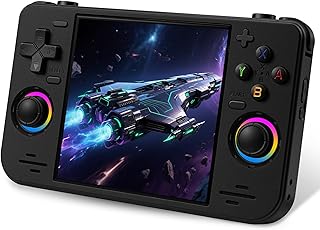
With a generous 5.5-inch IPS screen, a 5000mAh battery, and an open Linux system, the RG56PRO is built for longer sessions. It tackles 3D-heavy libraries more confidently than most units in this range, and the larger display is a genuine joy for arcade and PS1 titles.
R46H
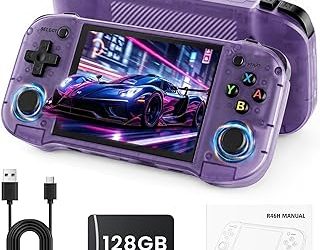
The R46H stands out for its 4.2″ screen and built-in Wi-Fi multiplayer support, letting you link up with friends for classic co-op. The open-source Linux platform is tinker-friendly, and the included 128GB TF card gives you plenty of room to build a personal library.
R36MAX II
Rounding out our list, the R36MAX II offers a 4.5″ HD screen, dual joysticks, and a clever detachable stand for tabletop play. The 4000mAh battery keeps sessions going, and the refined shell feels more premium than its price suggests, making it a smart mid-tier pick.
Frequently Asked Questions
Are retro handheld consoles legal?
The devices themselves are perfectly legal. Where things get gray is the preloaded games. To stay on the right side of copyright, the safest approach is to buy the hardware and load ROMs of games you personally own.
What systems can these handhelds emulate?
Budget Linux units like the R36s reliably run NES, SNES, Genesis, Game Boy, and PlayStation 1. More powerful models such as the RG56PRO or V40MAX can push into N64, Dreamcast, and PSP territory with the right settings.
How long does the battery last?
Expect roughly three to six hours depending on screen size and game intensity. Smaller 3.5″ units with 3000mAh cells last longer per screen inch, while big-screen 3D gaming drains a 5000mAh battery faster.
Can I add my own games?
Yes. Nearly every unit here supports microSD or TF card expansion, so you can drop your own legally-obtained ROMs onto the card and organize them however you like using the built-in file system.
Final Thoughts
The best retro handheld console for you depends on how far up the emulation ladder you want to climb. The R36s is unbeatable value for casual 8- and 16-bit play, while the RG56PRO and V40MAX give power users the muscle for 3D-era classics. Whichever you choose, 2026 is a fantastic time to be a portable retro gamer.