Key takeaways
- Best marketing speakers explained: how to choose PA, portable, and in-store speakers for events, demos, and promotions that people can actually hear today.
As an Amazon Associate we earn from qualifying purchases.
The best marketing speakers are not a single product. The phrase is ambiguous, and that ambiguity matters, because the right speaker for a trade show booth is very different from the right speaker for a shop floor, a product launch, or an outdoor promotion. Before choosing any model, it helps to pin down what the speakers are actually for, where they will be used, and who needs to hear them.
In most cases, people searching for marketing speakers mean one of three things. They may want portable PA speakers for events and demonstrations, where a presenter needs to be heard over a crowd. They may want in-store speakers that play background music and promotional announcements without overwhelming shoppers. Or they may want compact portable speakers for demos, pop-up stalls, and street promotions, where power, portability, and quick setup matter more than sheer volume.
This guide explains those three uses, compares the main types of speakers, and gives a practical checklist for choosing a system that fits your space, your audience, and your budget. It is an informational guide, not a product roundup, because the best choice depends on the marketing job you need the speakers to do.
What Do People Mean by Marketing Speakers?
Speakers for Events and Promotions
Event marketing speakers are usually PA speakers, short for public address speakers. They are designed to project voice and music clearly across a room or an outdoor area. A product launch, a conference booth, a charity run, or a pop-up event all need this kind of speaker, because a normal home speaker will not carry far enough and will distort when turned up loud.
PA speakers are often sold as portable systems with a built-in amplifier, a microphone input, and sometimes a battery. A presenter can plug in a microphone, play music from a phone or laptop, and address a crowd without a separate amplifier or mixer. Larger events may need two speakers on stands, placed on either side of a stage, so sound reaches the back rows without blasting the front rows.
Speakers for Shops and Retail Spaces
Retail marketing speakers are a different job. In a shop, the goal is not to be loud, but to be clear and pleasant. Music and announcements should fill the space evenly, so customers near the door hear the same level as customers near the till. That usually means several smaller speakers spread across the ceiling or walls, rather than one large speaker in a corner.
In-store speakers are often ceiling speakers or wall-mounted speakers connected to a central amplifier. They are chosen for even coverage, clear speech, and a discreet appearance. A shop that plays music too loudly will drive customers away, while a shop with no sound at all can feel empty. The right balance is background music that customers notice without having to raise their voices.
Speakers for Demos and Pop-Up Stalls
Pop-up stalls, market stands, and street promotions need speakers that are portable, quick to set up, and able to run without mains power. A battery-powered portable PA speaker or a large portable Bluetooth speaker is often the practical choice. It can be carried in one hand, placed on a table or a stand, and packed away in minutes.
For demos, clarity matters more than bass. A speaker that makes a voice announcement clear at ten metres is more useful than a speaker that sounds impressive at close range but becomes muddy at a distance. If you are demonstrating a product, the speaker should also be easy to connect to a phone, tablet, or laptop, so you can play a video soundtrack or a short promotional clip without fuss.
Types of Marketing Speakers Compared
Portable PA Speakers
Portable PA speakers are the workhorse of event marketing. They combine a speaker, an amplifier, and often a battery and a wireless microphone receiver in one box. They are designed to be carried, set up quickly, and used outdoors as well as indoors. Many models have wheels and a telescopic handle, which helps when you need to move them across a venue.
The main advantage is simplicity. One box can cover a small to medium event, and two boxes can cover a larger space. The main limitation is that a single portable PA speaker will not fill a very large hall evenly, and bass response is usually limited compared with a larger installed system. For most marketing events, though, voice clarity and portability matter more than deep bass.
Column and Line Array Speakers
Column speakers, also called line array speakers, use a tall, narrow column of small drivers to project sound in a controlled pattern. They are popular for conferences, weddings, and corporate events, because they throw sound further with less spill to the sides. That makes them useful in long, narrow rooms where a traditional speaker would be too loud at the front and too quiet at the back.
For marketing, column speakers look professional and take up little floor space. They are often sold as a system with a subwoofer for bass and a mixer for microphones and music. They cost more than a basic portable PA speaker, but they are a good choice if you run regular events in similar venues and want consistent, even coverage.
Ceiling and Wall-Mounted Speakers
Ceiling and wall-mounted speakers are the standard choice for shops, cafes, showrooms, and offices. They are installed permanently, connected to an amplifier in a back room, and controlled from a central point. Music can be played at a low, even level throughout the space, and announcements can be made through the same system.
The advantage is discretion and even coverage. Customers see the products, not the speakers. The disadvantage is that installation takes planning, wiring, and sometimes professional help. If you rent a space or move frequently, a portable system may be more practical than a fixed installation.
Portable Bluetooth Speakers
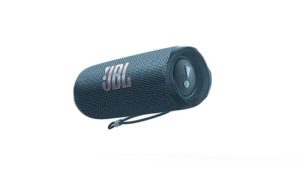
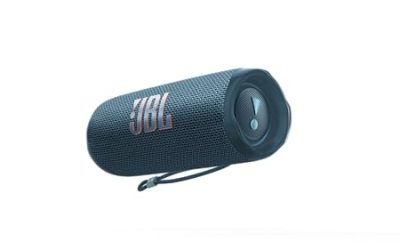
Large portable Bluetooth speakers are useful for small demos, social media filming, and informal promotions. They are easy to carry, connect wirelessly to a phone, and often have a battery that lasts for hours. They are not a substitute for a PA system at a large event, because they are designed for close listening, not for projecting voice across a crowd.
Use a portable Bluetooth speaker when the audience is small and close, for example at a market stall, a filming setup, or a small product demo. If people need to hear you from more than a few metres away, or if there is background noise from traffic or a crowd, a PA speaker with a microphone input will work better.
Comparison Table
| Speaker Type | Best Use | Coverage | Portability | Microphone Input |
|---|---|---|---|---|
| Portable PA speaker | Events, launches, outdoor promos | Small to medium room or outdoor area | High, often battery powered | Yes, usually included |
| Column or line array speaker | Conferences, corporate events | Long rooms, even coverage | Medium, needs a stand or subwoofer | Yes, through a mixer |
| Ceiling or wall speaker | Shops, showrooms, cafes | Even coverage across a whole space | Low, fixed installation | Yes, through a central system |
| Portable Bluetooth speaker | Small demos, stalls, filming | Close range only | Very high | Rarely, usually no dedicated input |
How to Choose Marketing Speakers
Start With the Space and the Audience
Measure the space, or at least estimate it, before choosing speakers. A small shop needs a different system from a hall that seats two hundred people. Think about how far the furthest listener will be from the speaker, and whether there are walls, curtains, or open doors that will absorb or reflect sound. An outdoor space needs more power than an indoor room of the same size, because there are no walls to contain the sound.
Also think about who is listening. A product launch for journalists needs clear speech and a professional look. A shop needs pleasant background music. A street promotion needs to cut through traffic noise without annoying neighbours. The audience and the setting should drive the choice, not the other way round.
Voice Clarity Matters More Than Volume
Marketing speakers are often used for announcements, presentations, and product explanations. If the audience cannot understand the words, the volume does not help. Look for speakers with clear midrange response, which is where human speech lives, and avoid systems that emphasise bass at the expense of clarity.
A good test is to play a spoken announcement at the volume you plan to use, then stand at the back of the space and listen. If words blur together, the speaker is too loud, too far away, or not suited to the room. Moving the speaker, adding a second speaker, or lowering the volume often improves clarity more than buying a more powerful model.
Power, Battery, and Setup Time
For events, check how the speaker is powered. Battery-powered speakers are essential for outdoor promotions and venues without easy access to mains power. Check the rated battery life at a realistic volume, not just at low volume, and bring a spare battery or a charging cable if the event lasts all day.
Setup time also matters. A marketing team that sets up and packs down every day needs a system that can be assembled in minutes, not an hour. Look for speakers with built-in handles, simple controls, and clear labelling. If you need to train different team members to use the system, a simple setup is safer than a complex one with many separate parts.
Connectivity and Microphone Options
Check what you can connect to the speaker. Most marketing setups need at least a microphone input and a way to play music from a phone or laptop, either through Bluetooth or a wired connection. A wireless microphone is useful for presenters who move around, while a wired microphone is simpler and never needs charging.
If you plan to play video soundtracks, check that the speaker can connect to your laptop or media player without delay or dropouts. A wired connection is usually more reliable than Bluetooth for video, because Bluetooth can introduce a small delay between picture and sound. For music only, Bluetooth is usually fine.
Appearance and Brand Fit
Marketing speakers are visible, especially at events and in shops. A speaker that looks professional and matches your brand will make a better impression than a battered box with exposed cables. Column speakers and discreet ceiling speakers often look better in a polished setting, while a rugged portable PA speaker is acceptable at an outdoor event or a trade show.
Consider cable management as part of appearance. Tidy cables, speaker stands, and a simple backdrop make a setup look intentional. A speaker on a stand at ear height usually sounds better and looks better than a speaker left on the floor.
Common Mistakes to Avoid
One common mistake is buying a speaker that is too powerful for the space. A large PA speaker in a small shop will be too loud at the front and will distort if turned down too far. A better approach is to use smaller speakers spread across the space, or a portable speaker set to a moderate level.
Another mistake is placing a single speaker in a corner and expecting it to fill a room evenly. Sound spreads in a pattern, and a corner placement often leaves dead spots. Placing speakers on stands, at ear height, and facing the audience usually gives better coverage than placing them on the floor or on a high shelf.
A third mistake is forgetting the microphone. A good speaker with a poor microphone will still sound bad, because the microphone is the first link in the chain. Use a microphone designed for speech, keep it at a consistent distance from the mouth, and test it in the actual venue before the event starts.
Practical Setup Checklist
Before an event, run through a short checklist. Charge the battery fully, and bring the charging cable. Test the microphone and the music source together, at the volume you plan to use. Stand at the back of the space and check that speech is clear. Check that cables are tidy and not a trip hazard. Bring a backup connection, such as a wired cable, in case Bluetooth fails. If you are outdoors, check the weather forecast and have a plan to protect the speakers from rain.
For a shop installation, the checklist is different. Check that music plays evenly in all areas, including fitting rooms and corners. Set a maximum volume and lock it, so staff cannot turn it up too far during a busy shift. Choose a playlist that fits the brand and the time of day, and update it regularly so regular customers do not hear the same songs every visit.
FAQ
What are marketing speakers?
Marketing speakers are speakers used to promote a product, brand, or event. The term is broad and can mean portable PA speakers for events, ceiling speakers for shops, or portable speakers for demos and pop-up stalls. The best type depends on the space, the audience, and whether you need clear speech, background music, or both.
Are PA speakers the same as marketing speakers?
PA speakers are one type of marketing speaker, and often the most relevant type for events. PA stands for public address, and these speakers are designed to project voice and music clearly to a crowd. For shops and showrooms, ceiling or wall-mounted speakers may be a better fit than a portable PA speaker.
How many speakers do I need for an event?
It depends on the size of the space and the number of listeners. A small room or stall may need only one portable PA speaker. A medium hall often works better with two speakers on stands, placed on either side of the stage or presentation area. A large hall may need a column system or multiple speakers spread across the space for even coverage.
Can I use a Bluetooth speaker for marketing?
Yes, for small demos and close-range promotions, a large portable Bluetooth speaker can work well. It is easy to carry and connect to a phone. For larger events, or when you need a microphone, a portable PA speaker with a dedicated microphone input will usually give clearer speech and better coverage.
What should I look for in speakers for a shop?
Look for even coverage, clear speech, and a discreet appearance. Ceiling or wall-mounted speakers spread across the space usually work better than one large speaker. Choose a system with a central volume control, a music source you can update easily, and a maximum volume that keeps music at background level.
Conclusion
There is no single best marketing speaker, because the term covers different jobs. Portable PA speakers suit events and outdoor promotions, column speakers suit conferences and corporate events, ceiling and wall-mounted speakers suit shops and showrooms, and portable Bluetooth speakers suit small demos and stalls.
Start by defining the job: where will the speakers be used, how far away is the audience, and do you need clear speech, background music, or both? Then choose the type that fits that job, test it in the real space, and keep the setup simple enough for your team to use every day. A clear, well-placed speaker that your audience can actually hear will do more for your marketing than a more powerful system that is never set up properly.
FAQ
What are marketing speakers?
Are PA speakers the same as marketing speakers?
How many speakers do I need for an event?
Can I use a Bluetooth speaker for marketing?
What should I look for in speakers for a shop?
More from Amazon
Programs that pair well with the guide above. Offers and eligibility are set by Amazon and may change.
Free shipping on eligible items, Prime Video and more. Eligible new members can start with a free trial.
Start a Prime free trialAd-free music streaming. Eligible new subscribers can start with a free trial.
Try Music Unlimited freeA Prime membership for ages 18-24 with a trial period. Eligibility is set by Amazon.
See Prime for Young AdultsAudiobooks and podcasts to listen to on the go. Eligible new members can start with a free trial.
Try Audible freeAs an Amazon Associate we earn from qualifying purchases.