Key takeaways
- Pro: The highest listed gain at 29 dB.
- Pro: Plug-and-play metal adapter design.
- Con: It requires a separate 48V phantom-power source.
In a small room, a dynamic microphone can sound clean and focused yet still arrive at your interface quieter than expected. That problem is especially common when the mic is placed several inches away, the source is soft, or the room forces you to keep the microphone farther from your mouth. Turning up the interface gain may solve the level issue, but it can also raise the audible noise floor.
The best budget audio interface for dynamic mic gain boost depends on whether you need a simple inline preamp or a complete recording hub. The products below range from compact XLR boosters to the Focusrite Scarlett 2i2 4th Gen, which adds the broader functionality of a USB-C interface. We ranked them for practical home recording, streaming, podcasting, and stage use in 2026, using listed gain, connection details, phantom-power requirements, price, and intended compatibility.
As an Amazon Associate we earn from qualifying purchases at no extra cost to you. Product prices and availability are accurate as of the date shown and are subject to change.





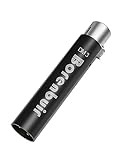


Quick Picks
| Product | Best for | Price |
|---|---|---|
| StudioMan DPM1 XLR Dynamic Microphones Preamp | Maximum listed gain on a simple budget booster | $39.99 |
| Coda MB-Stealth In-Line Microphone Preamp | Clean gain in a discreet inline design | $59.95 |
| Focusrite Scarlett 2i2 4th Gen USB-C Audio Interface | A full recording interface for dynamic-mic users | $224.99 |
| Bolanle NK1 In-Line Mic Preamp, first listing | Low-cost 28 dB gain boosting | $25.49 |
| In-line Microphone Preamp for Dynamic and Passive Ribbon Microphones | Dynamic and passive ribbon microphone setups | $38.59 |
| In-Line Mic Preamp/Booster, Brass Shield | The lowest-price option | $19.97 |
| Bolanle NK1 In-Line Mic Preamp, second listing | A second low-cost 28 dB option | $25.49 |
| StudioMan CL-100 XLR Preamp | Compact 25 dB gain with metal housing | $31.99 |
How We Picked
We focused on the specific problem of adding usable level to a quiet dynamic microphone without immediately moving to a costly studio setup. Inline preamps were judged by their listed gain, compatibility language, connection format, phantom-power notes, shielding or housing claims, and price. The Scarlett 2i2 was considered differently because it is a complete USB-C audio interface rather than a single-purpose XLR booster.
We also separated products with clearly stated gain from products whose listings emphasize compatibility or construction without naming a gain figure. None of the listings supplied dimensions, weight, wattage, or independent noise measurements, so we have not invented those details. Prices are listed as provided, with the overall range running from $19.97 to $224.99.
The 8 Best Picks
1. StudioMan DPM1 XLR Dynamic Microphones Preamp
The StudioMan DPM1 is the most direct answer for someone who wants a strong boost between a dynamic microphone and an existing interface, mixer, or recorder. Its listed 29 dB of gain is the highest stated figure in this group, making it a compelling choice for particularly quiet sources. The plug-and-play format and metal adapter design also suit users who do not want another menu-driven device. It is specifically described for dynamic microphones and requires 48V phantom power, which is not included. That last point matters: your connected interface or mixer must supply phantom power.
- Pro: The highest listed gain at 29 dB.
- Pro: Plug-and-play metal adapter design.
- Con: It requires a separate 48V phantom-power source.
Skip it if you use a condenser microphone, passive ribbon microphone, or an interface without phantom power.
2. Coda MB-Stealth In-Line Microphone Preamp
The Coda MB-Stealth targets buyers who want a clean, simple gain stage rather than a complete interface replacement. Its listed 28 dB of clean gain should be useful when an existing interface gets a little too close to its maximum input setting with a dynamic mic. The in-line format keeps the setup straightforward: place the booster in the XLR signal path and continue using the interface you already own. At $59.95, it is one of the more expensive standalone options here, but the clean-gain positioning may appeal to streamers, podcasters, and vocalists who prioritize a tidy signal chain.
- Pro: Clearly stated 28 dB of clean gain.
- Pro: Simple in-line approach for an existing setup.
- Con: It costs more than most competing inline boosters.
Skip it if you need USB connectivity, multiple inputs, or the lowest possible purchase price.
3. Focusrite Scarlett 2i2 4th Gen USB-C Audio Interface
The Scarlett 2i2 is the outlier in this roundup because it is a full USB-C audio interface, not merely an inline gain booster. That makes it a better fit for someone building a recording station from scratch or replacing an older interface. It gives a dynamic-mic user a broader hardware platform for recording rather than adding one device to an existing chain. At $224.99, it is also by far the most expensive pick, so its value depends on whether you need a complete interface. Buyers seeking only a small level increase should compare its broader purpose with a $19.97-to-$59.95 inline preamp.
- Pro: A complete USB-C audio interface rather than a single-purpose booster.
- Pro: Better suited to a new or upgraded recording setup.
- Con: It is substantially more expensive than the inline options.
Skip it if you already have a suitable interface and only need additional XLR gain.
4. Bolanle NK1 In-Line Mic Preamp, First Listing
The first Bolanle NK1 listing is one of the strongest value choices for a dynamic microphone that needs more level before reaching an interface. It specifies 28 dB of gain, XLR connectivity, and 48V phantom power, giving shoppers more concrete compatibility information than some less-detailed listings. At $25.49, it keeps the upgrade inexpensive while addressing the common “interface gain knob nearly maxed out” problem. Its listing does not identify it as a complete audio interface, so think of it as an addition to your current signal chain rather than a replacement for your recording hardware.
- Pro: A useful listed gain figure of 28 dB.
- Pro: Low price for an XLR inline preamp.
- Con: It depends on 48V phantom power.
Skip it if your interface cannot provide phantom power or if you need USB recording hardware.
5. In-Line Microphone Preamp for Dynamic and Passive Ribbon Microphones
This brass-finish inline preamp stands out for its compatibility wording: it is listed for both dynamic and passive ribbon microphones. That makes it a useful candidate for a mixed microphone collection, particularly when one setup includes a passive ribbon that also benefits from careful gain staging. The listing does not provide a gain number, so buyers should not assume it matches the 28 dB or 29 dB products in this roundup. At $38.59, it sits in the middle of the price range. Its clearest advantage is microphone-type flexibility, not a documented maximum boost.
- Pro: Listed for dynamic and passive ribbon microphones.
- Pro: A relatively affordable way to add an inline gain stage.
- Con: The listing does not state a gain amount.
Skip it if a specific dB figure is essential to your buying decision.
6. In-Line Mic Preamp/Booster for Dynamic Mic, Brass Shield
At $19.97, this is the lowest-priced product in the roundup and an easy entry point for anyone testing whether an inline booster solves a quiet dynamic-mic signal. The listing emphasizes a brass shield and ultra-clean gain, which should appeal to buyers looking for a compact signal-path accessory rather than a new interface. However, it does not state a gain figure in the supplied product facts. That makes it harder to compare directly with the 28 dB and 29 dB models. Its value is strongest when price and a simple dynamic-mic application matter more than detailed specifications.
- Pro: The lowest price at $19.97.
- Pro: Brass shielding and an ultra-clean gain claim.
- Con: No gain amount is listed.
Skip it if you need documented gain or compatibility beyond a dynamic microphone.
7. Bolanle NK1 In-Line Mic Preamp, Second Listing
The second Bolanle NK1 entry has the same supplied description and $25.49 price as the first listing: 28 dB gain, XLR connection, and 48V phantom power. In practical terms, it belongs in the same value category. We include it separately because it appears as a separate product listing, but buyers should compare the seller, condition, and included details before treating it as a different design. For a dynamic microphone connected to an interface with phantom power, the NK1 offers a clearly stated boost without the cost of a complete recording interface.
- Pro: Clearly listed 28 dB gain.
- Pro: One of the more affordable specified options.
- Con: The supplied details duplicate the first NK1 listing.
Skip it if you expected a meaningfully different product from the first NK1 entry.
8. StudioMan CL-100 XLR Preamp
The StudioMan CL-100 is a compact XLR preamp for dynamic microphones with a listed 25 dB of gain. Its low-noise amplifier language, metal housing, and XLR input/output give it a practical, purpose-built profile for home studios, streaming desks, and stage rigs. It is compatible with phantom power, which is an important system requirement to confirm before purchase. The listed gain is lower than the DPM1, Coda, and Bolanle options, but $31.99 keeps it affordable. The orange-and-black finish may also make it easy to identify in a crowded equipment bag or cable setup.
- Pro: Metal housing and XLR input/output.
- Pro: Listed 25 dB gain with low-noise amplifier positioning.
- Con: It offers less listed gain than several competing picks.
Skip it if you need the maximum stated boost or a complete USB interface.
Buying Guide
Inline booster or full audio interface?
Choose an inline preamp when you already own an interface and only need more level from a dynamic microphone. Choose the Scarlett 2i2 when you need a broader USB-C recording solution. The price difference is substantial: the inline options run from $19.97 to $59.95, while the Scarlett is $224.99.
How much gain do you need?
Among the products with stated figures, the listed range is 25 dB to 29 dB. The DPM1 leads at 29 dB, while the Coda and Bolanle NK1 list 28 dB. The CL-100 lists 25 dB. Products without a stated gain amount should be chosen for their other listed traits, not assumed to deliver a particular boost.
Do you have phantom power?
Check your interface or mixer before ordering. The DPM1 explicitly requires 48V phantom power and says it is not included. The Bolanle NK1 also lists 48V phantom power, while the CL-100 is described as phantom-power compatible. An inline booster cannot help if the connected system cannot power it as required.
Our Verdict
The StudioMan DPM1 is our top pick for the best budget audio interface for dynamic mic gain boost when you already own an interface with 48V phantom power. Its listed 29 dB gain leads the group at a reasonable $39.99. For the lowest cost, the $19.97 brass-shielded booster is the obvious trial option, while the Bolanle NK1 offers a stronger value proposition when its stated 28 dB gain matters. Choose the Focusrite Scarlett 2i2 instead when you need a complete USB-C interface rather than an inline accessory.
FAQ
What is the best budget audio interface for dynamic mic gain boost?
The StudioMan DPM1 is the strongest overall match among these products because it lists 29 dB of gain and costs $39.99. It requires 48V phantom power, so verify that your interface or mixer can provide it.
Can an inline preamp replace an audio interface?
No. An inline preamp adds gain within an XLR microphone signal chain. It does not replace the USB connection and recording functions of a complete audio interface such as the Focusrite Scarlett 2i2.
Do dynamic microphones need phantom power?
Many standard dynamic microphones do not need phantom power by themselves. However, some inline boosters do require it to operate. Follow the booster’s requirements and confirm compatibility with your interface or mixer.
Which pick is the cheapest?
The In-Line Mic Preamp/Booster with brass shielding is the cheapest listed option at $19.97. Its listing does not state a gain amount, so it is best for buyers who prioritize price over a documented dB specification.